

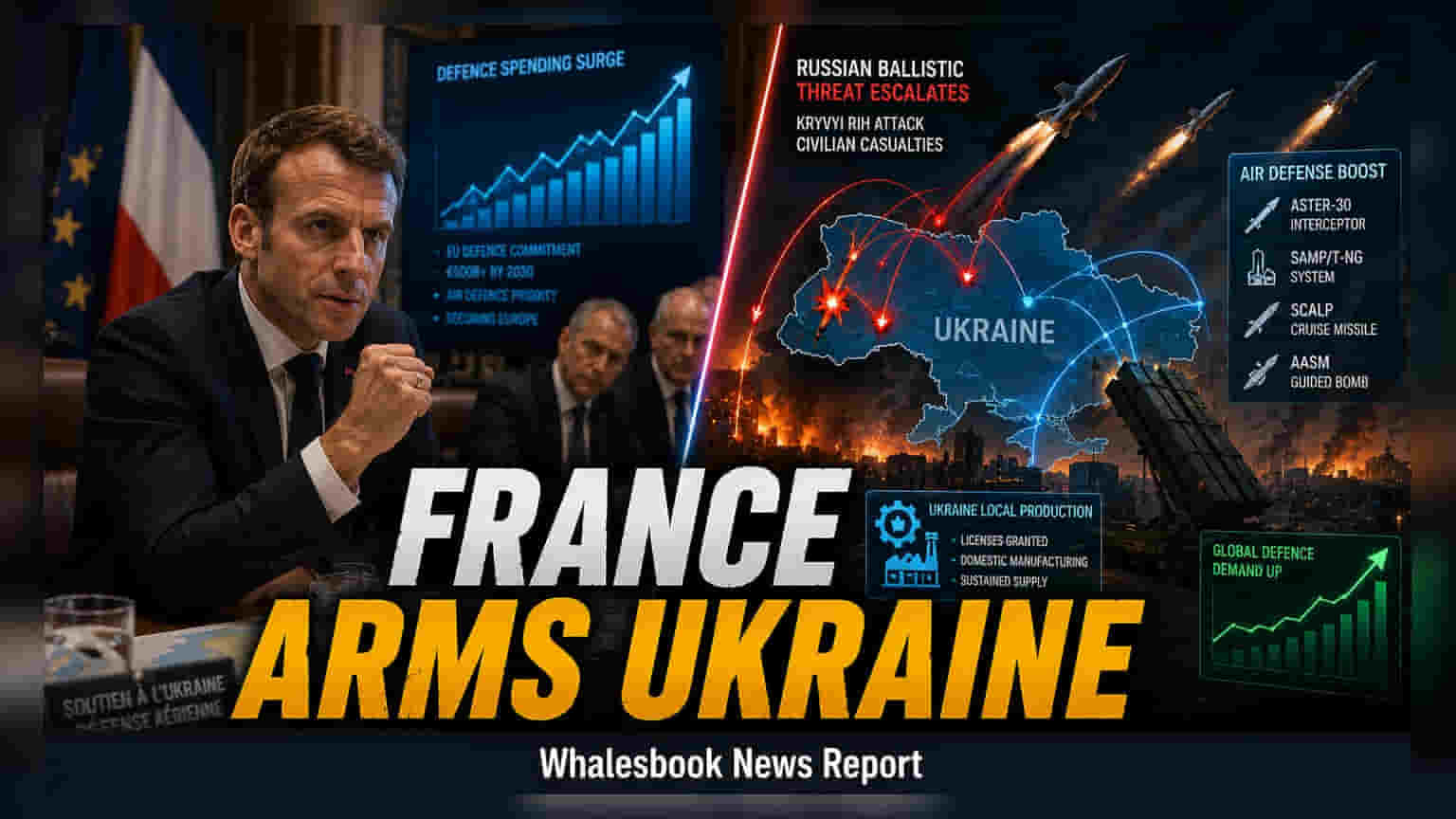
France will accelerate the delivery of interceptor missiles and air defense systems to Ukraine following a surge in Russian attacks. President Emmanuel Macron has also authorized licenses for domestic weapon production in Ukraine, including the Aster-30 missile. Investors are monitoring these developments for their impact on global defense sector dynamics and potential supply chain disruptions.
President Emmanuel Macron has committed to accelerating the delivery of interceptor missiles and advanced air defense systems to Ukraine. This decision follows an intense series of Russian ballistic missile and drone strikes, including a recent, deadly attack in Kryvyi Rih that resulted in significant civilian casualties. The move is intended to bolster Ukraine's air defense capabilities against high-speed ballistic threats that have been increasingly difficult to intercept.
A key development in this support package involves France granting licenses for the domestic production of critical defense hardware within Ukraine. This manufacturing initiative will include the Aster-30 interceptor, AASM guided bombs, and SCALP cruise missiles. By enabling production within Ukraine, the initiative aims to address the logistical challenges of transporting heavy equipment into a conflict zone and ensuring a more consistent supply of ammunition.
France and Italy are also collaborating to advance the deployment of the SAMP/T-NG air defense system. These efforts are part of a broader strategy coordinated through the European Integrated Anti-Ballistic Missile Coalition. The support package is expected to be a primary topic of discussion during the upcoming meeting of the 'Coalition of the Willing,' scheduled for August 24, 2026, where allies will coordinate strategies to counter intensified Russian military operations.
From an economic and risk perspective, the escalation of the conflict continues to introduce volatility into global markets. Russian authorities have previously warned that significant increases in Western military support could lead to retaliation against Ukraine's sensitive economic sectors. For the global defense industry, while this environment often drives higher demand for defense systems, it also brings operational complexities. The move toward localized production in a conflict-heavy region introduces specific risks, including the security of manufacturing infrastructure and the stability of supply chains for complex defense components.
Market participants typically track such geopolitical developments for their broader impact on defense spending, global shipping stability, and commodity prices. The ability of Ukraine to successfully operationalize local production facilities for sophisticated missiles like the Aster-30 while under active fire remains a critical factor that observers will watch in the coming months.