

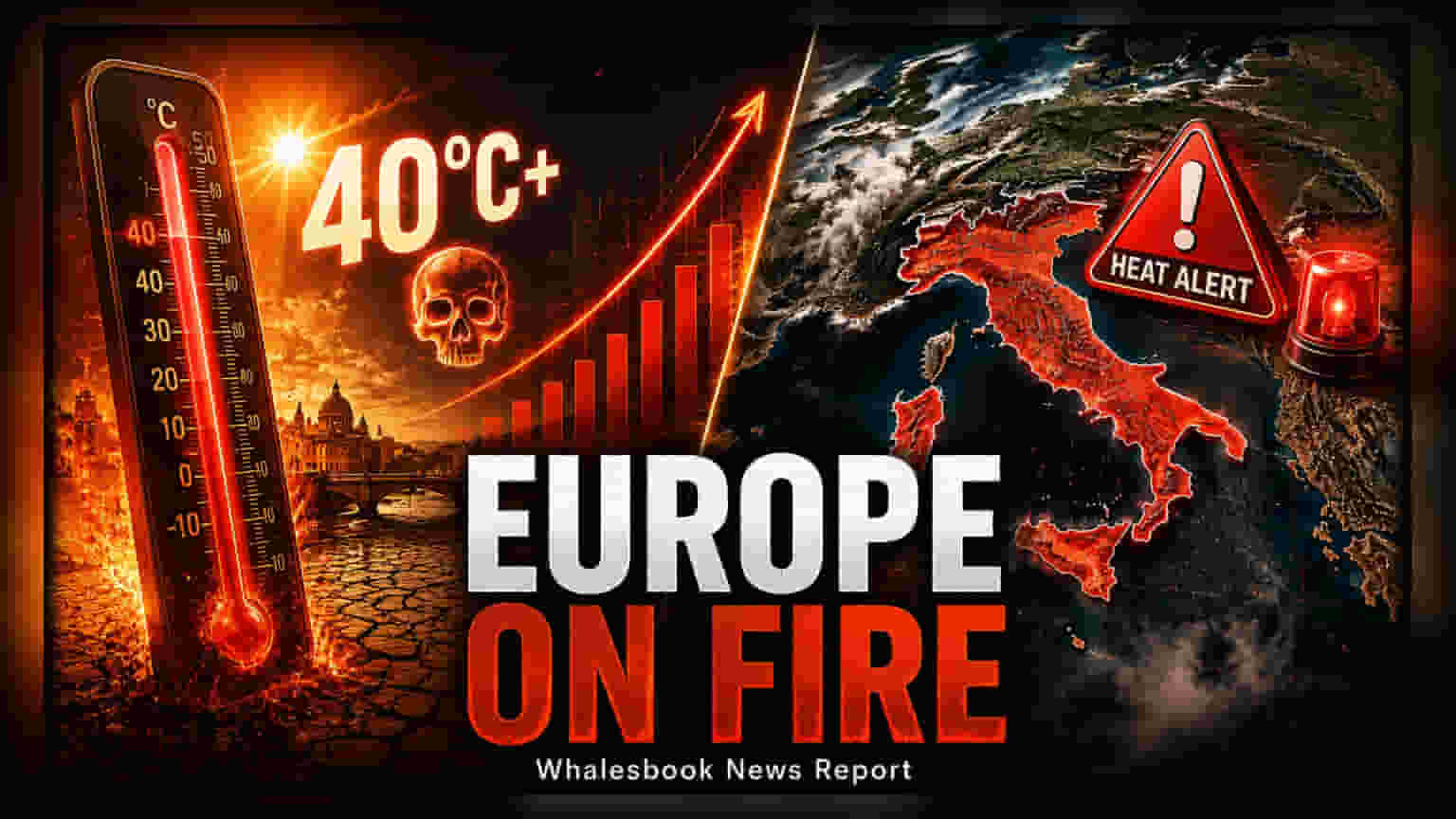
Italy has issued red alerts across 27 cities as extreme heat pushes temperatures above 40°C. The crisis is forcing energy production cuts in Hungary and straining vital European transport routes, raising concerns about potential impacts on utility costs and industrial supply chains across the region.
Italy has declared a red alert across 27 major cities today, marking a severe escalation in Europe's ongoing heat wave. With temperatures regularly surpassing 40°C, the extreme weather is moving beyond a public health concern and into a significant economic challenge for the continent. Austria has also reported a new national temperature record of 41.2°C, highlighting the intensity of the heat spreading across Central and Southern Europe.
Energy infrastructure is facing direct pressure from these conditions. In Hungary, the country's sole nuclear power plant has cut production to just 10% of its normal capacity. The facility requires water from the Danube River for cooling, but record-low water levels have made this process difficult, limiting how much electricity can be generated. This comes at a critical time when electricity demand for cooling is spiking across the region.
Transport logistics are also under strain. Similar to the energy issues in Hungary, low water levels in the Rhine River in Germany are restricting the movement of freight barges. These rivers are vital arteries for moving coal, fuel, and industrial goods. When river levels drop, it forces companies to move goods by truck or rail, which are more expensive and less efficient modes of transport. This shift can lead to increased costs for raw materials and finished goods.
The broader economic implication is that European nations are facing the reality of climate adaptation costs. The European Commission has estimated that member states may need to spend nearly €70 billion annually to upgrade and adapt infrastructure to handle these rising temperatures. This capital spending will be a long-term factor for many European economies.
For investors, these events carry several risks. High energy consumption coupled with restricted production capacity can push utility prices higher, affecting industrial margins. Additionally, the agricultural sector faces a threat of lower yields, which can influence global food commodity prices. The reliability of power grids and the cost of logistics during such extreme weather events will be key monitorables for anyone tracking European industrial performance and broader economic stability.