

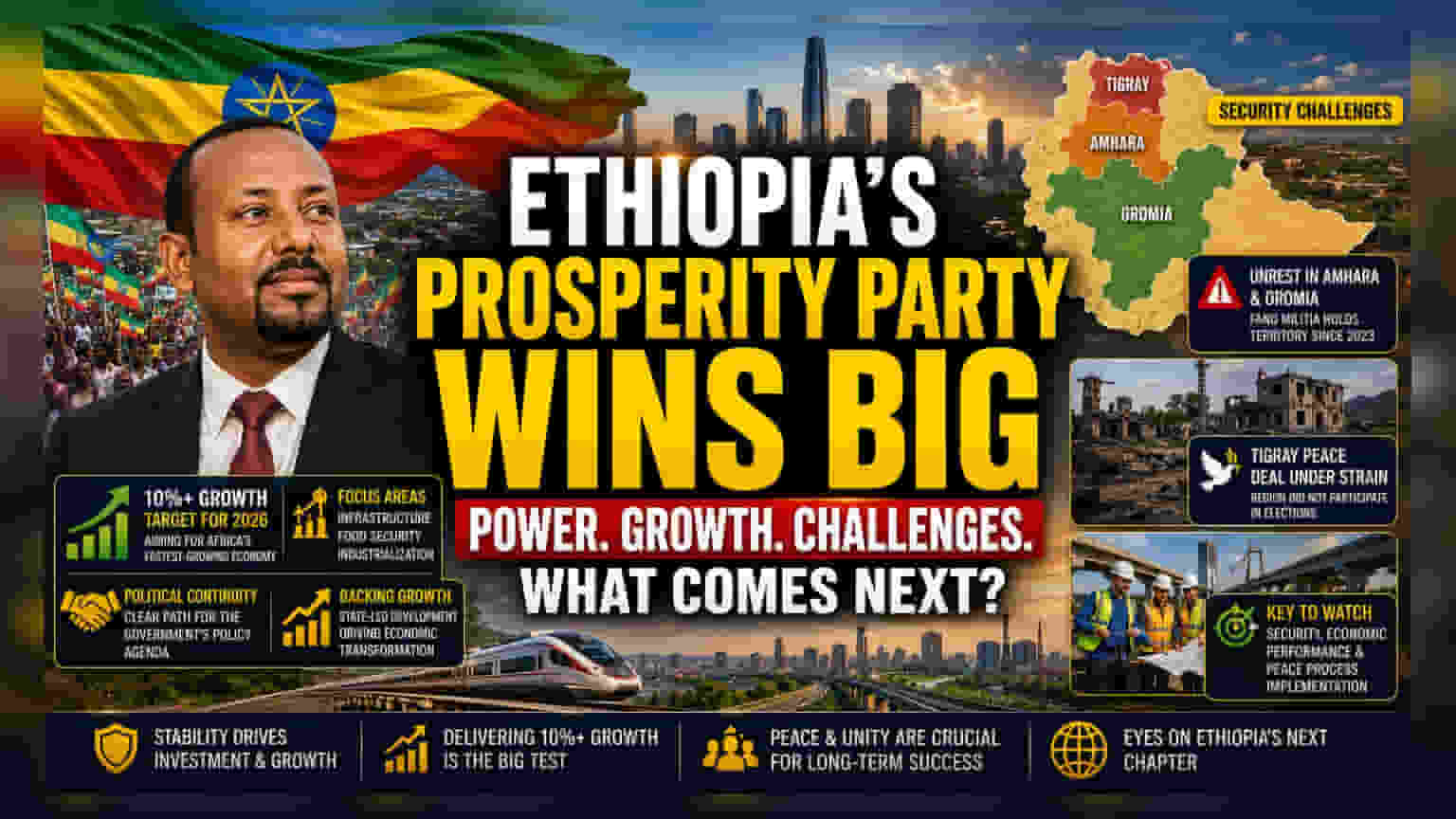
Prime Minister Abiy Ahmed’s Prosperity Party has secured a parliamentary majority, confirming his administration’s mandate. While the government is targeting over 10% economic growth for 2026, the election results come amid persistent regional security challenges. For investors and observers, the focus now shifts to how the leadership balances its growth agenda with the need to resolve internal conflicts and maintain political stability.
What Happened
Ethiopia's Prosperity Party, led by Prime Minister Abiy Ahmed, has won a parliamentary majority in the recent national elections. This victory ensures that the current administration will continue its tenure, providing political continuity for the East African nation. The campaign centered on the government's economic performance and initiatives to improve food security. For observers of the region, this outcome signals a clear path for the ruling party’s existing policy framework, though the administration continues to face external scrutiny regarding its handling of political rights and civil society.
The Economic Growth Outlook
The Ethiopian government has set an ambitious economic growth target of over 10 percent for 2026. If achieved, this would position Ethiopia as one of the fastest-growing economies in Africa. The government’s narrative heavily relies on this projected expansion, which it aims to drive through state-led development and infrastructure focus. However, delivering on this growth target will require more than just political continuity; it depends heavily on maintaining macroeconomic stability and creating an environment conducive to both domestic and foreign economic activity.
The Reality Of Regional Instability
While the election outcome provides political clarity, the country continues to face significant security hurdles that could influence economic performance. The administration is currently managing unrest in several ethnically defined regions, specifically Oromia and Amhara. In the Amhara region, a militia group known as Fano has held territory since 2023, complicating the government's administrative control. Furthermore, the northern Tigray region, which did not participate in these elections due to unfavorable conditions, is still navigating the aftermath of a major civil war that lasted from 2020 to 2022. The 2022 peace deal meant to stabilize the region shows signs of strain, with reports of political groups attempting to reassert administrative control, which raises concerns about the potential for renewed conflict.
Why It Matters For Stability
For businesses and observers, political stability is a primary indicator of economic health. The Prosperity Party's win suggests that the current government’s policy direction will remain unchanged. However, the contrast between the government’s growth targets and the reality of regional volatility creates a complex picture. Investors and international partners typically prioritize stable governance, consistent regulatory frameworks, and peaceful internal conditions. The ability of the re-elected administration to bridge the gap between its development goals and the ongoing security challenges in regions like Tigray and Amhara will be the true test of this new term.
What To Watch Next
The immediate monitorables include the government’s ability to manage regional security, as any escalation in violence could disrupt economic activity and supply chains. Observers will also track subsequent updates on the 10 percent growth projection, looking for concrete data on GDP, inflation control, and infrastructure project progress. Finally, the sustainability of the Tigray peace process and the government's approach to resolving conflicts in Amhara and Oromia will remain essential indicators of the country's long-term risk profile.