

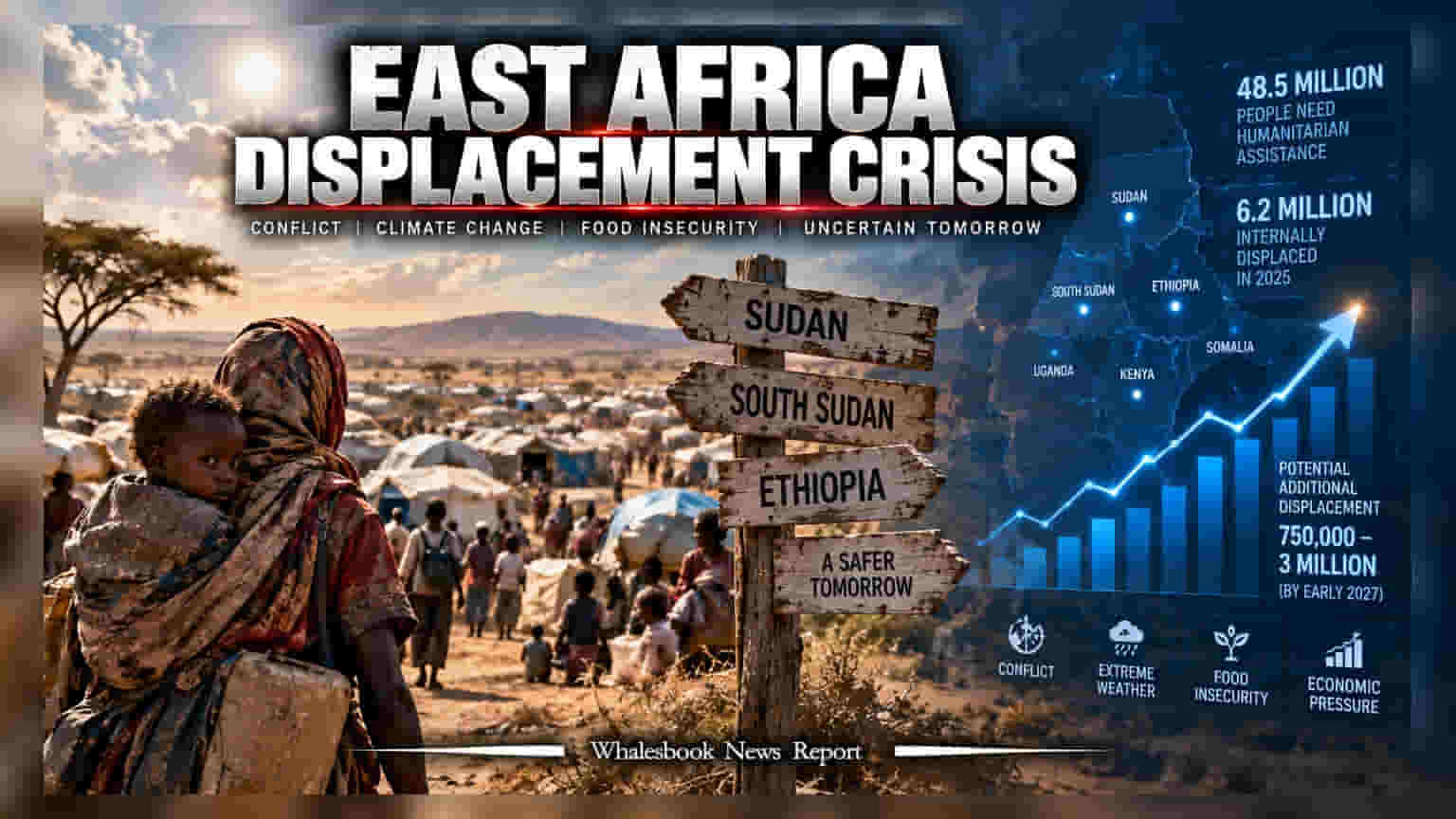
Persistent conflict and extreme weather forced 6.2 million people from their homes in East Africa during 2025. With 48.5 million people currently requiring aid in 2026, the region faces rising economic and supply chain pressures that can impact broader trade stability.
The humanitarian situation in East Africa reached a critical point in 2025, with internal displacement numbers hitting 6.2 million. This massive movement of people, primarily driven by regional conflict and extreme weather, has created significant instability across nine countries. As of mid-2026, the scope of the crisis has broadened, with approximately 48.5 million people now requiring urgent humanitarian assistance to survive.
The Double Threat: Conflict and Climate
The crisis is fueled by a combination of armed conflict and climate-related disasters. Nations like Sudan, South Sudan, and Ethiopia remain at the center of this instability, accounting for nearly 90 percent of displacement events. In Sudan alone, fighting has disrupted basic infrastructure and local economies. Simultaneously, shifting weather patterns, including persistent heatwaves and severe flooding, have destroyed critical roads, bridges, and water systems.
Looking ahead, climate models warn that a strengthening El Niño event could persist through early 2027. Experts estimate that this could potentially displace between 750,000 and 3 million additional people due to flooding in countries such as Somalia, Kenya, South Sudan, and Uganda. For the region, this means the cycle of infrastructure damage and food insecurity is likely to continue in the near term.
Economic and Trade Implications
For investors and global market watchers, this humanitarian crisis carries broader economic risks. Food insecurity is currently at critical levels, affecting over 40 million people across the region. As agricultural yields suffer, the potential for food inflation increases, which can pressure local economies that are already struggling.
Furthermore, some regional economies, notably Kenya, are navigating high levels of debt distress. This limits the ability of governments to fund infrastructure repairs or social safety nets when climate shocks occur. When debt burdens are high, a humanitarian crisis can further limit fiscal flexibility, creating a chain reaction that may affect regional trade corridors and overall economic output.
Investors may monitor how these nations manage their fiscal stability amidst these pressures. The interplay between climate-induced infrastructure damage and the need for significant capital to rebuild remains a primary challenge. As aid funding remains historically tight, the long-term impact on regional growth, food trade, and supply chain stability will depend on both the severity of the upcoming weather patterns and the ability of these nations to maintain basic economic operations.