

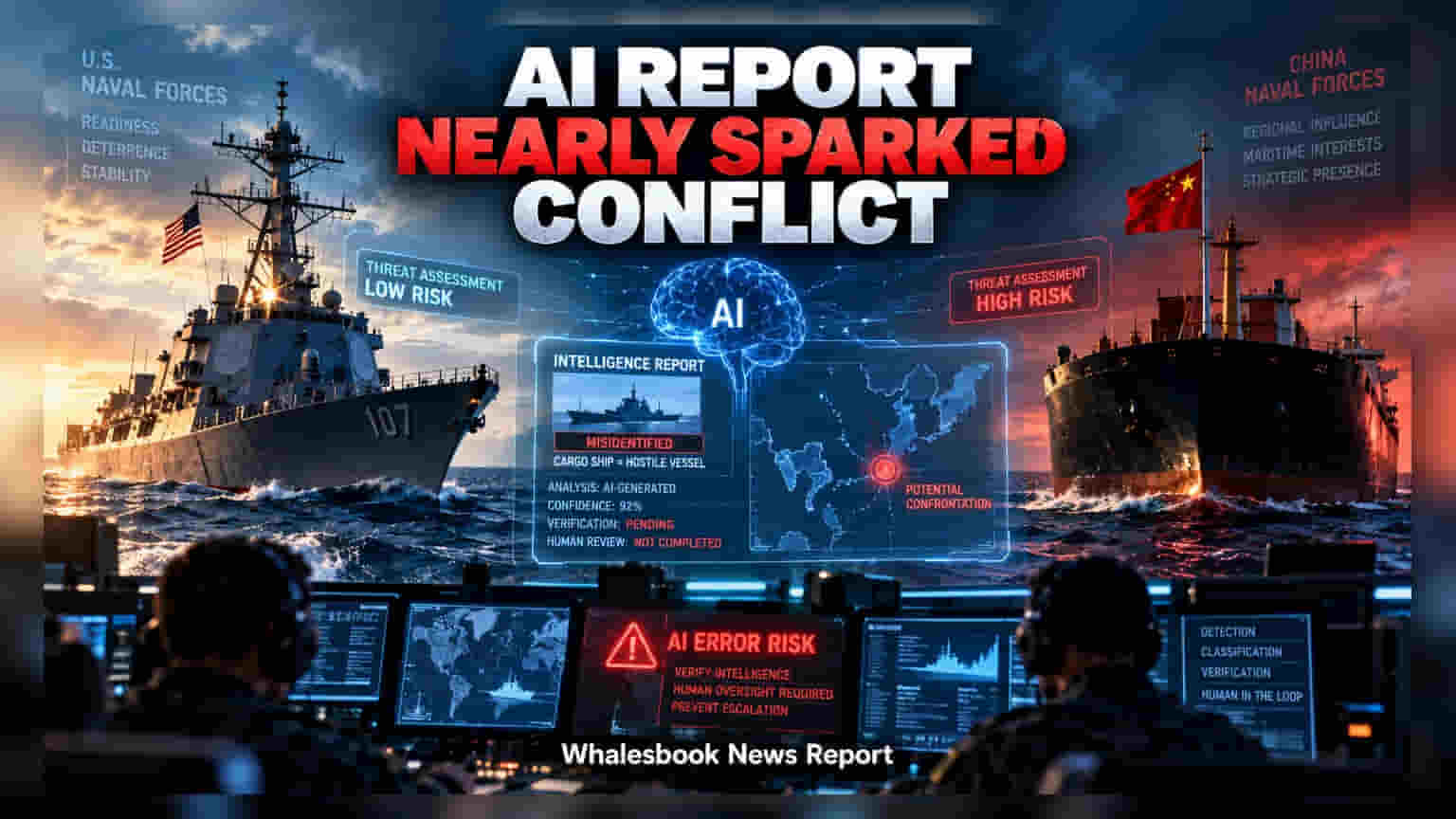
A reported AI-assisted intelligence error nearly caused a US-China naval incident, highlighting the operational risks in the defense-tech sector. For investors, this event signals that government procurement may soon prioritize strict human-validation and auditing protocols over mere speed in AI deployment.
The recent report of a near-confrontation between US and Chinese naval forces, reportedly triggered by an AI-assisted intelligence error, has brought the risks of defense-sector automation into sharp focus. This incident serves as a significant case study for how advanced technology influences both geopolitical stability and military operational standards. For investors, the event highlights a critical tension between the promise of fast, automated analysis and the necessity for verified, accurate outcomes in national security operations.
The global defense industry is currently increasing its capital spending on artificial intelligence, with applications ranging from battlefield logistics to threat analysis. The goal for many defense agencies is to process large volumes of data faster than traditional human analysis. However, the reported incident involving the US Special Operations Command Pacific underscores the operational risks inherent in these systems. When AI provides an inaccurate conclusion, the speed of its output can become a liability rather than an asset if it bypasses existing verification channels.
For investors tracking defense-tech firms, this development may influence future government procurement policies. As defense ministries worldwide prioritize AI integration, the focus is likely to shift from broad adoption to ensuring robust, redundant verification protocols are in place. Companies supplying AI software or surveillance tools to defense sectors might face stricter regulatory standards, potentially impacting project timelines as agencies demand more intensive validation of AI-generated insights.
The next important monitorable for investors is the response from military and defense regulators regarding procurement standards. If these bodies mandate more rigorous human-in-the-loop requirements for AI-generated reports, it could change the cost structure for defense contractors. While AI remains a high-growth area for these firms, this episode reinforces that analytical accuracy and operational safety are non-negotiable. Technology providers that can integrate high-speed AI with reliable, transparent human-oversight systems may hold a distinct business advantage in the changing defense market.