

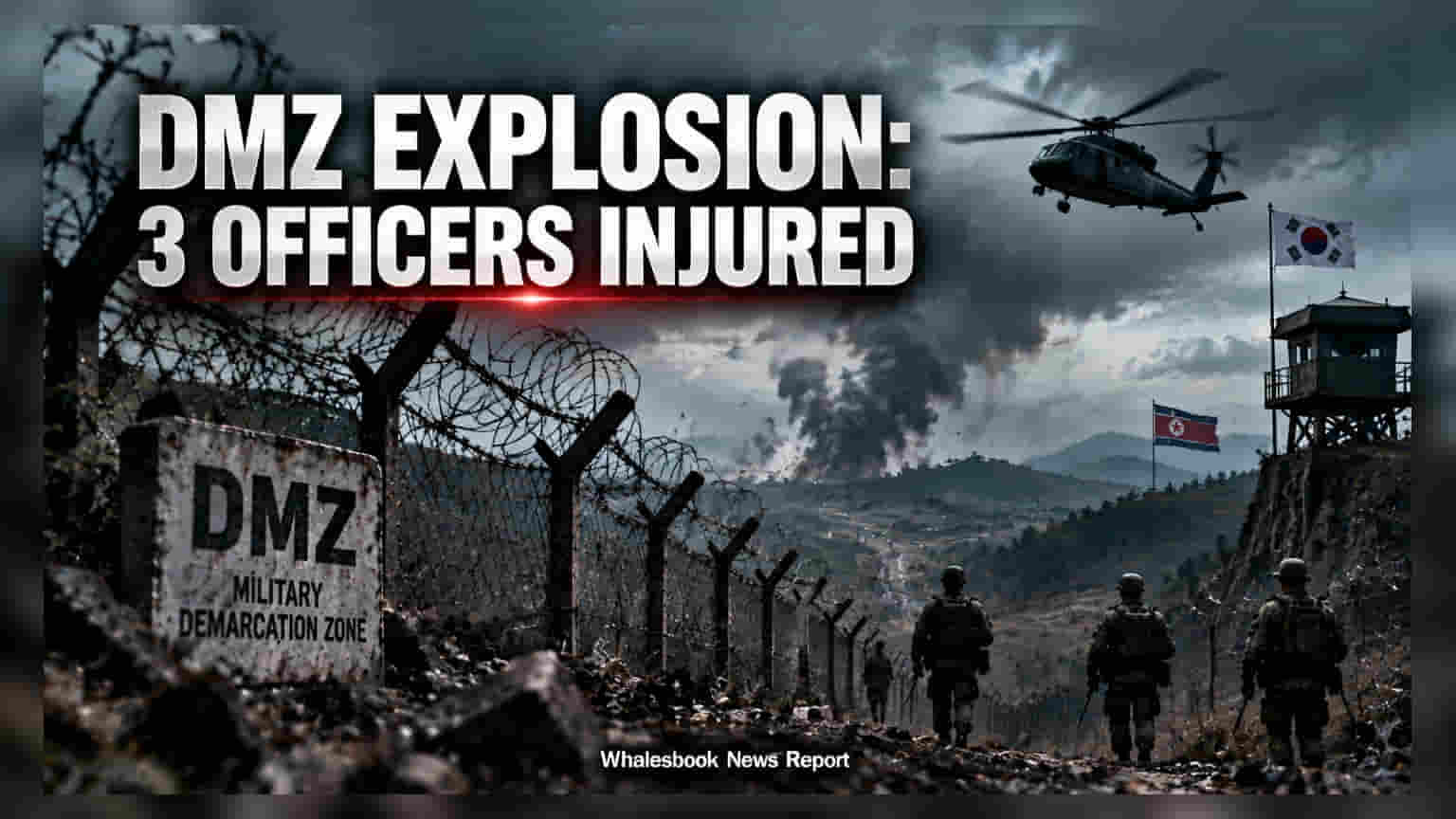
Three South Korean military officers were injured today in an unexplained explosion within the Demilitarised Zone. The incident follows increased border activity by North Korea as it builds new fortifications. For investors, the event highlights rising geopolitical risks in East Asia, which can influence regional market sentiment, global supply chain stability, and energy pricing outlooks.
On Monday, September 21, 2026, three South Korean military officers were injured following an explosion within the Demilitarised Zone (DMZ). The personnel were airlifted to a military hospital near Seoul. Authorities are currently investigating the cause of the blast, which remains unconfirmed, with officials assessing whether it was an accidental occurrence or contact with one of the millions of land mines historically buried along the 248-kilometre boundary.
Heightened Border Activity
The incident occurs against a background of deteriorating inter-Korean relations. In recent months, North Korea has significantly intensified its military presence at the front lines. Verified reports indicate that the North has been actively installing anti-tank barriers and laying new minefields as part of a shift toward a more hardline military policy. This infrastructure expansion, coupled with reports of increased incursions near the military demarcation line, has elevated the risk profile of the region for those operating in or monitoring the area.
Regional Geopolitical and Market Context
While the explosion is primarily a military and geopolitical event, it carries implications for regional stability that global investors often track. South Korea is a critical hub in the global supply chain, serving as a primary base for major technology, semiconductor, and automotive manufacturers like Samsung and Hyundai. Any sustained increase in volatility on the Korean Peninsula can lead to caution among global investors, potentially impacting sentiment across broader Asian markets.
Furthermore, the Korean Peninsula serves as a significant shipping route. Geopolitical friction in this area can lead to indirect economic effects, such as fluctuations in shipping insurance premiums, energy price volatility, or temporary disruptions in export-import logistics. The current diplomatic stalemate, where North Korea has formally classified Seoul as its primary adversary, reduces the likelihood of immediate de-escalation, leaving military patrols to navigate an increasingly hazardous environment.
Moving forward, the primary monitorables for investors and global observers will be the findings of the South Korean military investigation and any subsequent official diplomatic reactions. The stability of the peninsula remains a key variable for international markets, and further reports of military infrastructure buildup or border incursions may continue to weigh on the regional risk outlook.