

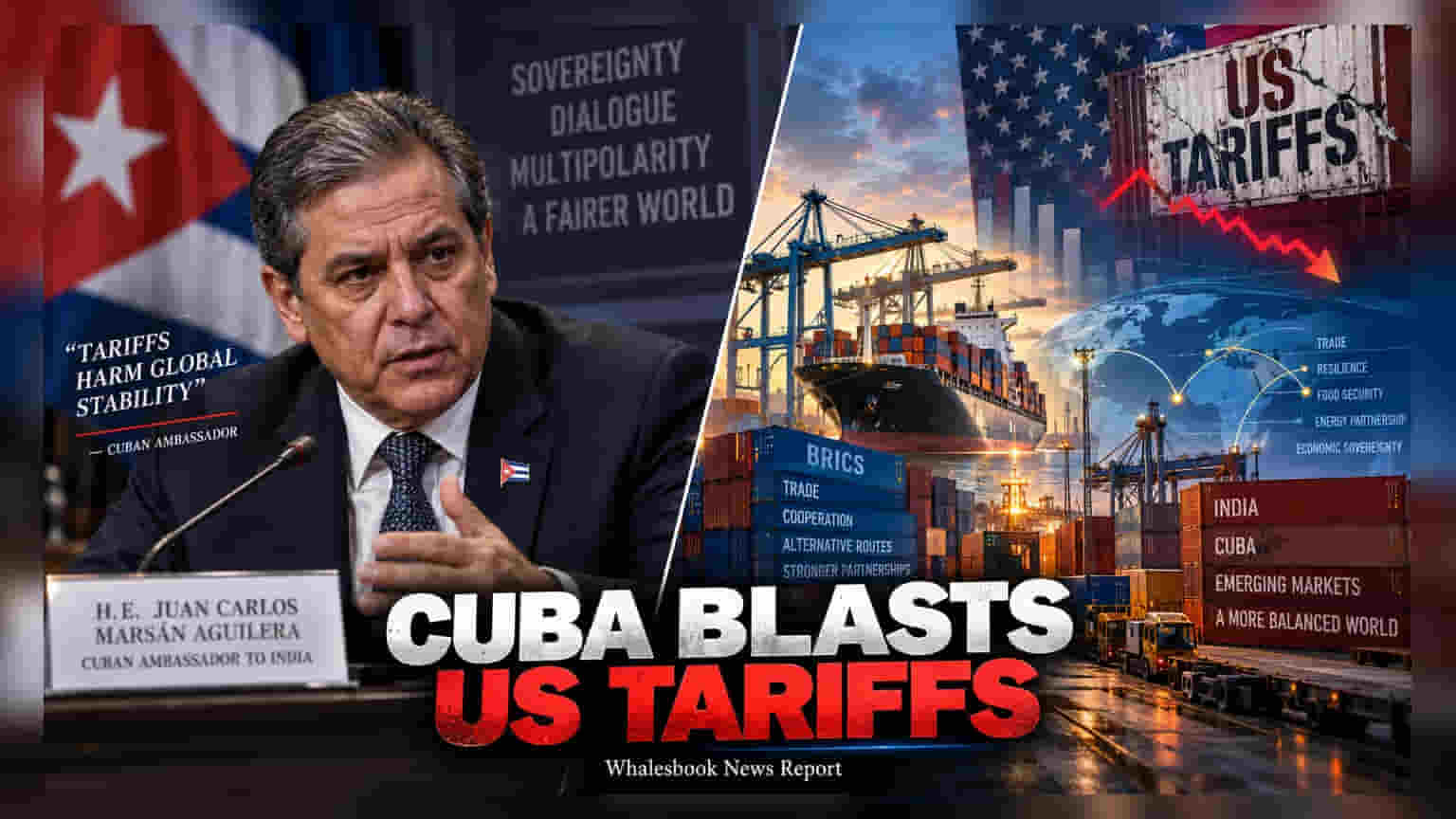
Cuban Ambassador to India, Juan Carlos Marsán Aguilera, has criticized U.S. tariff policies while emphasizing Cuba's alignment with BRICS nations. The remarks reflect growing efforts by emerging economies to secure trade sovereignty, a trend investors monitor as global supply chains and geopolitical alliances continue to evolve.
Cuban Ambassador to India, Juan Carlos Marsán Aguilera, recently addressed the changing nature of international trade during his visit to Odisha. The envoy expressed strong opposition to unilateral tariff policies imposed by the United States, describing them as politically motivated measures that disrupt global commercial stability. These comments come at a time when nations across the Global South are increasingly looking to reconfigure their trade dependencies to protect against external economic pressures.
The core of the Ambassador's message centered on the importance of the BRICS alliance. By framing Cuba’s inclusion as a partner country within the bloc as a strategic necessity, the envoy underscored a broader shift toward a multipolar economic framework. For international investors and market observers, this rhetoric highlights the ongoing efforts of emerging markets to create alternative trade routes and financial systems that are less reliant on traditional Western-led economic mandates.
While the direct trade volume between India and Cuba remains relatively modest, the diplomatic and strategic context is significant. India continues to navigate a complex balancing act, maintaining strong commercial ties with Western economies while actively participating in, and expanding, the BRICS forum. The Ambassador’s comments reflect the sentiment within the bloc regarding the need for insulation against sanctions and unilateral trade barriers, which are increasingly viewed as risks to sovereign economic growth.
From an investor perspective, this geopolitical positioning is important to track. As global supply chains face ongoing volatility, the formation and strengthening of alternative trade alliances like BRICS can influence policy decisions on tariffs, energy trade, and currency settlement. The Ambassador pointed specifically to the impact of U.S. policies on nations with ties to Russia, suggesting that such restrictions are driving countries to seek deeper integration within groups that offer more autonomy.
Moving forward, the primary monitorable for the market will be how these geopolitical alignments translate into actionable trade policies within the BRICS framework. Investors may track future developments related to cross-border payment mechanisms, potential trade agreements within the alliance, and how these shifts influence India’s diplomatic and commercial negotiations with both its Western partners and its BRICS counterparts.