

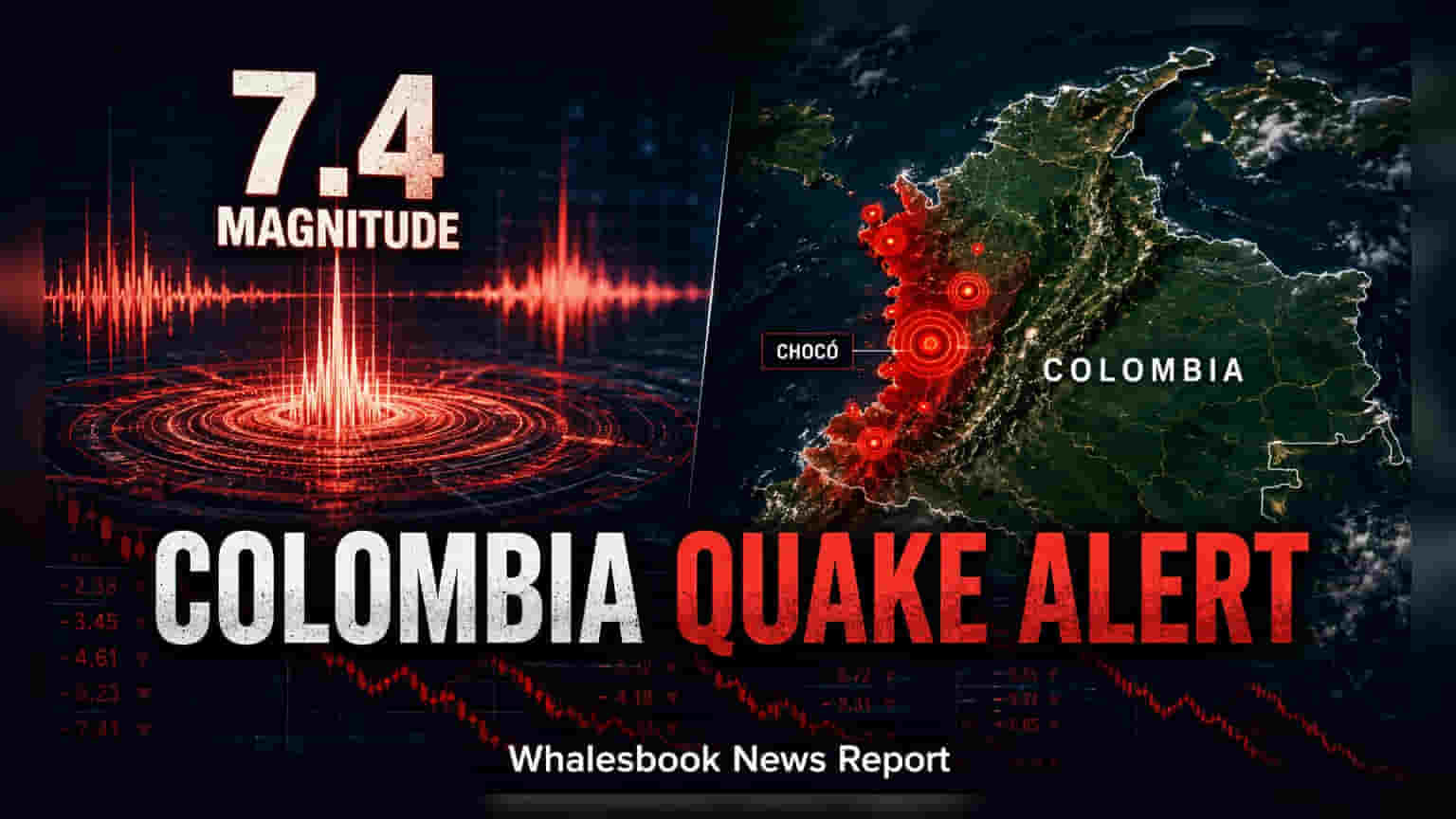
A significant earthquake struck Colombia on August 10, 2026, with reported magnitudes ranging between 6.8 and 7.4. Centered near San José del Palmar, the tremors caused widespread shaking and building evacuations in major cities. While no tsunami warning was issued and no major casualties were immediately reported, the event highlights potential risks for infrastructure and regional commodity supply chains.
A powerful seismic event shook Colombia on Monday, August 10, 2026, with tremors felt across the country. The earthquake originated in the Chocó department, near the municipality of San José del Palmar. While the US Geological Survey initially registered the event at a magnitude of 7.4, other international agencies, including the European-Mediterranean Seismological Centre, reported the intensity at a magnitude of 6.8. The depth of the tremor was recorded between 80 km and 115 km.
The earthquake’s impact was broad, with vibrations felt in major urban centers, including Bogotá, Medellín, and Cali. In these cities, public buildings, schools, and office structures were evacuated as a precautionary measure to ensure the safety of residents. Despite the significant shaking, authorities confirmed that no tsunami warning was issued for the coastal regions. As of the current updates, there have been no reports of catastrophic property damage or major loss of life, though local teams are continuing to assess structural integrity.
From an economic perspective, the event draws attention to the vulnerability of the region, which is located along the Pacific Ring of Fire. For global observers and stakeholders, Colombia serves as a significant player in the production and export of commodities such as oil, coal, and coffee. While initial reports suggest the damage is contained, natural disasters in these regions are monitored closely for potential disruptions to logistics, transport infrastructure, and utility networks. Such events can sometimes create temporary bottlenecks in the supply chain for materials that flow out of South American markets.
The primary concern for local authorities and the public now is the potential for aftershocks, which can cause further stress on buildings that may have been weakened by the initial tremor. The key monitorable for the coming days will be the results of infrastructure inspections, particularly regarding power grids, roads, and critical industrial facilities. Investors and market watchers typically track these assessments to gauge whether the event will have any lasting impact on regional business operations or if the economy will return to normal quickly.