

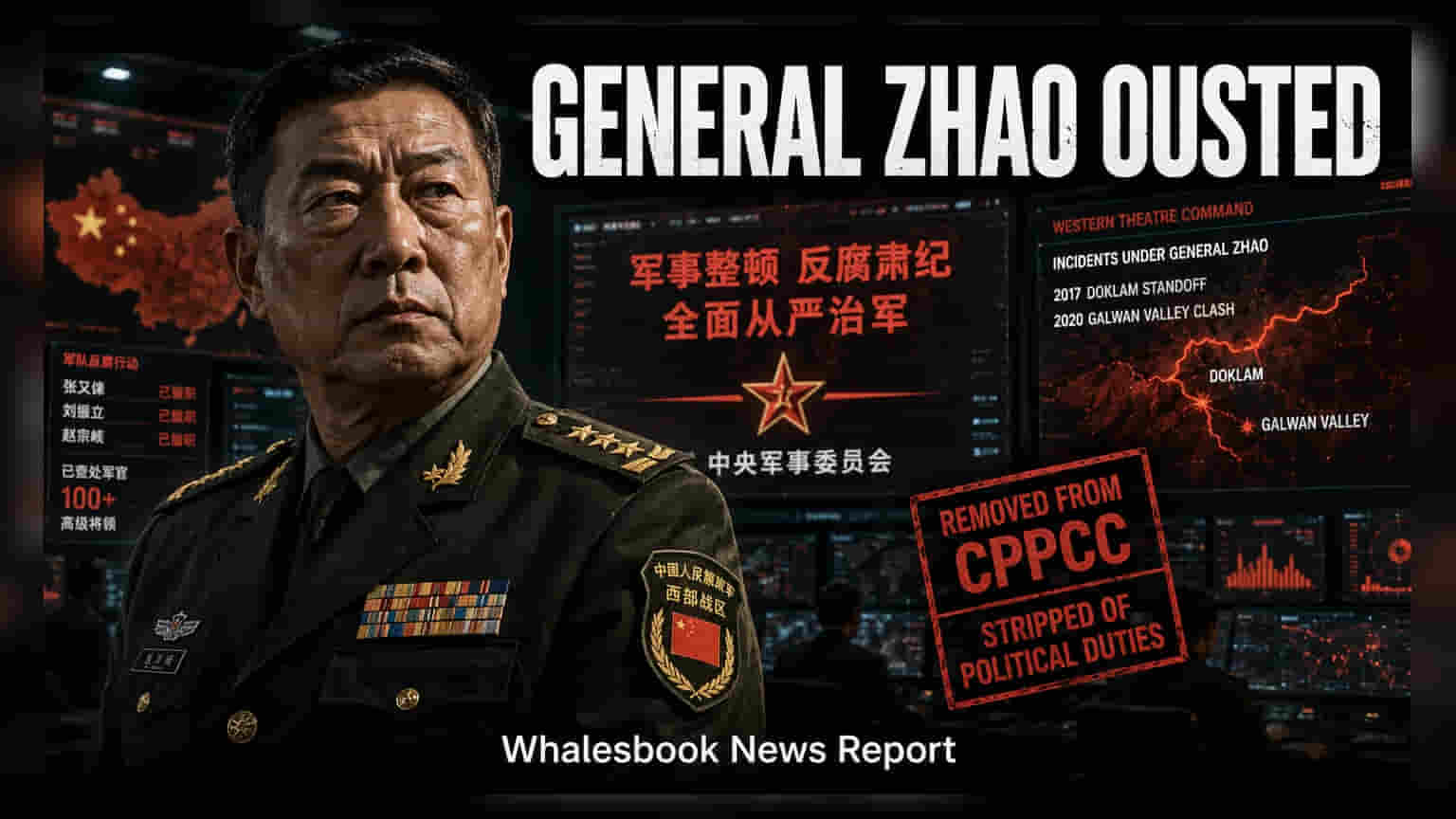
General Zhao Zongqi, who led the Western Theatre Command during the 2020 Galwan Valley conflict, has been removed from his political roles. This move is part of an ongoing purge within China's military leadership. For Indian investors, this event signals potential internal instability in the Chinese defense apparatus, a key monitorable for long-term regional geopolitical risks.
The Chinese government has stripped General Zhao Zongqi of his membership in the Chinese People's Political Consultative Conference (CPPCC) and relieved him of other political duties. General Zhao is well known in India for his leadership of the People’s Liberation Army (PLA) Western Theatre Command, where he presided over two significant border incidents: the 2017 Doklam standoff and the 2020 Galwan Valley clash.
This decision follows a series of removals within the top brass of the Chinese military. On August 28, 2026, the Central Military Commission also removed senior figures Zhang Youxia and Liu Zhenli from their posts as part of a wider investigation into discipline and law violations. President Xi Jinping’s ongoing campaign to purge the military of corruption and ensure absolute loyalty has now impacted over 100 senior officers according to various security assessments.
For Indian market observers and investors, the importance of this event lies in regional stability. Geopolitical tension along the Line of Actual Control has historically influenced market sentiment and government policy regarding defense spending and supply chain security. While the removal of a specific commander does not immediately change China's border policy, the scale of the leadership purge suggests a period of internal focus and restructuring for the Chinese military.
Investors typically view such shifts in Chinese military leadership as a source of uncertainty. Major changes in the command structure of a neighboring nuclear power can create risks for long-term economic planning and trade relations. Any sign of internal instability or a shift in the strategic procurement policies of the PLA may lead to policy adjustments that could impact regional security dynamics in the coming months.
The next important development to watch will be how the new leadership in the Western Theatre Command approaches border security and what, if any, changes in policy emerge from the Central Military Commission. The broader impact on regional peace and the continuity of defense-related policies remains a key area for analysis for those tracking the stability of the Indo-Pacific region.