

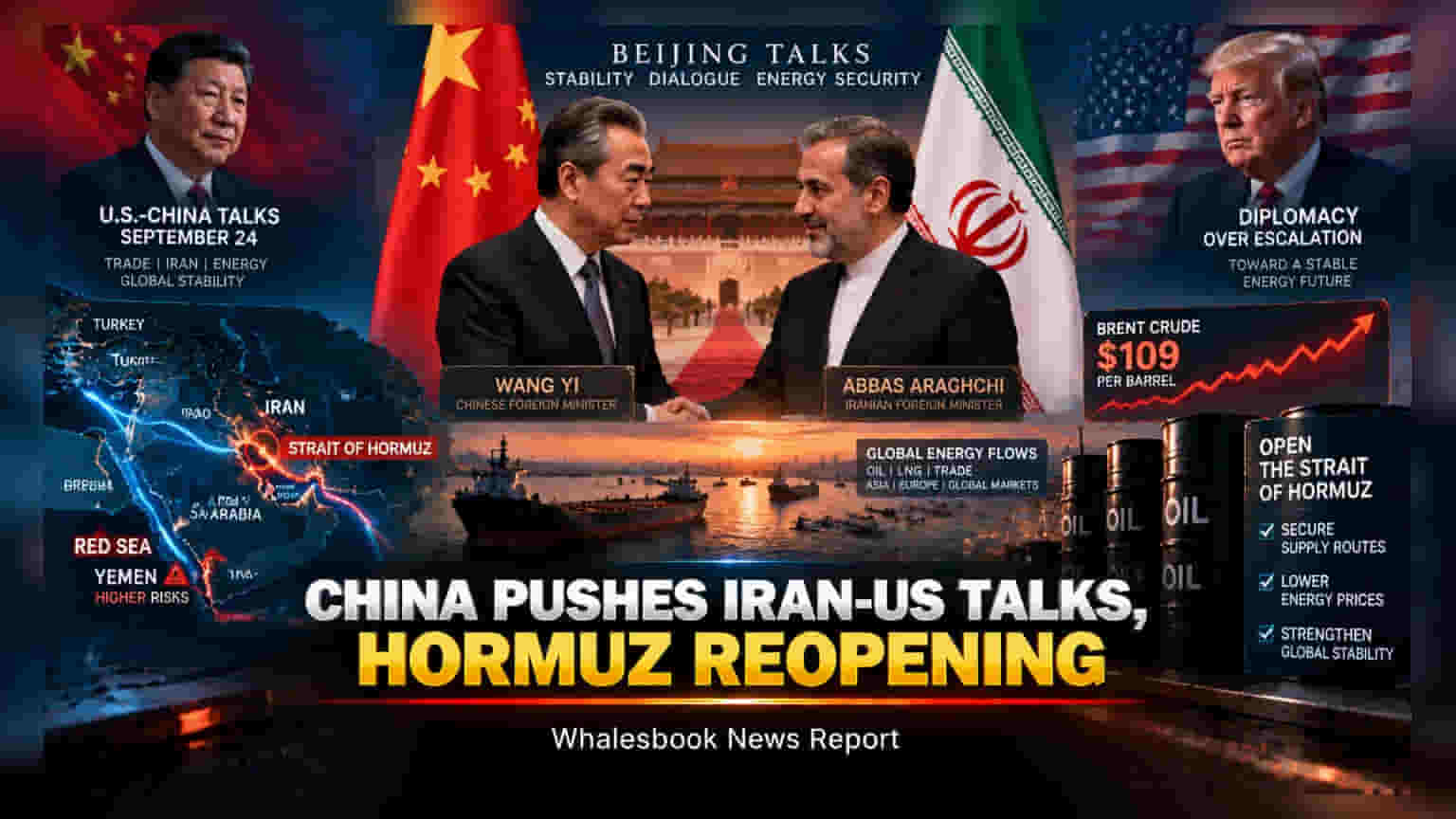
Chinese Foreign Minister Wang Yi met with Iranian counterpart Abbas Araghchi in Beijing, urging a return to the 'Islamabad Memorandum' diplomatic framework. With global energy supply chains under pressure and Brent crude trading near $109 per barrel, the diplomatic push aims to reopen the critical Strait of Hormuz ahead of next week’s U.S.-China summit.
Chinese Foreign Minister Wang Yi held high-level discussions in Beijing on September 16, 2026, with Iranian Foreign Minister Abbas Araghchi, centered on stabilizing energy routes and de-escalating regional tensions. The talks were primarily focused on the Strait of Hormuz, a vital maritime artery for global energy, which has seen repeated disruptions causing significant volatility in international fuel markets.
Beijing has urged both Tehran and Washington to return to the Islamabad Memorandum of Understanding, an interim diplomatic framework established in June 2026. This call for restraint comes as China—a major importer of Iranian oil—seeks to mitigate the economic risks posed by the ongoing conflict in the Middle East. The Chinese leadership is pushing for a resumption of substantive negotiations, hoping to prevent further escalation that could spill into Yemen and the Red Sea, threatening broader maritime trade.
Impact on Global Energy and Indian Economy
For investors, the developments in the Strait of Hormuz are directly linked to the current energy price environment. With Brent crude oil prices hovering near $109 per barrel, any prolonged closure or restriction of this waterway adds a significant geopolitical risk premium to the cost of energy. Disruption to shipping lanes forces tankers to seek longer, more expensive routes, which increases freight and insurance costs for crude oil shipments.
This inflationary pressure is particularly relevant for the Indian economy. As a large importer of crude oil, India is sensitive to supply chain bottlenecks in the Middle East. Elevated energy prices generally translate into higher import bills, which can put pressure on the rupee and influence domestic fuel inflation. Companies in energy-intensive sectors, such as logistics, manufacturing, and transport, often face margin pressure when oil prices spike, as they may struggle to fully pass on higher input costs to consumers.
Geopolitical Context and Future Monitorables
The diplomatic efforts in Beijing are occurring just one week before a critical meeting in Washington between Chinese President Xi Jinping and U.S. President Donald Trump, scheduled for September 24. U.S. Treasury Secretary Scott Bessent has indicated that discussions will cover Iran’s financial ties with Beijing, making this diplomatic initiative part of a larger, more complex set of negotiations between the world’s two largest economies.
Investors will likely track whether these talks result in a durable reopening of the Strait of Hormuz. A successful resolution could lower the geopolitical risk premium currently embedded in oil prices, potentially easing some of the inflationary fears that have impacted global markets throughout the year. Conversely, if tensions persist or expand, the risk of higher shipping costs and sustained energy supply volatility will remain a central theme for equity and commodity markets. The key monitorable remains the outcome of the upcoming U.S.-China summit and any tangible progress on the Islamabad Memorandum framework in the coming weeks.