 Whalesbook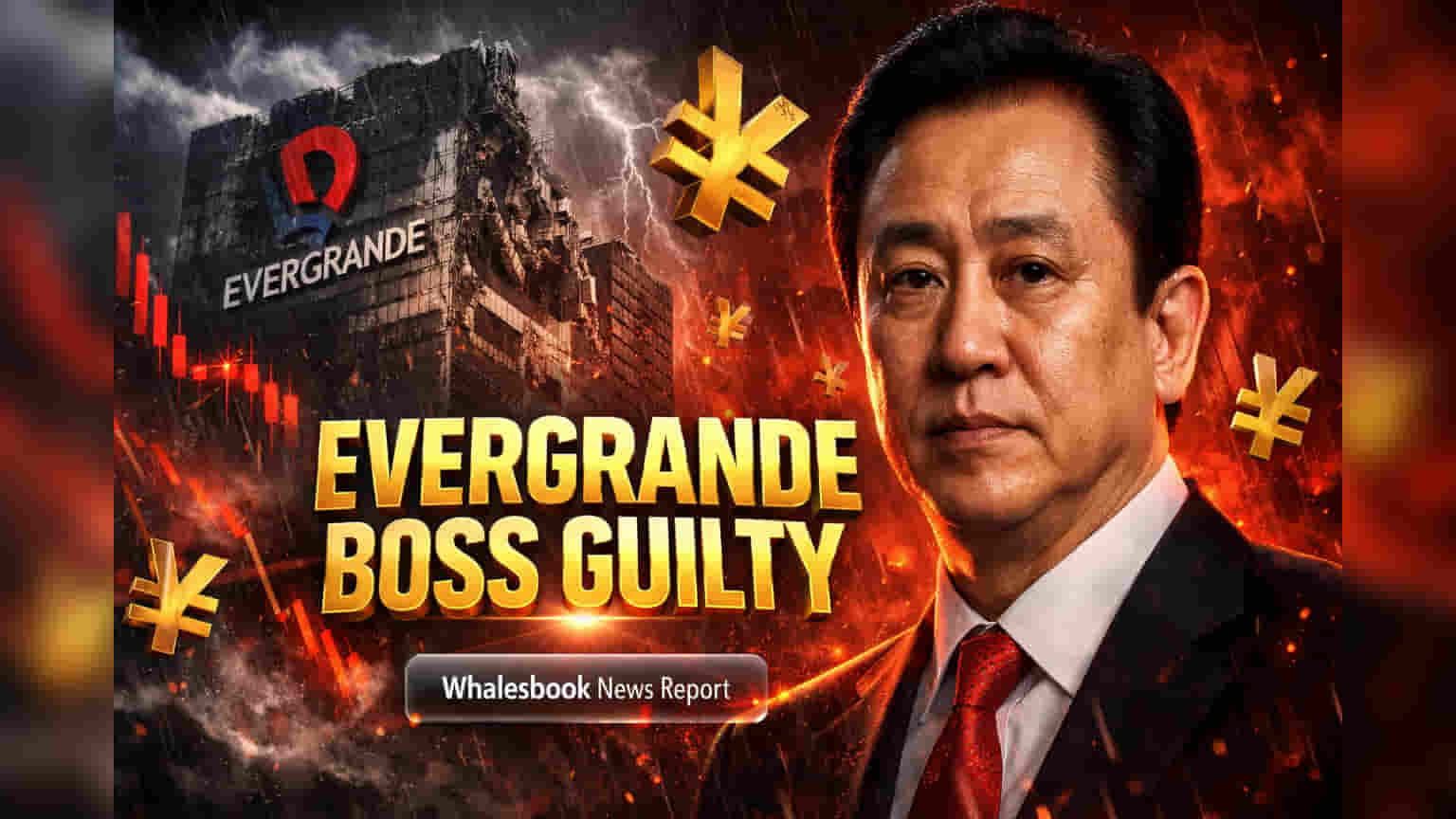


Hui Admits Guilt, Evergrande Empire Ends
Hui Ka Yan, founder of China Evergrande Group, has pleaded guilty to charges of fundraising fraud and bribery. The plea, entered on April 14, 2026, follows three years of investigation and detention. The company, now in liquidation, had liabilities exceeding $300 billion. This figure is comparable to Finland's projected 2025 GDP. Evergrande's plea officially closes its chapter. Hui's plea provides a judicial end to the saga, which sent shockwaves through global financial markets and exposed the shaky foundations of China's real estate industry.
From Richest Man to Ruin: The Scale of the Collapse
The story of Hui Ka Yan and Evergrande serves as a stark example of China's economic changes and regulatory actions. In 2017, Hui was Asia's richest man with a net worth of $45.3 billion. By 2023, his net worth had dropped to an estimated $3 billion, showing the massive wealth loss caused by Evergrande's collapse. Evergrande's sales revenue in 2020 reached $77.77 billion. Aggressive debt-fueled expansion and low-margin sales created a fragile structure. A regulatory crackdown on developer borrowing, starting around 2020, exposed Evergrande's deep problems, leading to defaults in 2021 and liquidation in 2024.
Other major developers face similar challenges. Country Garden, a former rival, reported a 2025 net profit mainly from debt restructuring, showing that operational recovery is still uncertain. Other players, including Vanke, posted record losses, highlighting a sector-wide struggle against entrenched oversupply and declining homebuyer confidence. S&P Global Ratings forecasts primary property sales to fall 10%-14% in 2026, a revised forecast suggesting the downturn is deeper and more structural than expected. Persistent oversupply and price pressure are worsened by cautious bank lending. While banks' real estate exposure is decreasing, it remains key for financial stability. Banks like Bank of China (Hong Kong) and Bank of East Asia have notable exposure to commercial real estate.
Sector-Wide Risks Persist Despite Plea
While Hui Ka Yan's guilty plea offers a legal end to his personal involvement, the systemic risks from Evergrande's collapse and the wider property downturn are not over. The large amount of unsold housing in China is a structural problem. S&P Global Ratings notes only government intervention can absorb excess inventory. This suggests market forces alone cannot create a sustainable recovery. The property sector, historically more than a quarter of China's economy, has seen annual sales volumes halve since its 2021 peak. This prolonged crisis continues to strain developers, banks, and local governments, creating a complex web of interconnected financial vulnerabilities. Regulators had warned Evergrande about its debt levels before its collapse, fearing contagion. However, the eventual fallout showed these warnings were not enough to prevent disaster. Restoring genuine homebuyer confidence long-term remains a challenge, as falling prices cause a cycle of delayed purchasing decisions.
China's Property Market Faces Slow Stabilization
Analysts expect a long period of stabilization for China's property sector. S&P Global Ratings forecasts sales declines of 10%-14% for 2026, while UBS predicts property sales, new starts, and investment to fall 5%-10% in 2026. The Chinese government has changed its policy approach, shifting from halting the market's slide to actively stabilizing it, guided by 'good housing and new models'. This involves managing new construction, clearing existing inventory, and potentially using government entities to absorb unsold properties. However, the path to genuine recovery is expected to be slow. Efforts will focus on qualitative improvement over quantitative growth, signaling a rebalancing of the sector within China's economic strategy.