

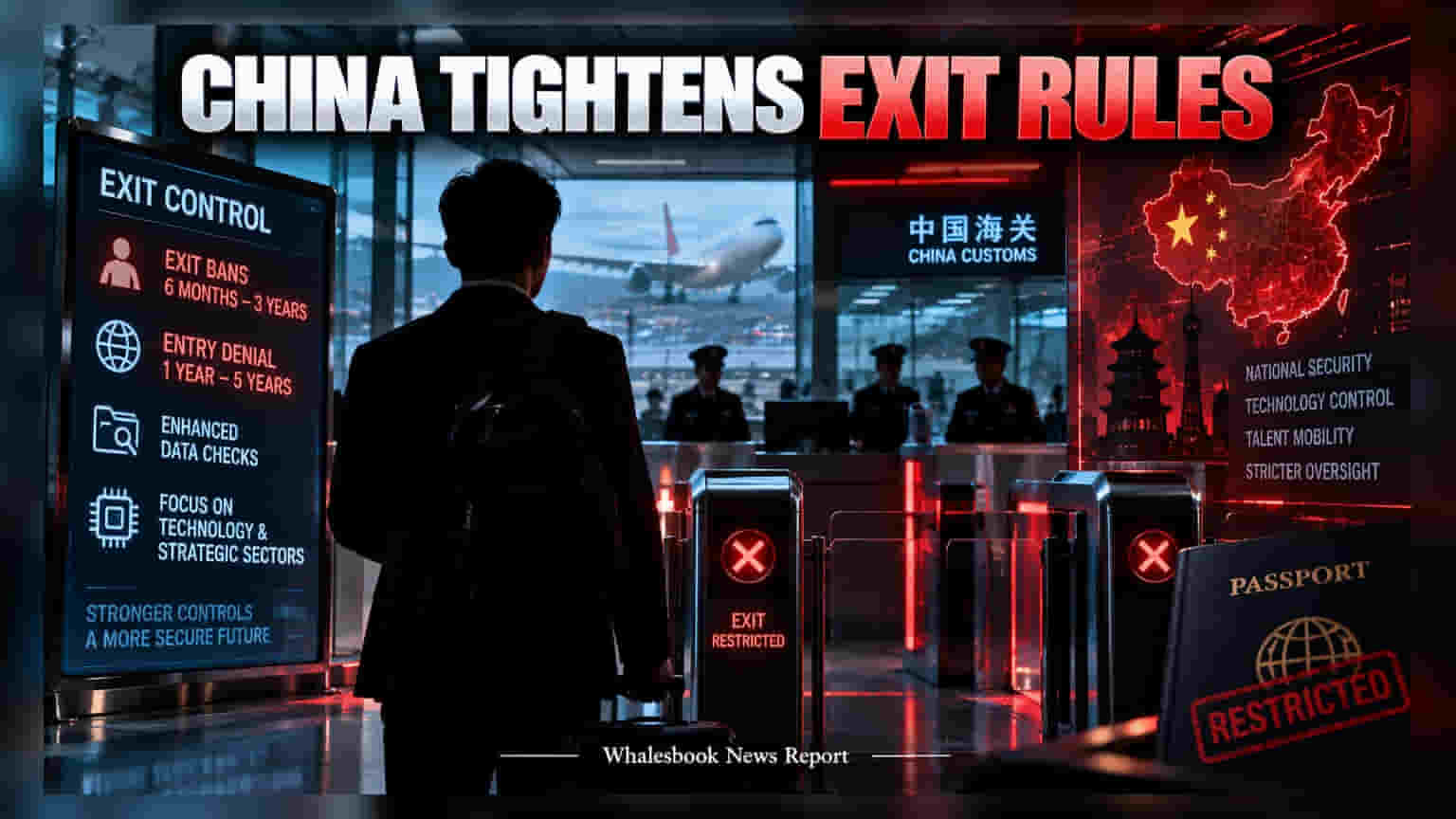
China has implemented State Council Order No. 841, allowing authorities to impose exit bans on citizens linked to technology security violations and deny entry to foreigners over visa inaccuracies. These rules create new operational uncertainties for multinational companies and tech firms that rely on the free movement of professional talent and proprietary data.
The Chinese government has officially activated new exit-and-entry regulations, known as State Council Order No. 841, as of September 15, 2026. The policy grants immigration and security authorities broader legal powers to manage the movement of individuals, specifically targeting those deemed to threaten national industrial or technological security. For businesses and investors, the key concern is how these rules will affect the mobility of professionals in the technology and semiconductor sectors.
Under the new legal framework, Chinese authorities can impose exit bans lasting between six months and three years on citizens suspected of violating export control or technology import-export laws. The scope of these regulations also extends to foreign nationals. Authorities now have the mandate to deny entry into China for a period of one to five years if they determine that a visa application contains false information. Furthermore, immigration officials have been granted increased access to electronic data and documentation to verify the stated purpose of travel.
For international companies operating in China, these regulations introduce new operational risks. Many multinational firms rely on the ability to transfer staff across borders to manage technical projects, integrate global teams, and secure proprietary knowledge. If companies face difficulty moving key personnel in or out of the country due to these stricter immigration controls, it could lead to project delays or staffing challenges. The broad language used in the regulation has raised questions among business groups regarding how strictly or consistently these rules will be applied at the local level.
Companies with significant exposure to the Chinese technology sector, including many Taiwanese firms and global multinationals, are monitoring the situation to see if this policy leads to a decline in professional mobility. While the government maintains that the law is designed to protect legitimate national security interests, the uncertainty surrounding potential discretionary enforcement is prompting many firms to assess their talent management strategies.
Investors may track whether international companies issue updates regarding their ability to maintain cross-border operations or if there is any evidence of project execution delays involving technical teams in the region. The focus for stakeholders will remain on whether these measures lead to a disruption in the flow of skilled talent, which is critical for maintaining competitiveness in the high-tech and manufacturing industries.