 Whalesbook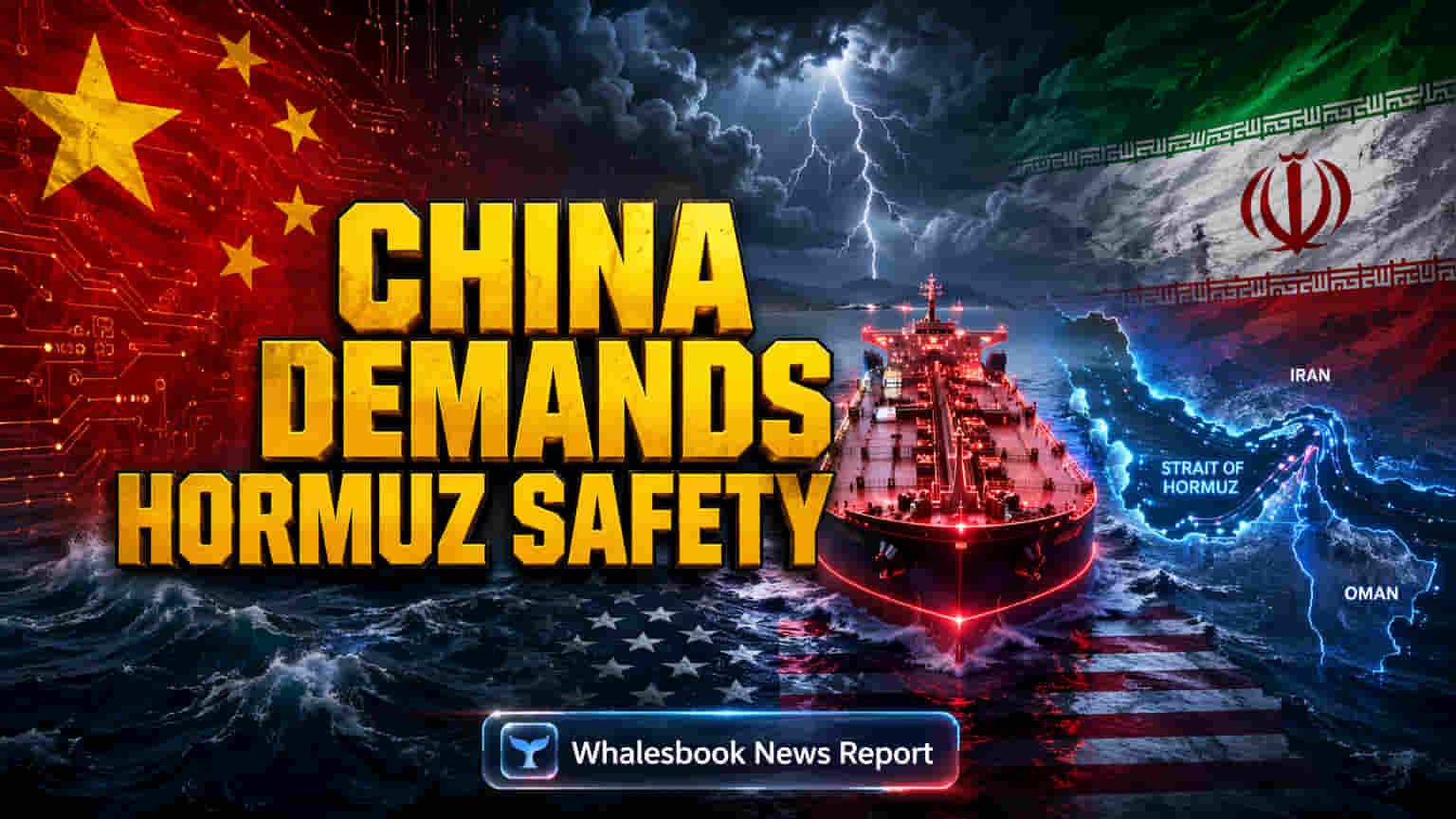


China's Direct Appeal
The direct call from Beijing to Tehran highlights the growing importance of the Strait of Hormuz as a key issue in global energy security talks. This heightens worries about supply chains amid the US-Iran tensions and naval blockade.
Hormuz: A Vital Chokepoint
China's formal request for safe passage through the Strait of Hormuz marks a more active diplomatic approach, driven by its heavy reliance on energy imports. The Strait, a vital 55-km maritime artery, facilitates roughly 20% of global oil trade, adding complexity to the situation. Beijing's intervention occurs alongside a US naval blockade around Iranian ports and Pakistan's mediation efforts for US-Iran talks. Brent crude is trading near $95 a barrel as of April 16, 2026, showing ongoing supply worries. Prices had already topped $100 and hit $126 in March 2026 because of the crisis. This situation is being called the biggest disruption to world energy supply since the 1970s.
China Boosts Energy Security
China's increased involvement underscores its deep strategic interest in the Strait. As a major importer of Iranian oil and Gulf energy, Beijing is taking steps to buffer potential disruptions, including boosting its strategic oil reserves to an estimated 1.2 billion barrels, enough for about 109 days of cover. China's Defense Minister, Dong Jun, stated Chinese naval forces will protect the waterway to secure national interests, showing a stronger commitment to regional energy security. Historically, threats to transit through the Strait have caused major oil price jumps; for instance, tensions in June 2025 saw Brent rise to $74 per barrel. The EIA forecasts Brent prices to peak at $115 per barrel in the second quarter of 2026 before a slow decrease, depending on supply recovery. The crisis also disrupts key non-energy goods like methanol and aluminum, affecting manufacturing and the green energy transition. Analysts at Gelber Associates say that while a full outage is no longer priced in, uneven recovery is keeping prices higher, leading to ongoing volatility.
Risks of Escalation
The growing competition over the Strait of Hormuz poses significant risks. Iran sees control of the waterway as a key deterrent and has called it a "red line," possibly increasing its response to actions it views as violations. Many analysts question the practicality of Iran's talk about potential "Hormuz tolls," seeing it as economically unrealistic and legally difficult, which could hurt Iran long-term. The broad US naval blockade, aimed at pressuring Tehran, could worsen regional tensions and lead to wider conflict. The vulnerability of global supply chains, clearly shown by this crisis, means any misstep or uncontrolled escalation could cause severe and long-lasting energy shortages. While diversifying global energy sources is a long-term strategy, it offers little immediate help against sudden chokepoint disruptions. The reliance on a narrow strait also concentrates risk, seen in the significant rise in war-risk insurance premiums for ships in the area.
Market Outlook
Goldman Sachs expects ongoing two-way risks for oil prices, with uncertainty over Hormuz transit being a main factor for price increases. Despite ongoing diplomatic efforts by Pakistan and China, the EIA forecasts that even as Strait flows slowly restart, prices will stay higher into 2027 compared to pre-crisis levels, with Brent averaging around $76 per barrel. China's firm stance suggests a possible shift in global energy diplomacy, potentially creating new power blocs and ongoing market instability as countries focus on energy security in a complex geopolitical climate.