

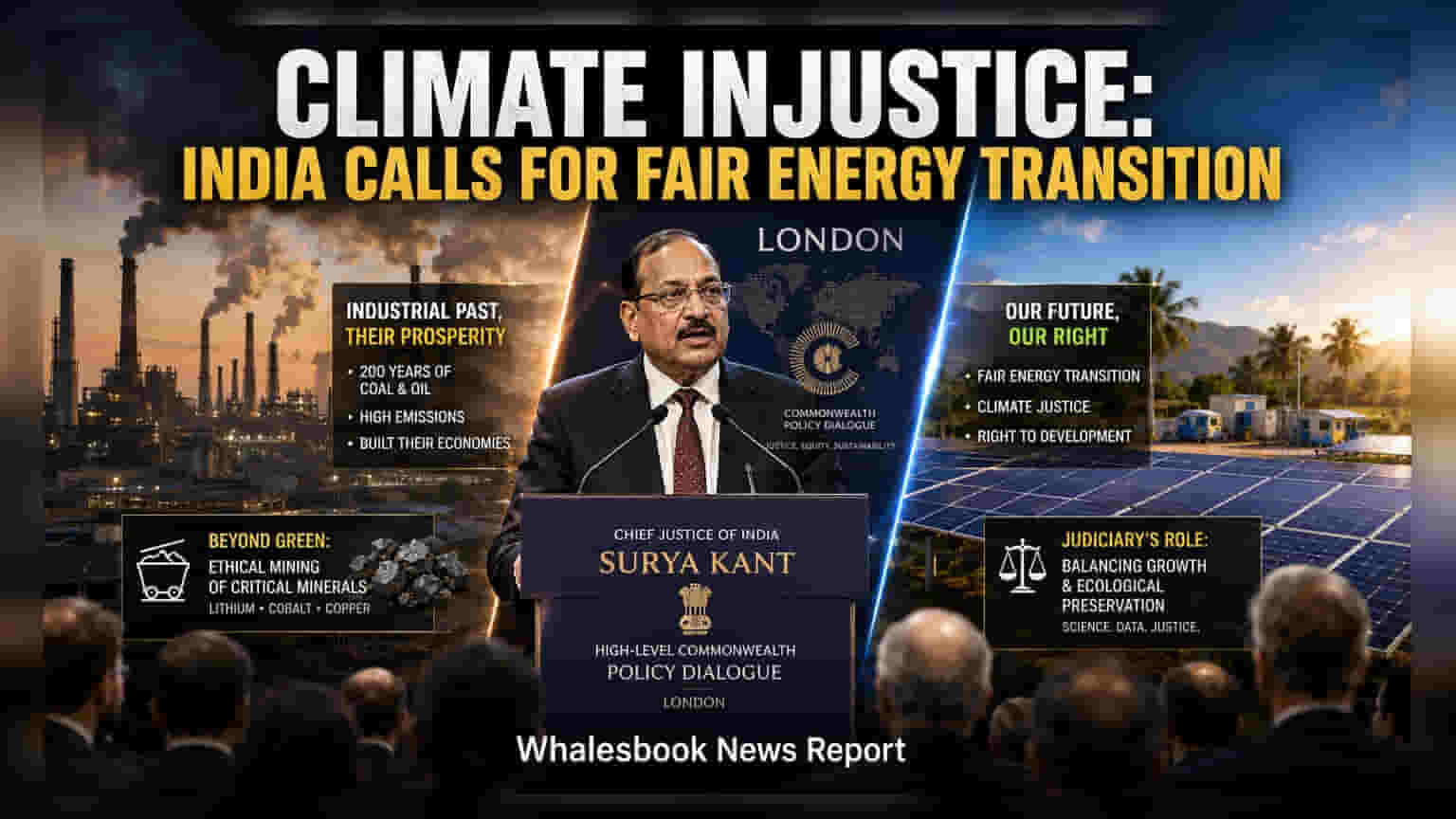
Chief Justice of India Surya Kant has questioned international climate mandates, noting that developing nations unfairly bear the cost of green transitions. Speaking at a Commonwealth dialogue in London, he highlighted the environmental and social risks of critical mineral extraction. For investors, this underscores the growing legal focus on the sustainability of supply chains in renewable energy, which may influence future regulatory standards.
Chief Justice of India (CJI) Surya Kant has raised concerns regarding the fairness of global climate policies, arguing that the current framework places an unequal burden on developing nations. During his address at the High-Level Commonwealth Policy Dialogue in London this week, the CJI pointed out a disconnect between the development trajectories of wealthy nations and the decarbonization pressures currently placed on emerging economies.
His remarks centered on the historical context of industrial growth. Justice Kant noted that many developed economies built their prosperity over two centuries using coal and oil, yet these same nations are now demanding rapid transitions to renewable energy from developing states. For Indian investors, this commentary highlights a shift in how legal systems may view compliance and climate targets. Companies operating in high-emission sectors or energy-intensive industries may need to navigate an increasingly complex landscape where judicial bodies are balancing national development goals against international environmental requirements.
Beyond the broad policy debate, the CJI touched upon a critical issue for the renewable energy and electric vehicle (EV) supply chain: the procurement of raw materials. The global push for clean energy has exponentially increased demand for minerals such as lithium, cobalt, and copper. Justice Kant warned that the transition to green technology must not replace one form of exploitation with new environmental or social hardships in the regions where these minerals are mined.
This perspective has indirect implications for the mining and manufacturing sectors. As courts increasingly examine the entire lifecycle of green technologies—from mineral extraction to final product—companies may face stricter scrutiny regarding their supply chain ethics and environmental impact. This legal focus could lead to more robust regulatory frameworks, potentially affecting project costs, timelines, and operational compliance for firms involved in green energy infrastructure.
Finally, the CJI emphasized that the judiciary’s role is expanding as courts are now required to process complex scientific data, hydrology, and emission metrics. He urged Commonwealth nations to enhance judicial cooperation to share effective legal frameworks that reconcile growth with ecological preservation. For market observers, the next important development to watch will be how these judicial philosophies translate into specific legal precedents or regulatory requirements for green projects, which could impact the long-term feasibility and risk profiles of large-scale renewable investments.