

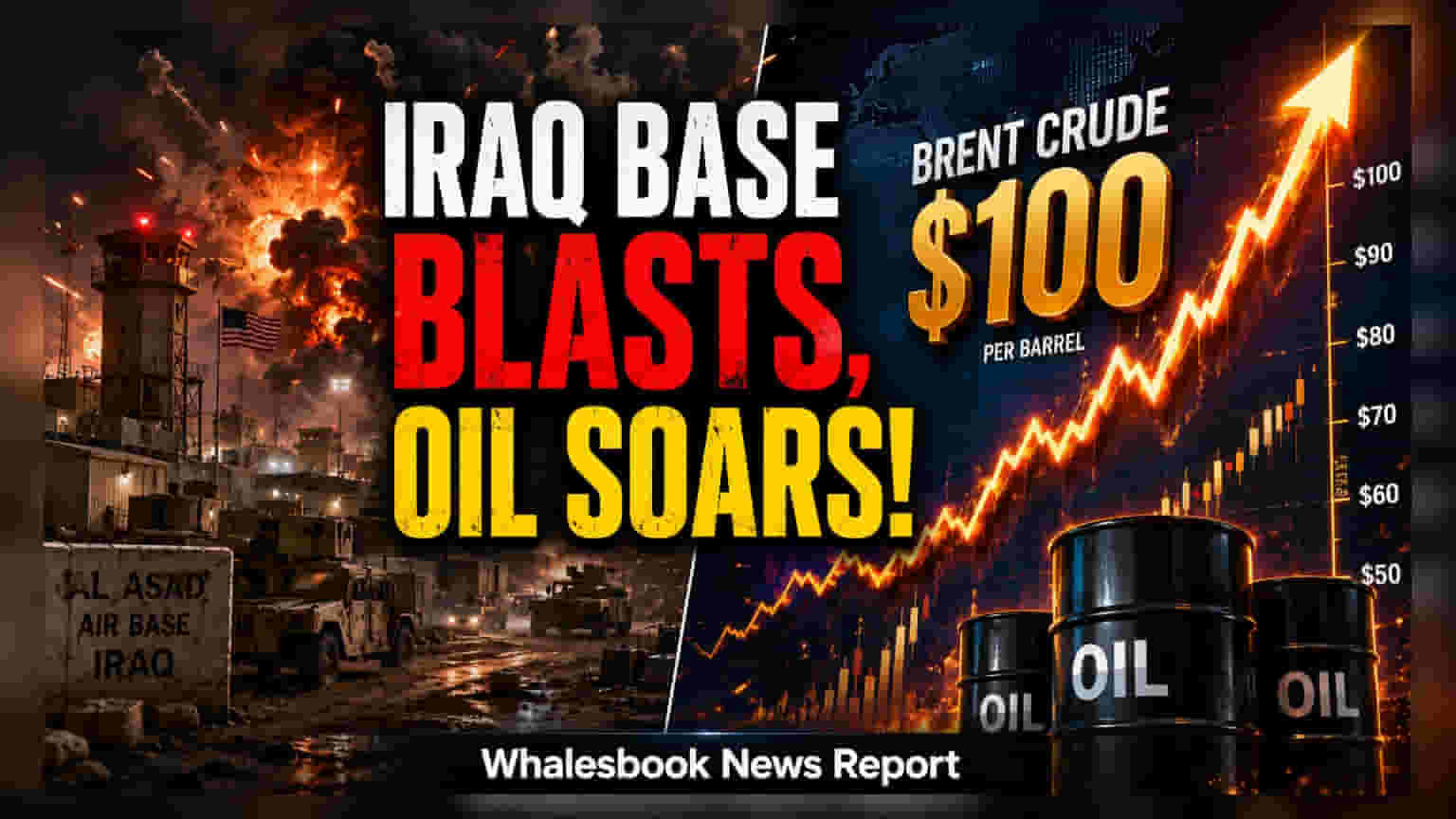
Brent crude prices jumped over 6% to $100 per barrel following reports of explosions in Iraq and ongoing U.S. strikes in Iran. The escalation threatens the stability of the Strait of Hormuz, a critical global chokepoint for energy supplies. This surge in oil prices poses a significant risk to global trade and could pressure the margins of Indian oil-marketing companies and transport-heavy sectors.
Detailed Coverage
Global oil markets witnessed a sharp reaction on Friday as Brent crude futures climbed more than 6% to touch the $100 per barrel mark. This price surge follows reports of explosions near a military base in northern Iraq, coinciding with a series of U.S. military strikes across multiple regions in Iran. The situation marks a heightened state of conflict in a region that is central to the world's energy infrastructure.
Impact on Global Oil Transit
The Strait of Hormuz, which sits at the center of these tensions, is a vital maritime corridor that handles approximately one-fifth of the total global supply of oil and gas. Any significant disruption in this waterway risks creating severe supply-side constraints for global energy markets. Adding to the logistical uncertainty, reports indicate that Iran-backed Houthi rebels have targeted Saudi oil tankers in the Red Sea. This creates a dual threat to two of the world's most critical shipping lanes: the Strait of Hormuz and the Bab el-Mandeb Strait.
For Indian investors, these developments carry significant weight. India is a major importer of crude oil, and a sustained increase in global prices typically impacts the country's import bill and can weigh on the profit margins of domestic oil-marketing companies (OMCs) if they are unable to pass these costs to consumers. Additionally, sectors such as aviation, logistics, and road transport often see their operating costs rise when fuel prices escalate, potentially impacting their bottom lines.
Regional Conflict and Diplomatic Tensions
The U.S. military operations, which have now spanned 13 consecutive nights, are described by the U.S. Central Command as a strategy to diminish Iran's capacity to threaten maritime commerce. Official reports from Iranian state media have noted casualties across several provinces, including sites with naval assets and infrastructure in Isfahan and Khuzestan. Meanwhile, Iraqi leadership has expressed concern over their territory being used in the conflict, emphasizing a push for diplomatic resolution as these events unfold.
Investors should closely track the volatility in crude oil prices in the coming days, as sustained high prices can influence domestic inflation and interest rate policy expectations. Key monitorables include any further statements from global energy agencies regarding supply continuity and potential announcements from the Indian government regarding fuel pricing or inventory management. Market participants will also be watching for any signs of de-escalation that might stabilize oil futures from these elevated levels.