

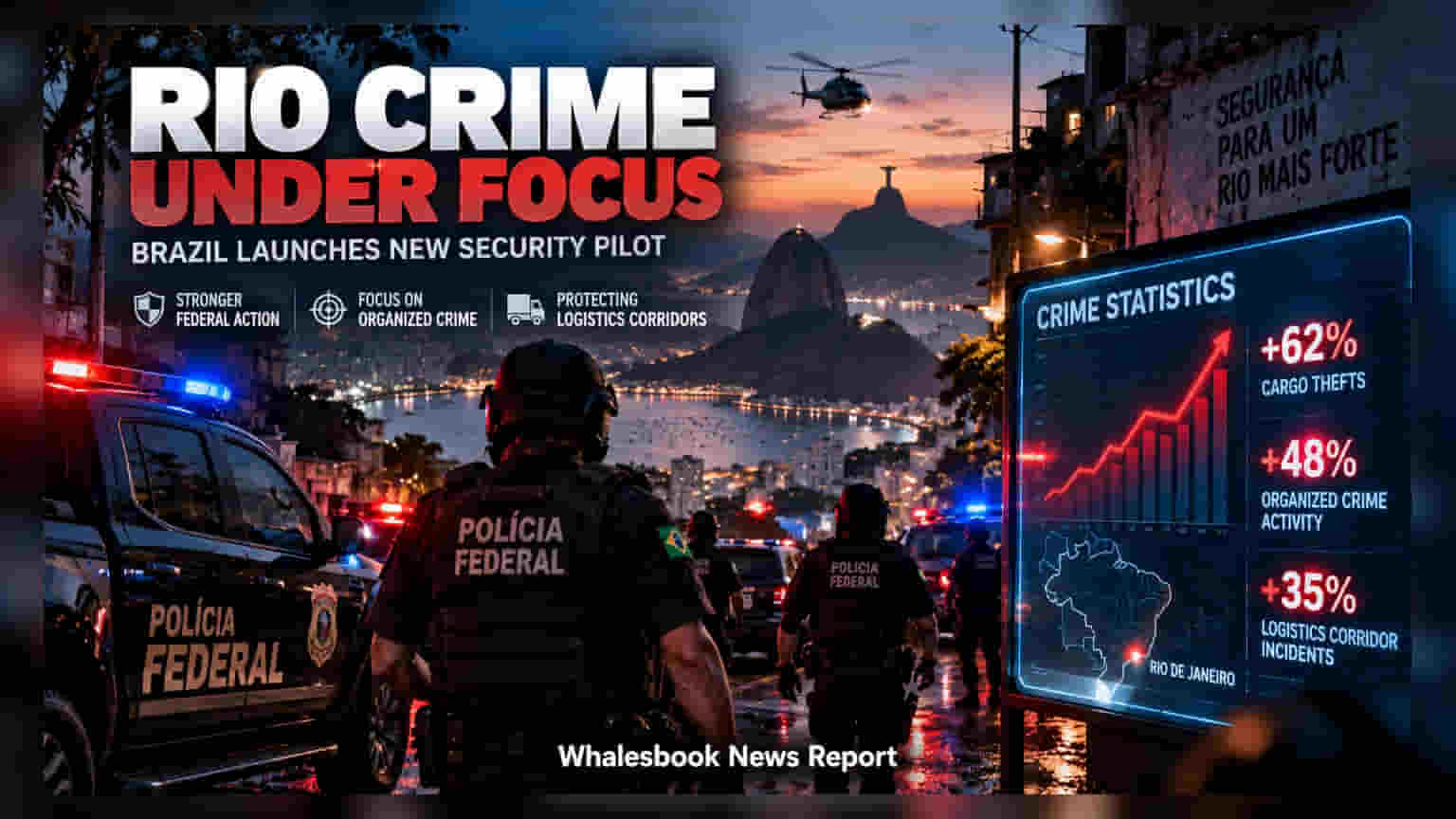
President Luiz Inácio Lula da Silva has introduced a federal security pilot in Rio de Janeiro to reduce cargo theft and illegal trade. This move aims to improve the business environment in the emerging market, following a USD 2 billion national security investment made earlier this year.
Brazil’s federal government has initiated a new security pilot program in Rio de Janeiro, marking a strategic shift in how the country manages internal security. The initiative is designed to curb organized crime, with a specific focus on protecting logistics corridors often plagued by cargo theft and illicit trade. By centralizing federal authority, the program intends to improve intelligence sharing and coordinate joint operations between local, state, and federal police forces.
For investors monitoring emerging markets, this development is significant because local security and infrastructure stability directly impact the cost of doing business. Persistent crime, particularly in key economic hubs like Rio de Janeiro, often forces companies to spend more on private security and supply chain risk management. By targeting the financial networks behind these criminal groups rather than relying only on traditional policing, the government is attempting to tackle the root causes of the insecurity that complicates operational planning for businesses in the region.
This new pilot is part of a broader push to increase federal influence in public safety. Under the current 1988 Constitution, security responsibilities are primarily handled by state governments, which has historically led to fragmented enforcement. President Lula’s administration aims to test this model in Rio, with the expectation of potentially rolling it out as a national standard if the pilot proves successful. This follows a major USD 2 billion anti-crime project launched earlier this year that focused on upgrading prisons and homicide investigation units.
While the objective is to create a more stable environment for commerce and citizens, the strategy faces notable challenges. There is political tension regarding the shift of power from states to the federal government, which could lead to administrative hurdles or resistance from local leadership. Furthermore, the effectiveness of such government programs in Brazil has historically been difficult to predict, as organized crime groups often adapt to new enforcement tactics.
Investors should track whether this pilot leads to a measurable decrease in cargo theft and criminal activity. Success could improve Brazil’s long-term business risk profile, while continued volatility in these sectors might necessitate that companies maintain higher risk premiums and security expenditures. The government's ability to execute this program without significant political friction will be the next key monitorable.