

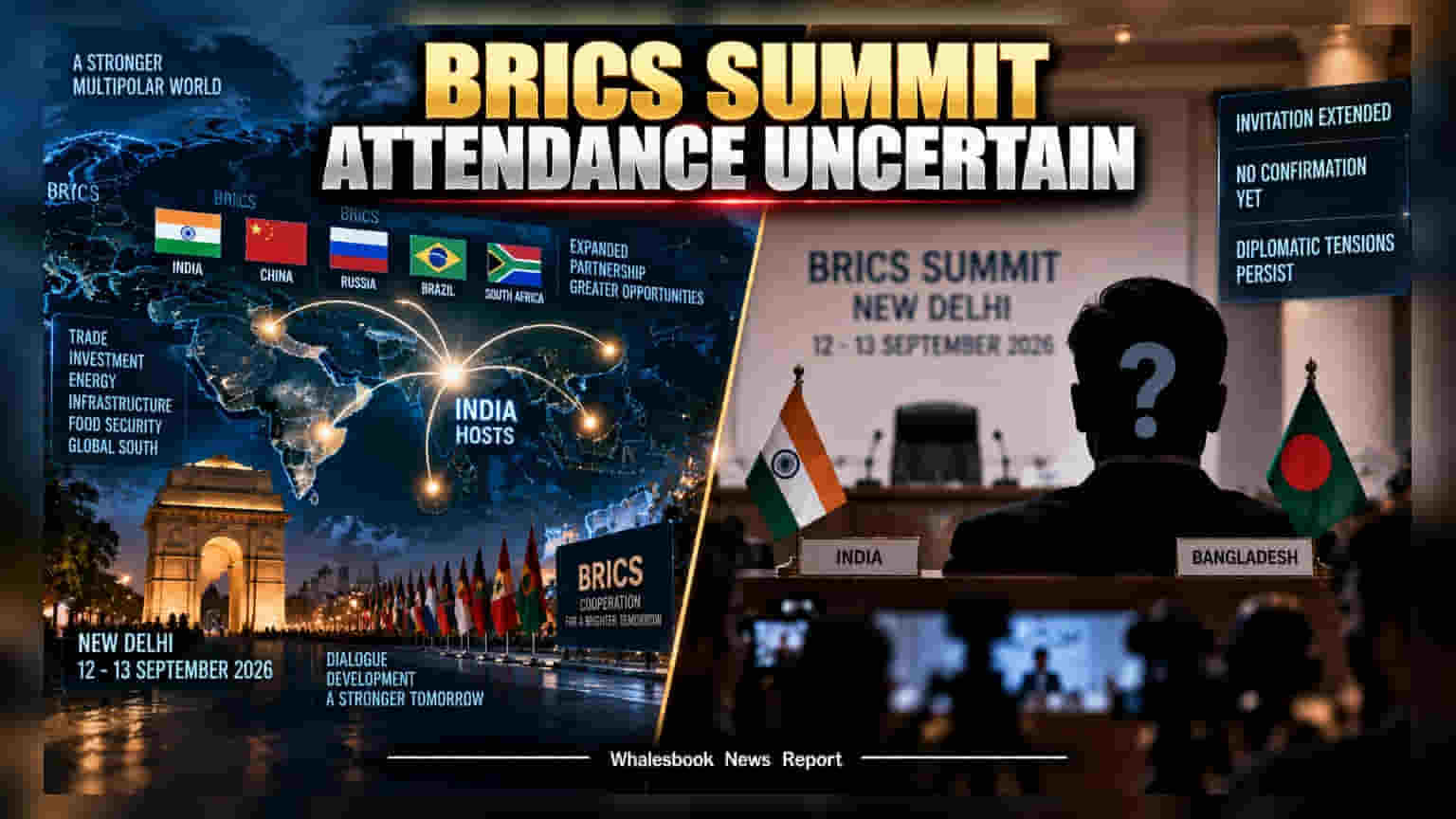
Bangladeshi Prime Minister Tarique Rahman has not yet confirmed his participation in the BRICS summit, scheduled for September 12–13 in New Delhi. The uncertainty underscores ongoing diplomatic friction following the political transition in Bangladesh in August 2024. For investors, the lack of clarity signals caution in bilateral ties, which are vital for regional trade, infrastructure projects, and supply chain stability.
The BRICS summit, hosted by India in New Delhi from September 12 to 13, faces a significant diplomatic question mark. Bangladeshi Prime Minister Tarique Rahman has been invited to attend the outreach session in his capacity as the current chair of the Bay of Bengal Initiative for Multi-Sectoral Technical and Economic Cooperation, or BIMSTEC. However, as of September 9, officials in Dhaka have not provided a definitive confirmation regarding his travel plans.
This hesitation reflects the current, cautious state of diplomatic relations between the two neighbors. The cooling of ties follows the political transition in Bangladesh in August 2024, which saw the ouster of former Prime Minister Sheikh Hasina. The ongoing presence of the former leader in India remains a sensitive topic that continues to influence bilateral engagements. While India has sought to engage regional partners through the BRICS platform, the silence from Dhaka highlights the challenges in managing these high-stakes diplomatic optics.
For the Indian market and regional investors, the state of India-Bangladesh relations is a relevant factor to monitor. The two nations share deep economic ties, including significant cross-border trade, energy cooperation, and joint infrastructure development projects. Any prolonged uncertainty in diplomatic communication can influence sentiment regarding regional stability, which is often a backdrop for cross-border business operations. Investors typically watch for signs of normalized dialogue, as this provides a clearer outlook for logistics, textiles, and energy sectors that rely on smooth connectivity between the two nations.
India, acting as the current chair of BRICS, is using the forum to address global economic concerns and foster cooperation among emerging economies. The inclusion of new members has expanded the bloc's reach, representing a substantial portion of global GDP and international trade. The potential absence of a key partner like Bangladesh from the outreach session would be a notable gap in these efforts.
The immediate monitorable for market participants will be any official communication from either New Delhi or Dhaka regarding the Prime Minister’s travel status. Should the visit proceed, it may signal an attempt to compartmentalize specific diplomatic tensions from broader regional economic cooperation. Conversely, a continued lack of high-level engagement may suggest that bilateral relations will require more time to stabilize.