

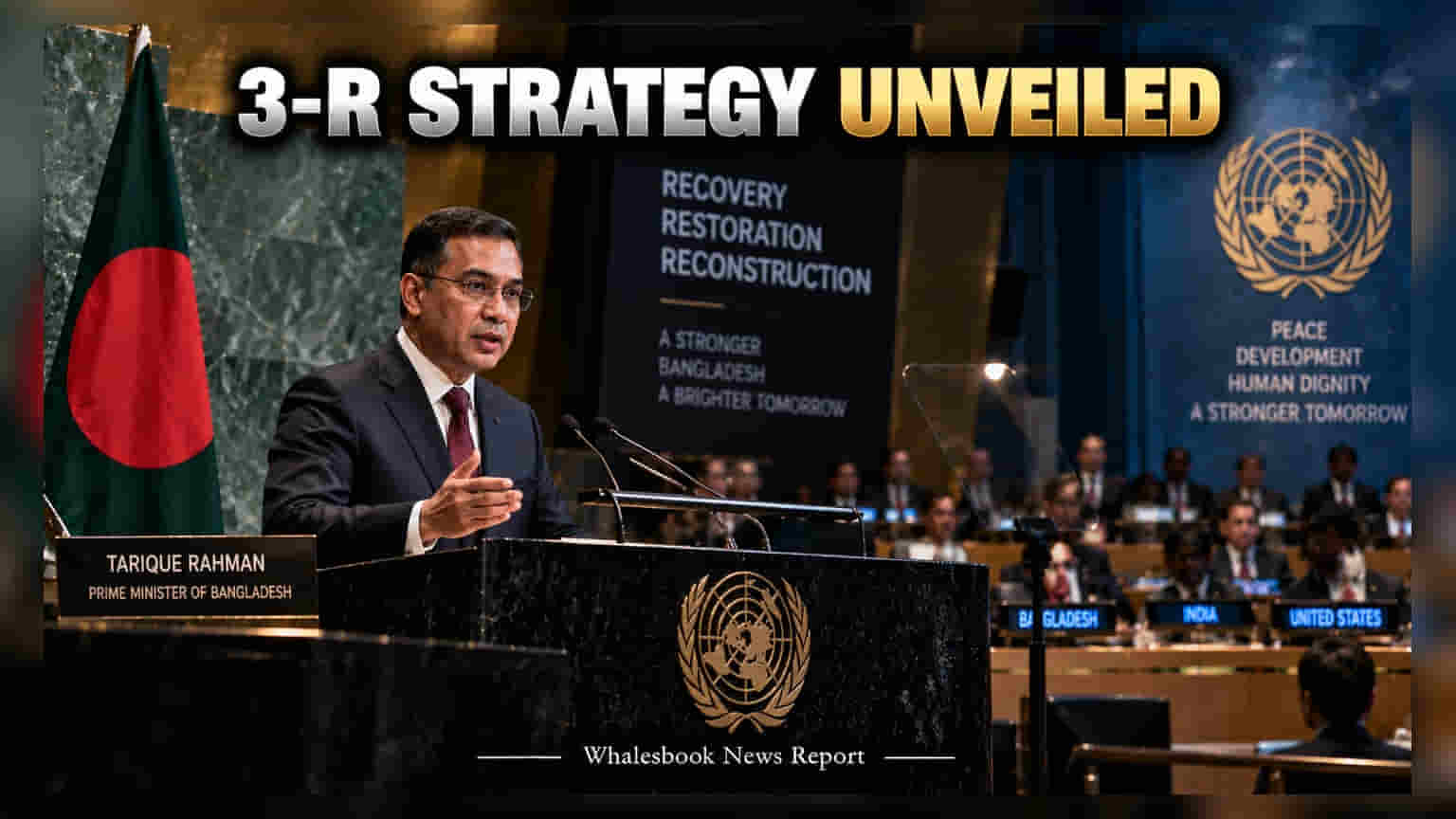
Prime Minister Tarique Rahman debuted his '3-R' strategy—Recovery, Restoration, and Reconstruction—at the 81st UN General Assembly to address Bangladesh's economic and political instability. The plan aims to dismantle systemic corruption and rebuild institutional trust. For investors and regional observers, the focus remains on whether this shift can stabilize the nation's governance and alleviate the fiscal strain caused by the ongoing Rohingya refugee crisis.
Bangladesh Prime Minister Tarique Rahman used the 81st session of the United Nations General Assembly to present a new governance and economic framework for the country. The administration introduced a strategy termed '3-R,' focusing on Recovery, Restoration, and Reconstruction, intended to stabilize a nation that has struggled with significant political instability and economic mismanagement over the past decade.
For the investment and business community, the success of this strategy is tied to the administration's ability to repair national institutions and address systemic corruption. The government stated that this framework is a central component of its effort to foster democratic governance following recent national elections. Stability in administrative and judicial institutions is often a prerequisite for improving the foreign investment climate in the region.
A significant factor impacting Bangladesh's fiscal health and resource allocation remains the Rohingya refugee crisis. With over 1.2 million refugees currently within its borders, the administration highlighted that the humanitarian, security, and environmental costs continue to strain national resources. Rahman emphasized that while the country is committed to the safe repatriation of these individuals, the current situation creates a persistent financial burden on the state. He urged the global community to maintain aid levels to ensure regional stability until a long-term resolution is reached.
On the diplomatic front, the administration is pivoting toward a multilateral approach, focusing on dialogue rather than the use of force in international relations. By advocating for a policy rooted in debate and protection of mutual interests, the leadership aims to recalibrate Bangladesh’s global footprint. This change in foreign policy direction marks a departure from the previous decade’s approach and signals an attempt to strengthen ties with the international community.
The most important monitorable for investors and stakeholders in the coming months will be the government's ability to execute these institutional reforms and manage the budgetary pressure stemming from the refugee crisis. Markets will watch for signs of improved economic governance and successful implementation of the reconstruction phase, as these factors will influence future trade relations and business confidence in Bangladesh.