

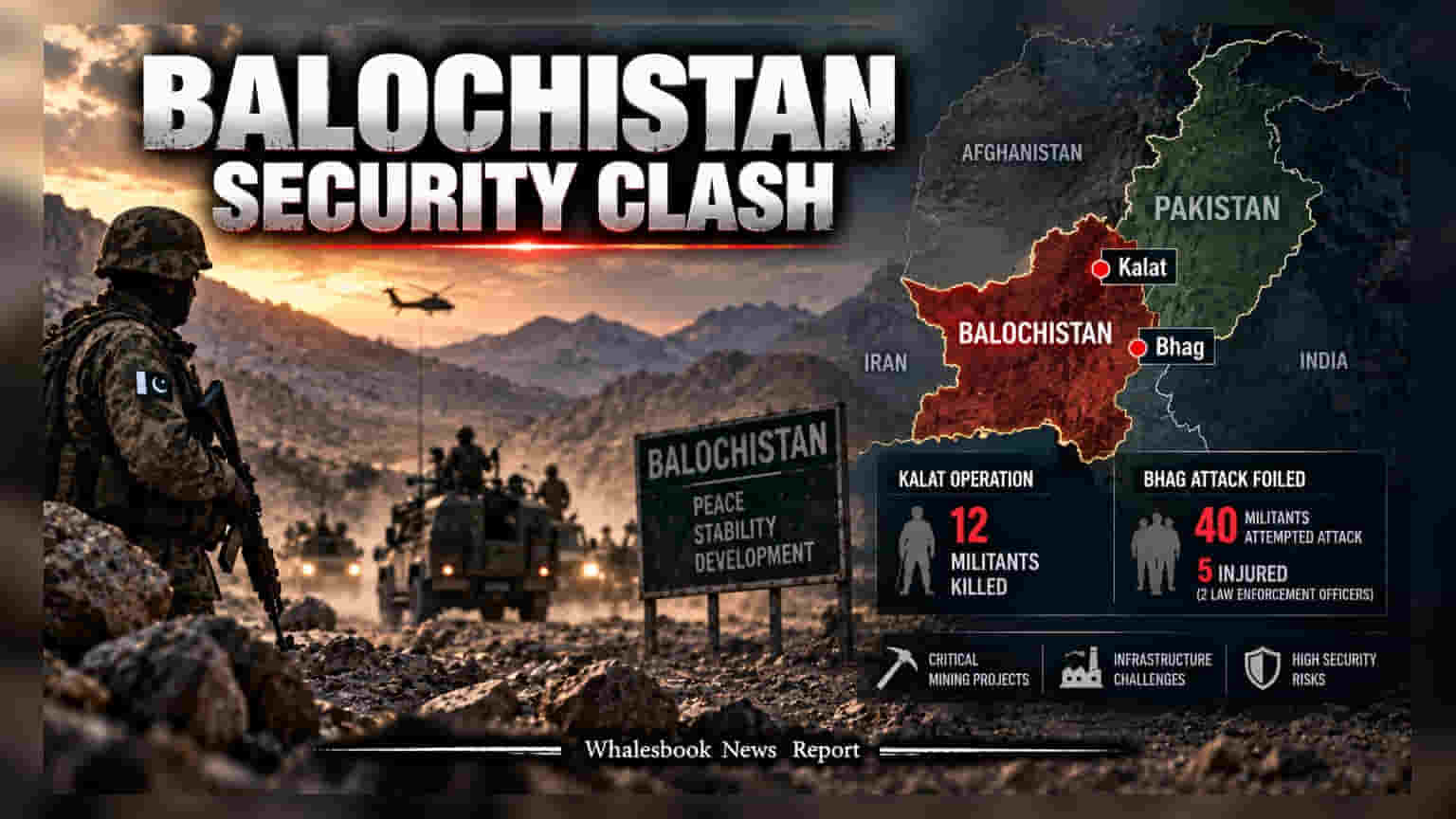
Pakistani security forces eliminated 12 militants in the Kalat district and successfully repelled an attack in Bhag on September 4, 2026. This ongoing instability highlights the persistent security risks in the region, which often complicate the environment for large-scale infrastructure and natural resource projects in Balochistan.
Pakistani security forces engaged in two separate, high-stakes security operations in the Balochistan province on September 4, 2026. In the Kalat district, an intelligence-based strike resulted in the death of 12 militants, according to updates from the military's media wing. On the same day, a separate, coordinated assault on government and financial infrastructure in Bhag city was thwarted by local law enforcement and paramilitary units.
During the Bhag city incident, approximately 40 militants attempted to target critical facilities, including a police station and a financial institution. While the attack resulted in injuries to five people, including two law enforcement officers, security forces prevented the militants from seizing control of the facilities or securing state-held weapons. These engagements are occurring under the framework of the 'Azm-i-Istehkam' counter-terrorism campaign, which the state has launched to address rising militant activity.
From a business and investment perspective, the security situation in Balochistan is a significant factor for regional stability. The province is home to several high-value natural resource projects, including the Reko Diq mining venture. For investors monitoring the South Asian region, ongoing militant activity and the necessity of frequent security interventions create a complex operational environment.
Historically, such security volatility can impact large-scale infrastructure development in several ways. These risks include the potential for project delays, increased operational costs due to necessary security enhancements, and challenges in logistics or supply chain management. Investors and global stakeholders generally track these developments because regional stability is a prerequisite for the long-term feasibility of mining, energy, and infrastructure assets.
The key monitorable for market participants will be whether the 'Azm-i-Istehkam' operations succeed in reducing the frequency of these attacks or if the security environment remains restricted. Future updates regarding the continuity of development projects in the region, particularly those involving international investment or critical infrastructure, may provide further clarity on how companies are navigating these security pressures.