

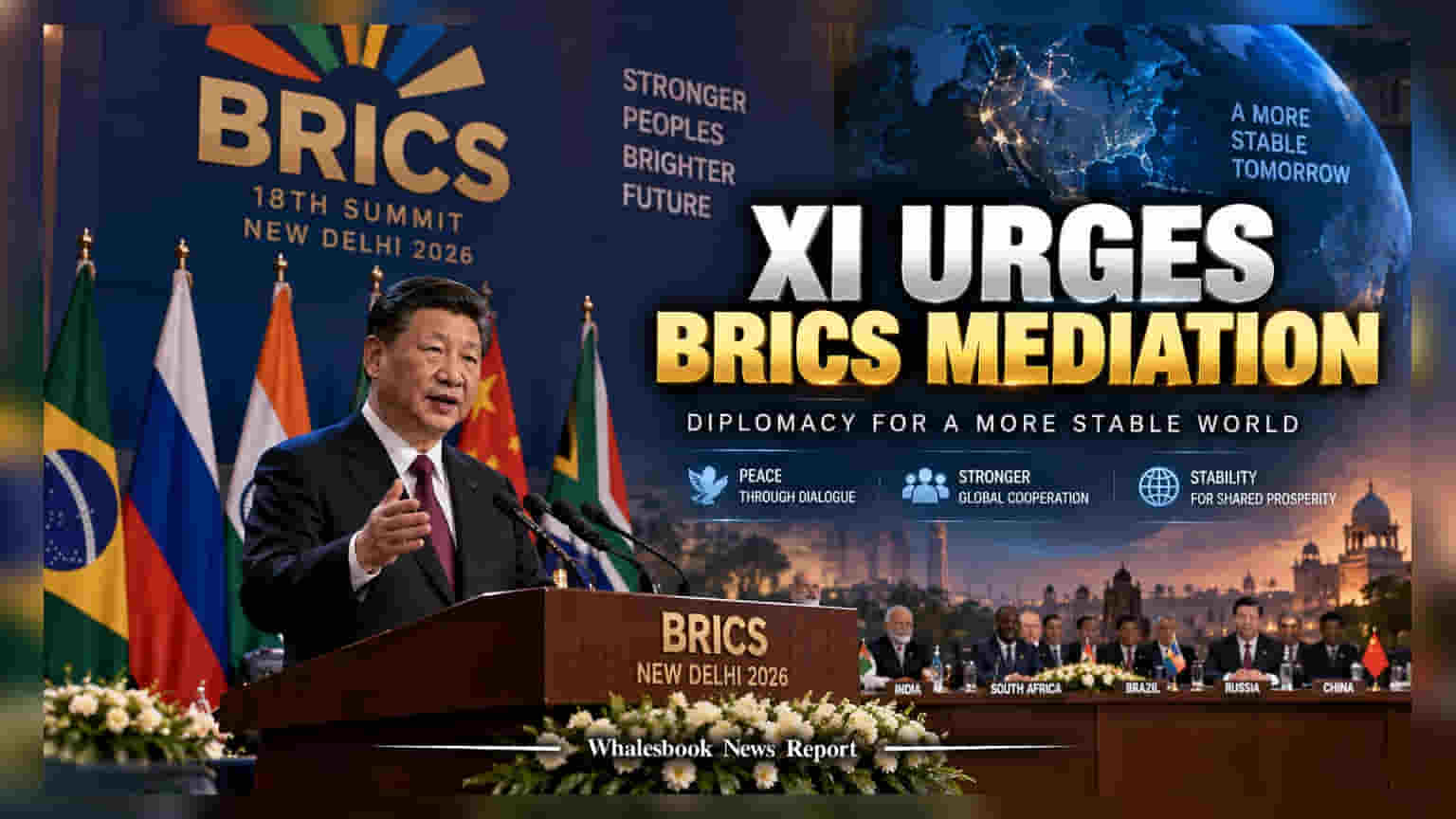
At the 18th BRICS summit in New Delhi, leaders adopted the 'New Delhi Declaration' calling for restraint in the Middle East. For investors, this signals a focus on regional stability, which is vital for managing energy supply chain risks and global market volatility.
Chinese President Xi Jinping, speaking at the 18th BRICS summit held in New Delhi, urged the bloc’s member nations to play a more active role in mediating the ongoing Middle East conflict. Characterizing the situation as a concern that impacts global stability, he pushed for collective diplomatic action. This call was echoed in the 'New Delhi Declaration,' a joint statement adopted by the member nations, which expressed deep concern over the regional war and urged maximum restraint to prevent further escalation.
For the Indian market and global investors, the significance of this diplomatic discourse lies in its potential impact on trade and energy security. The Middle East remains a critical region for the supply of crude oil and natural gas. Disruptions in key transit routes, such as the Strait of Hormuz, have historically led to energy price volatility, directly affecting input costs for manufacturing companies and transportation sectors. Any diplomatic effort to stabilize the region is viewed by market participants as a factor that could help manage these supply chain risks.
Beyond the immediate geopolitical concerns, the summit provided clarity on the bloc's administrative future. It was confirmed that China will assume the rotating BRICS chairmanship in 2027. This leadership transition suggests that the bloc’s agenda over the next year will likely prioritize the development of new economic policies and initiatives aimed at strengthening internal stability among member states. For investors, this transition points to a continued focus on economic independence and building alternative trade frameworks, which may influence long-term trade relations and investment policies in emerging markets.
The effectiveness of these diplomatic efforts remains a key monitorable. While the declaration highlights a shared intent for peace, the bloc is composed of diverse economies with varying geopolitical interests. Investors often watch such summits to gauge whether these nations can align their foreign policy objectives effectively. A lack of consensus on major global issues can sometimes lead to uncertainty in trade policies. In the coming months, the market will likely track any further developments regarding trade cooperation and energy partnerships that emerge under the upcoming leadership cycle.