

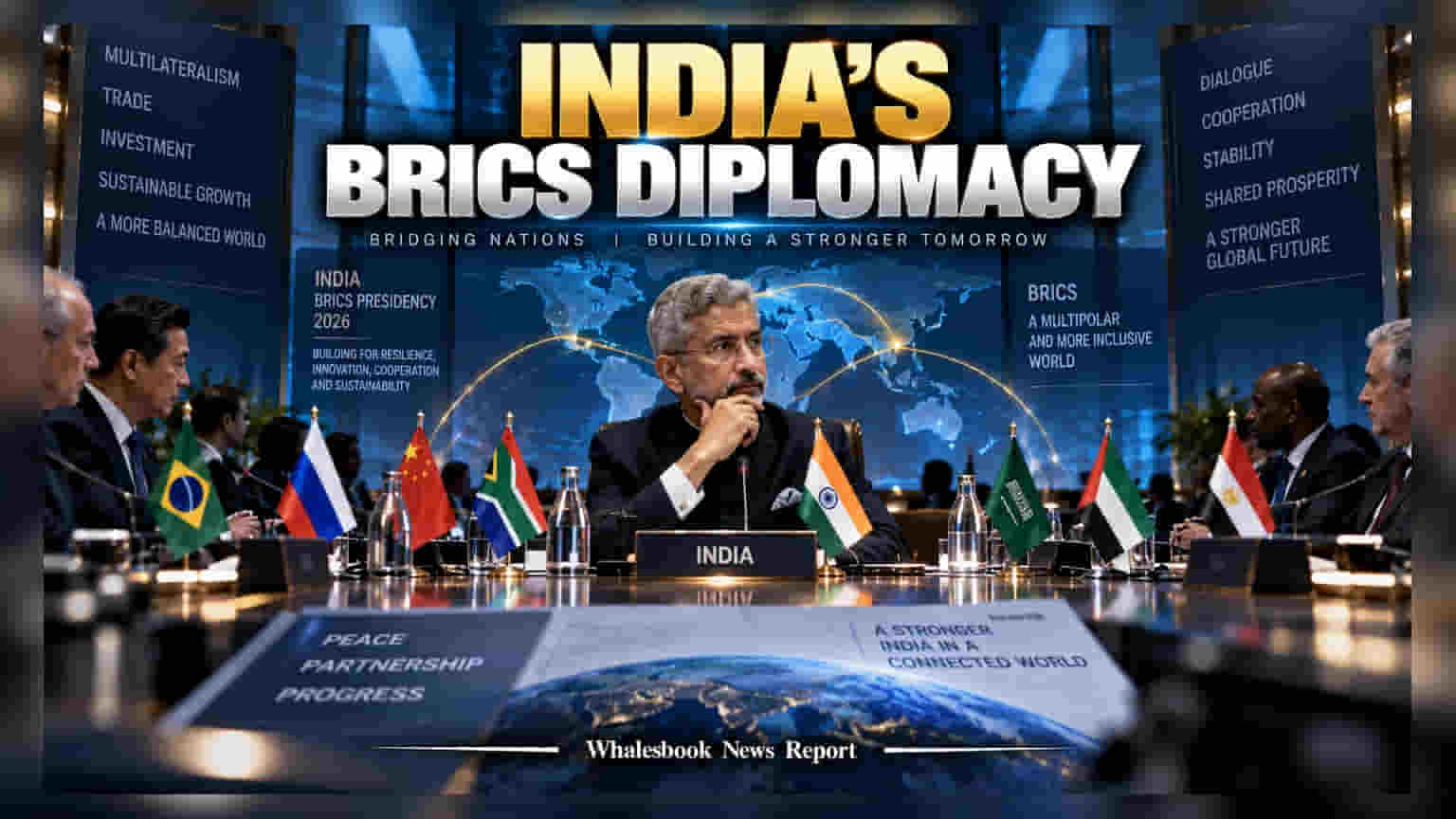
Former G20 Sherpa Amitabh Kant has urged India to maintain diplomatic neutrality while leading the BRICS bloc in 2026. He warned that balancing relations between the U.S., Europe, and China is critical to safeguard India's national interests and keep its 'Viksit Bharat' 2047 growth goals on track.
As India navigates its role as the BRICS president for 2026, former G20 Sherpa Amitabh Kant has issued a clear message on the country’s diplomatic strategy. He emphasized that for India to achieve its ambitious economic targets by 2047, it must act as a bridge between competing power blocs rather than aligning with any single ideology. This approach is essential to maintaining a stable environment for global trade and investment, which are the backbones of the nation's growth.
India assumed the BRICS presidency on January 1, 2026, under the theme 'Building for Resilience, Innovation, Cooperation and Sustainability.' While this leadership role offers India a platform to influence global agendas, it also brings the challenge of balancing ties with Western nations—the U.S. and Europe—while managing complex relationships within the expanded BRICS+ group, which includes China. Kant suggested that summit documents and declarations should avoid language that could be seen as anti-Western, ensuring that New Delhi preserves its status as a credible partner across all major global markets.
For investors and the broader economy, this diplomatic stance is significant because it directly impacts national stability and market sentiment. Geopolitical tensions often trigger supply chain disruptions, protectionist trade policies, and volatility in global commodity prices. If India can successfully steer the BRICS bloc without creating friction with Western trading partners, it helps keep vital supply lines open and supports a favourable environment for foreign direct investment.
However, the risks of this balancing act remain high. Intensifying regional rivalries, coupled with the difficulty of building consensus among a diverse and often divided BRICS+ membership, could complicate decision-making. Protectionist trends in major economies, such as shifts in industrial policy, could also threaten the open-market principles that India advocates. Investors should watch the upcoming summit declarations for signs of how India manages these contradictions, as the outcomes will likely influence the government's ability to maintain its economic momentum amidst global uncertainty.