

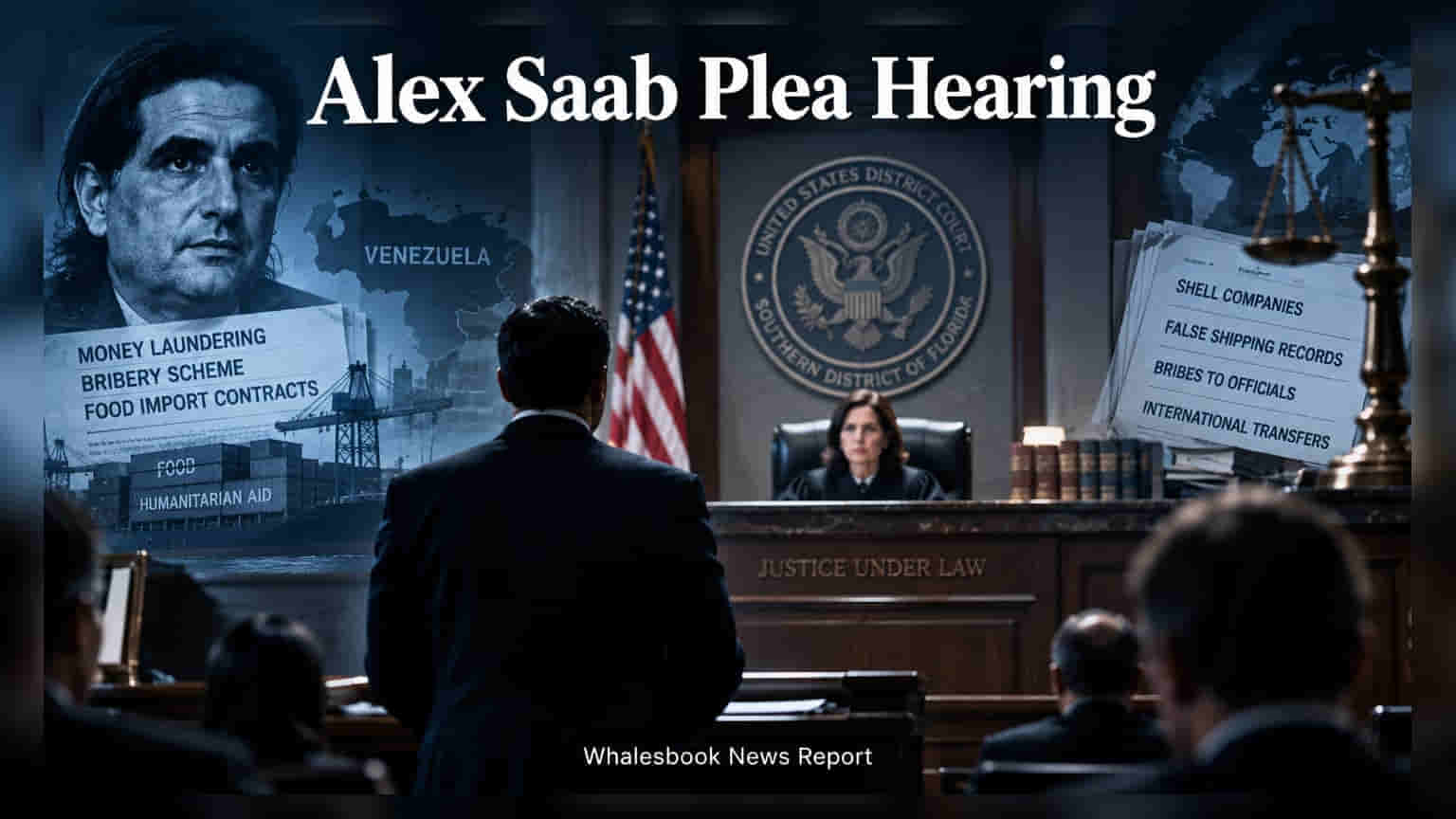
Alex Saab, a key associate of former Venezuelan leader Nicolas Maduro, is expected to enter a guilty plea in a Miami federal court regarding money laundering charges. The case involves an alleged scheme siphoning funds through government food import contracts. This development serves as a reminder of the heightened compliance risks associated with cross-border trade in high-risk jurisdictions.
Alex Saab, a Colombian-born businessman and long-time associate of former Venezuelan President Nicolas Maduro, is scheduled to enter a guilty plea in a Miami federal court. This legal development marks a significant turn in a federal investigation involving allegations of money laundering and a bribery scheme tied to Venezuelan government food import contracts.
The Nature of the Allegations
Federal prosecutors allege that the case centers on a complex conspiracy where government contracts for food imports were manipulated to siphon funds. The investigation contends that the network utilized shell companies and falsified shipping records to secure these contracts, often while Venezuela faced severe humanitarian shortages. Investigators claim these structures were used to disguise bribes paid to public officials, masking the flow of illicit capital through international financial systems.
Geopolitical and Legal Context
For those tracking international governance, this case is distinct from the legal proceedings that concluded in 2023. While Saab was previously pardoned in a high-profile prisoner swap involving Americans detained in Venezuela, that pardon was limited in scope. It did not cover the current, separate set of criminal charges now being pursued by US federal authorities. Saab’s legal journey has been volatile, including his detention in Cape Verde in 2020 and subsequent extradition, highlighting the complex intersection of international law and geopolitical tensions.
The Investor and Compliance Perspective
While this case involves an individual rather than a public company, it serves as a critical case study in governance and due diligence. For investors and businesses operating in global markets, the incident underscores the severe financial and reputational risks associated with government contracting in politically sensitive or sanctioned regimes.
International trade requires rigorous compliance with anti-money laundering (AML) laws and strict monitoring of third-party intermediaries. When companies engage with entities operating in high-risk jurisdictions, the use of complex financial structures—such as multiple shell companies or opaque shipping arrangements—is often flagged by global regulators as a potential sign of underlying governance failures. This case reinforces the importance of conducting deep due diligence on business partners and verifying the transparency of government-backed supply chain agreements.
The next important development to watch is the formal change of plea hearing before Judge Kathleen Williams, which will clarify the details of the agreement and potentially provide further insight into the depth of the alleged financial network.