

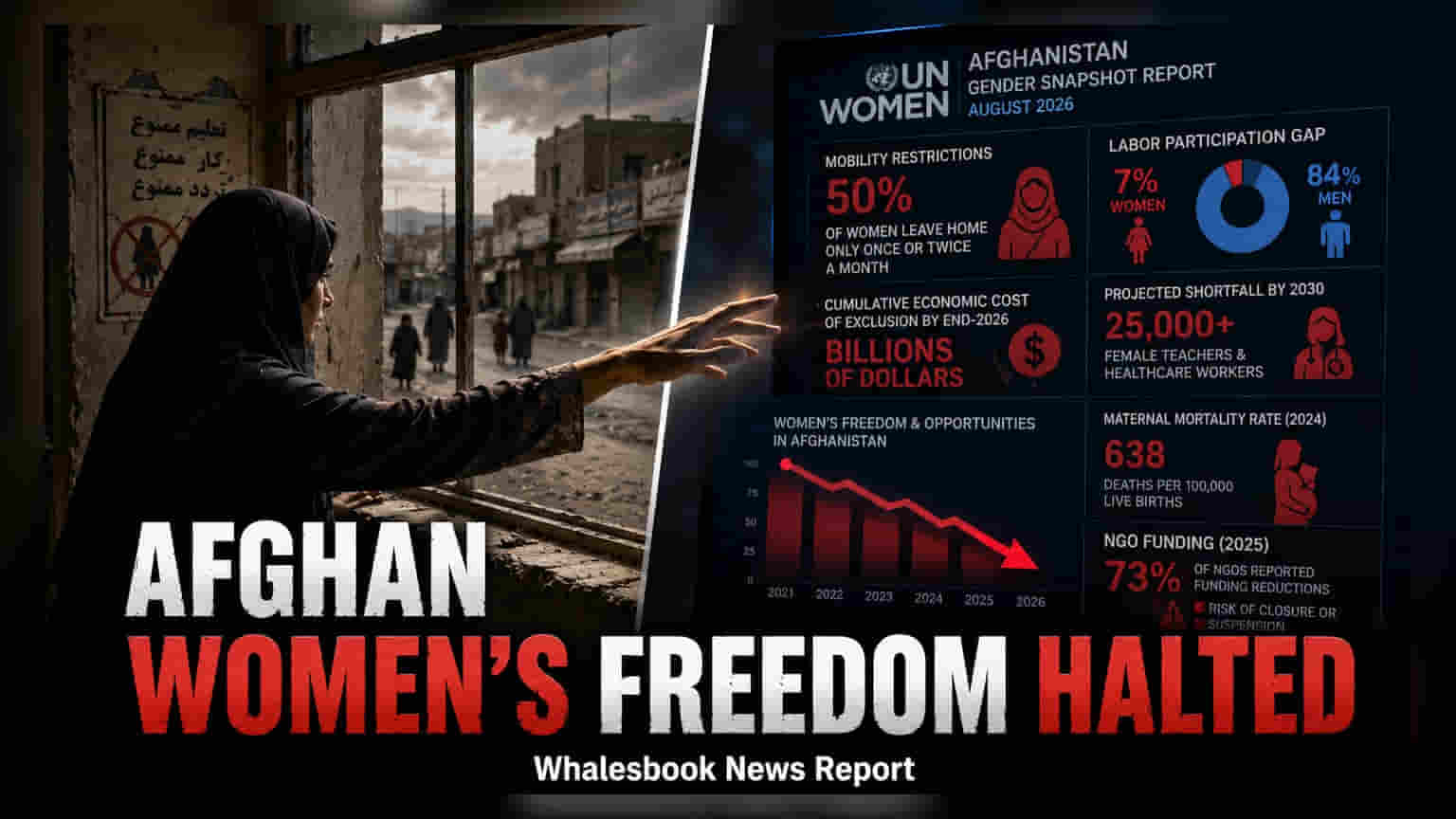
As the Taliban administration completes five years in power, UN Women reports half of Afghan women now leave home only twice a month. This severe confinement, combined with total exclusion from the formal labor market and the recent discontinuation of stipends for homebound workers, continues to create significant long-term economic and humanitarian risks.
August 2026 marks five years since the current administration took power in Afghanistan, a period that has seen systemic changes to the country's social and economic structure. A new report from UN Women highlights that mobility restrictions have reached a critical point, with 50% of Afghan women interviewed stating they leave their homes only once or twice a month.
Economic Impact and Labor Force Exclusion
From an economic analysis perspective, the policy of excluding women from the workforce remains a primary driver of the country's deepening financial stagnation. The labor participation gap is extreme, with only 7% of women employed compared to 84% of men. This exclusion is not merely a social issue; it represents a significant loss in potential economic productivity. Estimations suggest that the cumulative economic cost of this exclusion could reach billions of dollars by the end of 2026.
The economic pressure on households has intensified in the first half of 2026 following the Ministry of Finance's decision to discontinue monthly stipends of 5,000 afghanis, which were previously provided to homebound female government employees. This removal of support has further reduced household disposable income, increasing dependency on external humanitarian aid in an environment where funding is already shrinking.
Humanitarian and Developmental Risks
The infrastructure for long-term growth—specifically in education and healthcare—faces severe degradation. Girls remain prohibited from attending secondary and higher education, creating a long-term deficit in human capital. Projections indicate that if current restrictions remain, Afghanistan could face a shortfall of over 25,000 female teachers and healthcare workers by 2030.
This gap is already being felt in the public health sector. With mobility restrictions limiting access to medical facilities and a shortage of female healthcare professionals, maternal health outcomes have deteriorated, with the maternal mortality rate estimated at 638 deaths per 100,000 live births in 2024. The crisis is compounded by the financial instability of NGOs, which serve as the primary delivery mechanism for essential services. Nearly three-quarters of surveyed NGOs reported funding reductions in 2025, with many now facing the risk of closure or suspension of operations.
Monitorables for the Region
For observers of the region, the primary focus remains on the sustainability of current economic policies in the absence of international recognition and the drying up of humanitarian aid liquidity. The combination of fiscal constraints, the exclusion of a large portion of the potential workforce, and the potential for further cuts in international assistance suggests that the economic environment in Afghanistan will remain volatile. Market analysts will continue to track how these domestic policies influence the availability of basic services and the continued reliance on informal economic structures.