

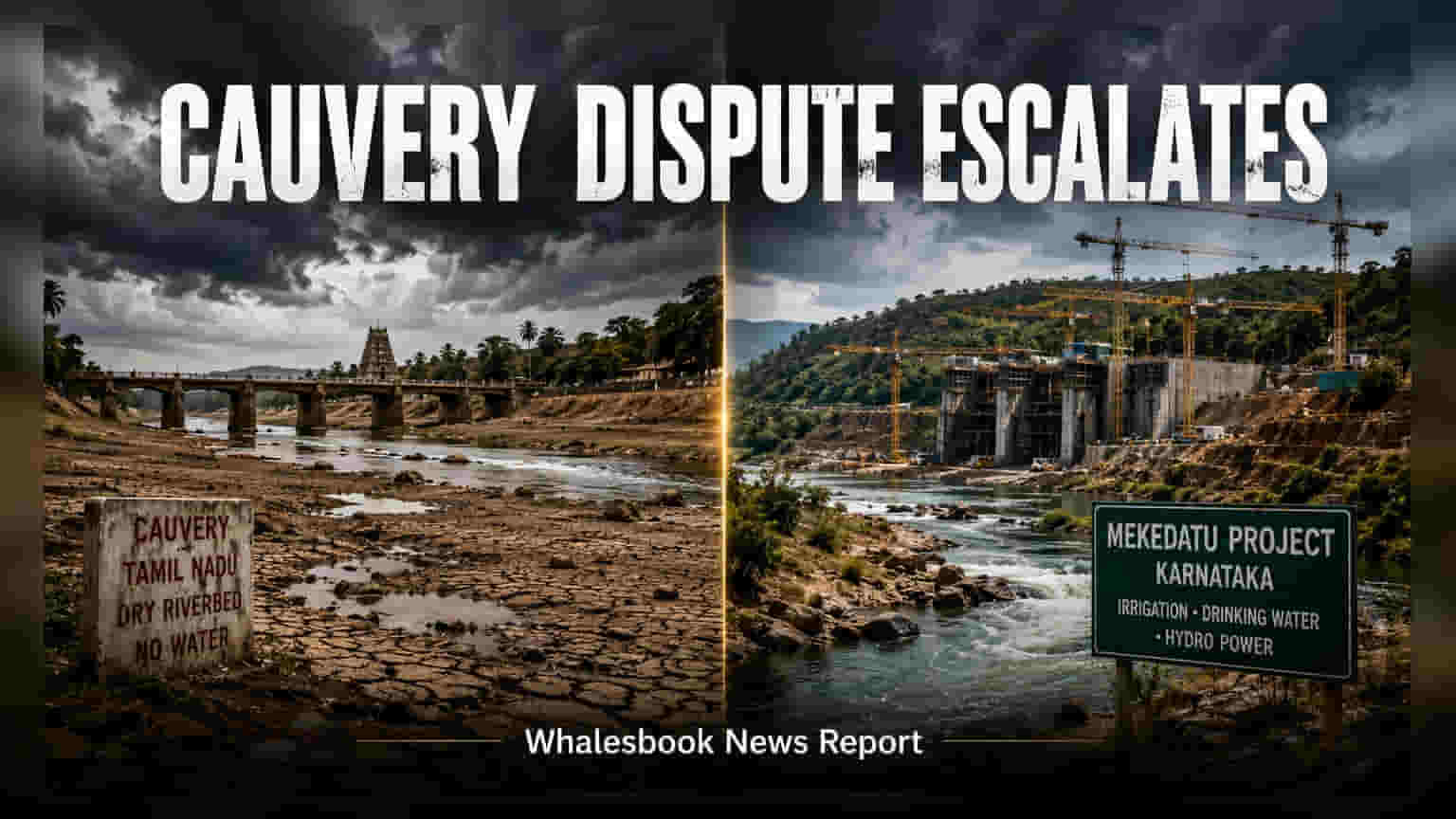
AIADMK leader Kovai Sathyan has threatened legal action against Karnataka regarding the proposed Mekedatu reservoir, warning that any unilateral construction would violate Supreme Court mandates. This latest escalation underscores the persistent inter-state water dispute, with Tamil Nadu maintaining strong opposition over concerns regarding agricultural water security in the delta region.
The long-standing water dispute between Tamil Nadu and Karnataka has seen a fresh escalation following a warning issued by the All India Anna Dravida Munnetra Kazhagam (AIADMK). AIADMK leader Kovai Sathyan has publically cautioned Karnataka officials against proceeding with any unilateral construction on the Mekedatu balancing reservoir project. The party has asserted that any attempt to move forward with the project without consensus or regulatory approval would invite serious legal repercussions.
The Mekedatu reservoir project has been a source of intense regional friction for years. The Karnataka government maintains that the project is essential to address the drinking water requirements of Bengaluru and to generate hydroelectric power. Conversely, Tamil Nadu has consistently opposed the initiative, arguing that the dam would significantly restrict water flow into the Cauvery delta region. The state government fears that this could adversely affect agricultural viability and water security for farmers who depend on the river.
This latest warning follows a period of heightened activity regarding the project. In June 2026, the Tamil Nadu Legislative Assembly passed a unanimous resolution formally objecting to the reservoir and calling upon the Union government to deny the necessary clearances. The legal status of the project remains complex. Currently, the project is under scrutiny by the Cauvery Water Management Authority (CWMA) and the Cauvery Water Regulation Committee (CWRC). The Supreme Court has previously categorized some legal challenges regarding the project as premature while the Detailed Project Report (DPR) is undergoing evaluation.
For those monitoring the business and policy environment, this dispute highlights the significant regulatory and political risks associated with large-scale infrastructure projects in regions involving inter-state water sharing. Such projects often face extended timelines due to the need for inter-state consensus and adherence to complex judicial mandates. The ongoing conflict creates uncertainty, not only for the project’s execution but also for broader planning in the infrastructure and agriculture sectors in Southern India.
The next critical developments to track include the ongoing evaluation of the project report by the CWMA and CWRC, as well as any further rulings or observations from the Supreme Court. Investors and stakeholders in the region will likely continue to monitor the political discourse, as any significant change in the legal or regulatory status of the project could impact future infrastructure planning and regional resource management.