

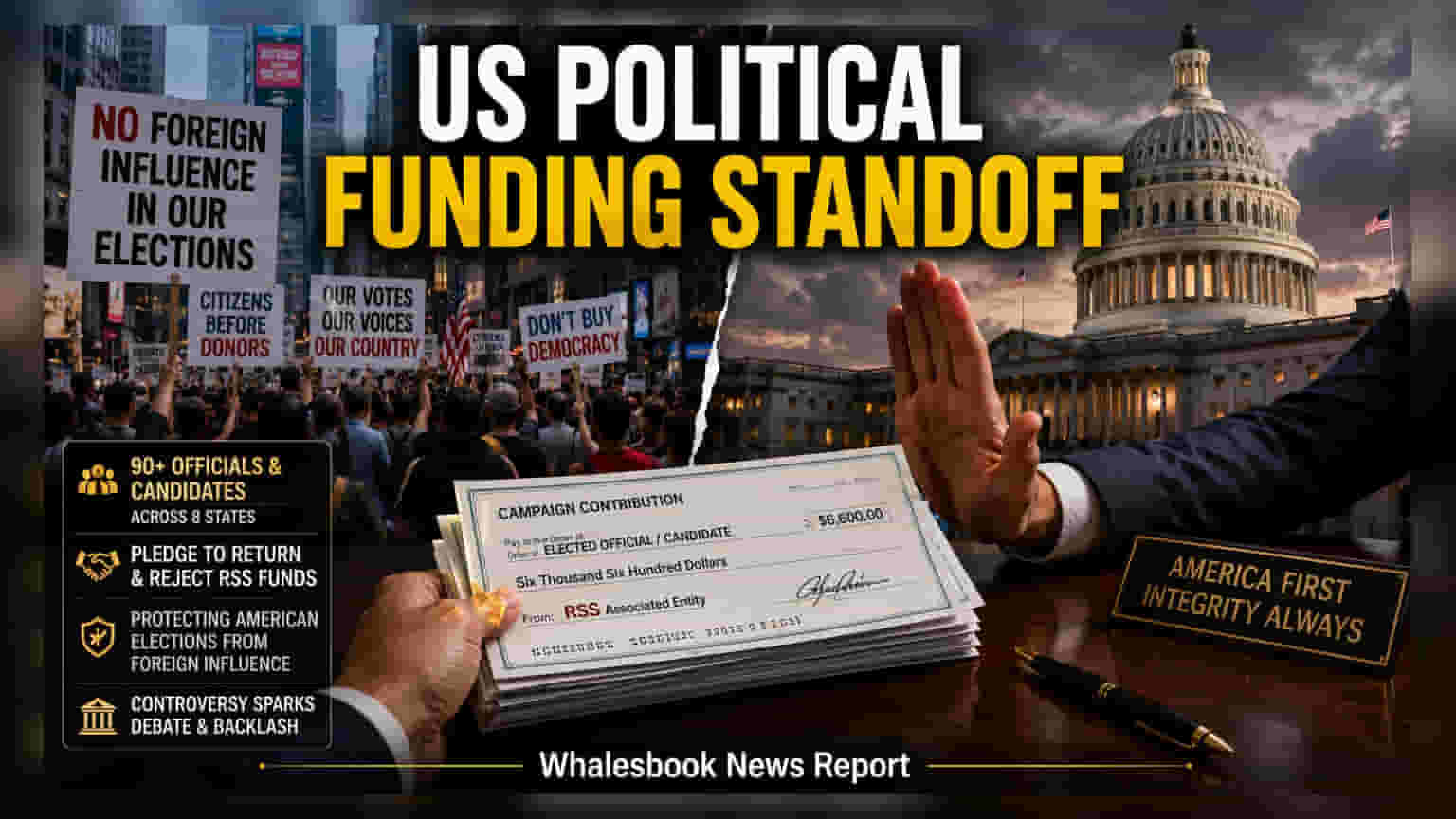
A coalition of 90 US politicians has committed to rejecting campaign contributions from individuals or entities associated with the Rashtriya Swayamsevak Sangh (RSS). The initiative, which followed a recent high-profile appearance by RSS chief Mohan Bhagwat in New York, has triggered a debate over foreign influence and political funding. Critics have labeled the move as discriminatory, creating a divide within the US political landscape regarding community donor engagement.
A group of 90 elected officials and political candidates across eight US states has formally joined an initiative to reject financial support from the Rashtriya Swayamsevak Sangh (RSS) and its associated entities. This bipartisan effort, coordinated by advocacy organizations Hindus for Human Rights Action and the South Asian American Coalition to Renew Democracy Acts (SACRED Acts), follows a public event held by RSS chief Mohan Bhagwat at Madison Square Garden on August 29, 2026.
The pledge outlines a commitment by these officials to return existing campaign funds linked to these organizations and to decline any future contributions from similar sources. High-profile signatories include federal lawmakers such as Representatives Ro Khanna and Pramila Jayapal. Representative Ro Khanna has publicly confirmed his intent to donate away a $6,600 campaign contribution he identified as coming from a source with ties to the organization, highlighting a broader effort to distance political campaigns from foreign ideological groups.
Proponents of the pledge argue that the move is a necessary step to protect American electoral processes from foreign influence. Supporters maintain that candidates must be transparent about the origins of their funding to ensure that political decision-making remains focused on domestic interests rather than international ideological agendas. This initiative essentially creates a new standard for vetting campaign donors, which may force other political figures to clarify their stances on foreign influence in US elections.
However, the move has faced strong opposition from several community advocacy groups, including the Hindu American Foundation (HAF) and the Hindu American Political Action Committee (HAPAC). These organizations have condemned the pledge, describing it as a discriminatory "loyalty test" that specifically targets Hindu-American donors. Critics argue that such initiatives threaten to alienate parts of the community and that they apply a standard of scrutiny not imposed on other political or advocacy groups. They view the effort as a politically motivated attack rather than a policy-driven decision.
For observers of the political and business environment, this development highlights the growing intersection of identity politics and campaign finance. The controversy signals a potential increase in scrutiny for political action committees and high-net-worth individuals who maintain international organizational ties. As this debate evolves, the primary focus for stakeholders will be on whether such "loyalty tests" become a broader trend in US politics, how they impact the fundraising strategies of candidates, and whether these actions lead to further polarization or legal challenges regarding the rights of political donors.