

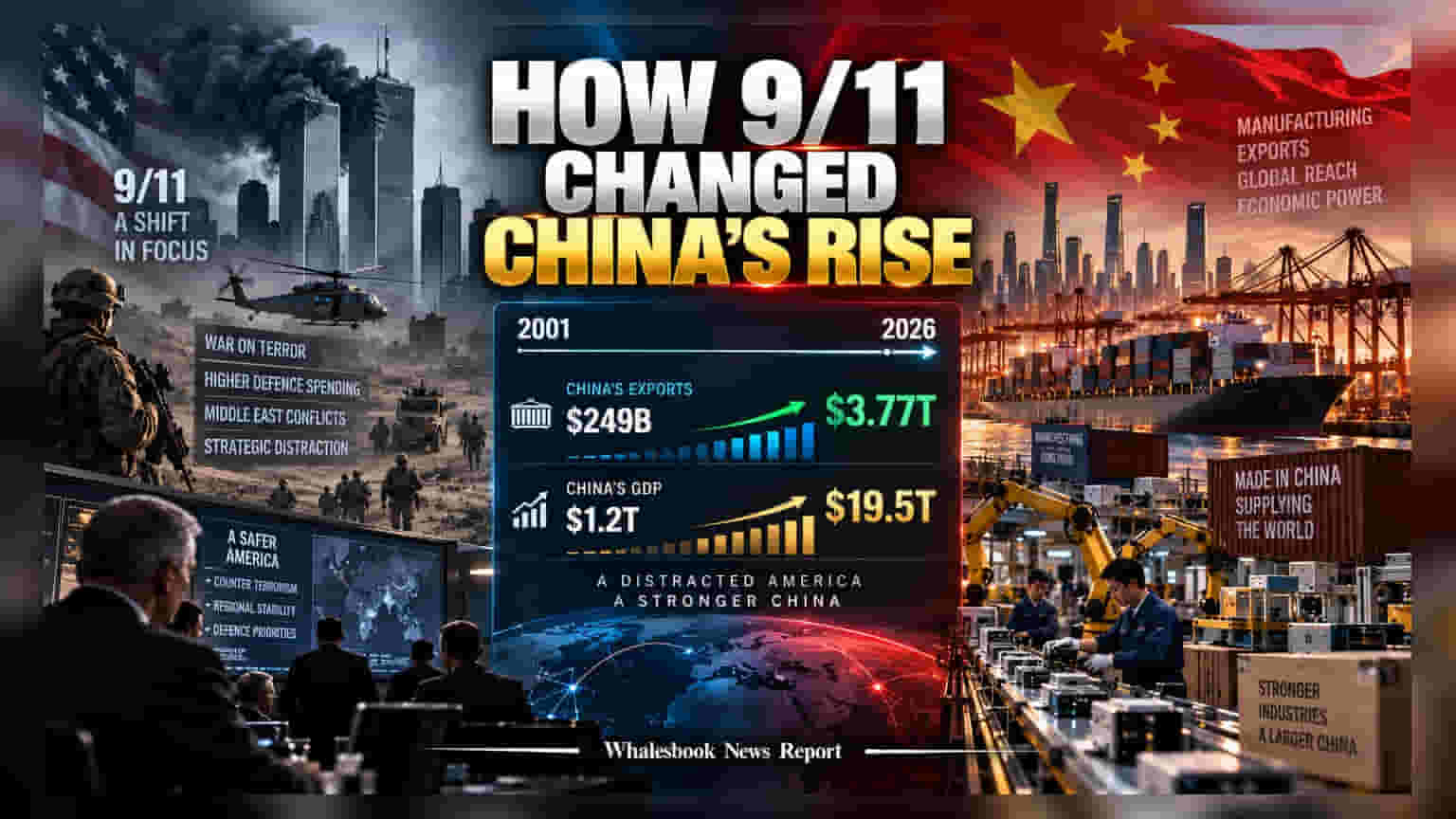
September 11, 2026, marks the 25th anniversary of the attacks that reshaped global strategy. As the US pivots from counter-terrorism to Great Power Competition, the changing US-China dynamic continues to influence global supply chains and market sentiment. Understanding this shift is essential for tracking geopolitical risk and emerging opportunities in manufacturing for Indian investors.
The 25th anniversary of the September 11 attacks serves as a reminder of how quickly global priorities can shift, directly impacting the financial environment for investors. Over the last two decades, the United States directed significant focus, budget, and diplomatic energy toward the War on Terror. During this period, global trade dynamics evolved significantly, as Beijing leveraged the opportunity to expand its manufacturing capabilities, integrate into the World Trade Organization, and grow its export-led economy.
The massive US spending on Middle Eastern conflicts, estimated by various reports to have reached over $8 trillion, created a strategic window for China to become a global manufacturing powerhouse. Between 2000 and 2025, China transformed from a developing exporter into a primary global supplier of goods, electronics, and technology. This period allowed for the deep integration of supply chains across the globe, creating dependencies that are now being re-evaluated by Western policymakers.
The Shift to Great Power Competition
By 2026, the global strategic focus has fully shifted. The United States now identifies Great Power Competition as its primary national security challenge, moving away from its post-9/11 counter-terrorism posture. This change introduces new dynamics for investors. Geopolitics is no longer just about regional security; it is about economic and technological dominance.
For Indian investors, this long-term shift is highly relevant. As Western nations and multinational companies seek to reduce their dependence on single-country manufacturing, strategies like "China+1" have gained traction. This move aims to diversify supply chains, often benefiting alternative manufacturing hubs, including India. However, this transition is not without challenges. Investors must account for the risks of trade protectionism, potential tariffs, and the volatility that comes from heightened US-China tensions.
Investor Monitorables
The key monitorable for the future is how these geopolitical tensions influence global trade policies. Investors may track news on supply chain restructuring, export controls, and sector-specific industrial policies, as these can affect commodity prices, technology costs, and overall market stability. The transition to a more competitive global environment suggests that geopolitical risk will remain a standard factor in market analysis for the foreseeable future.