

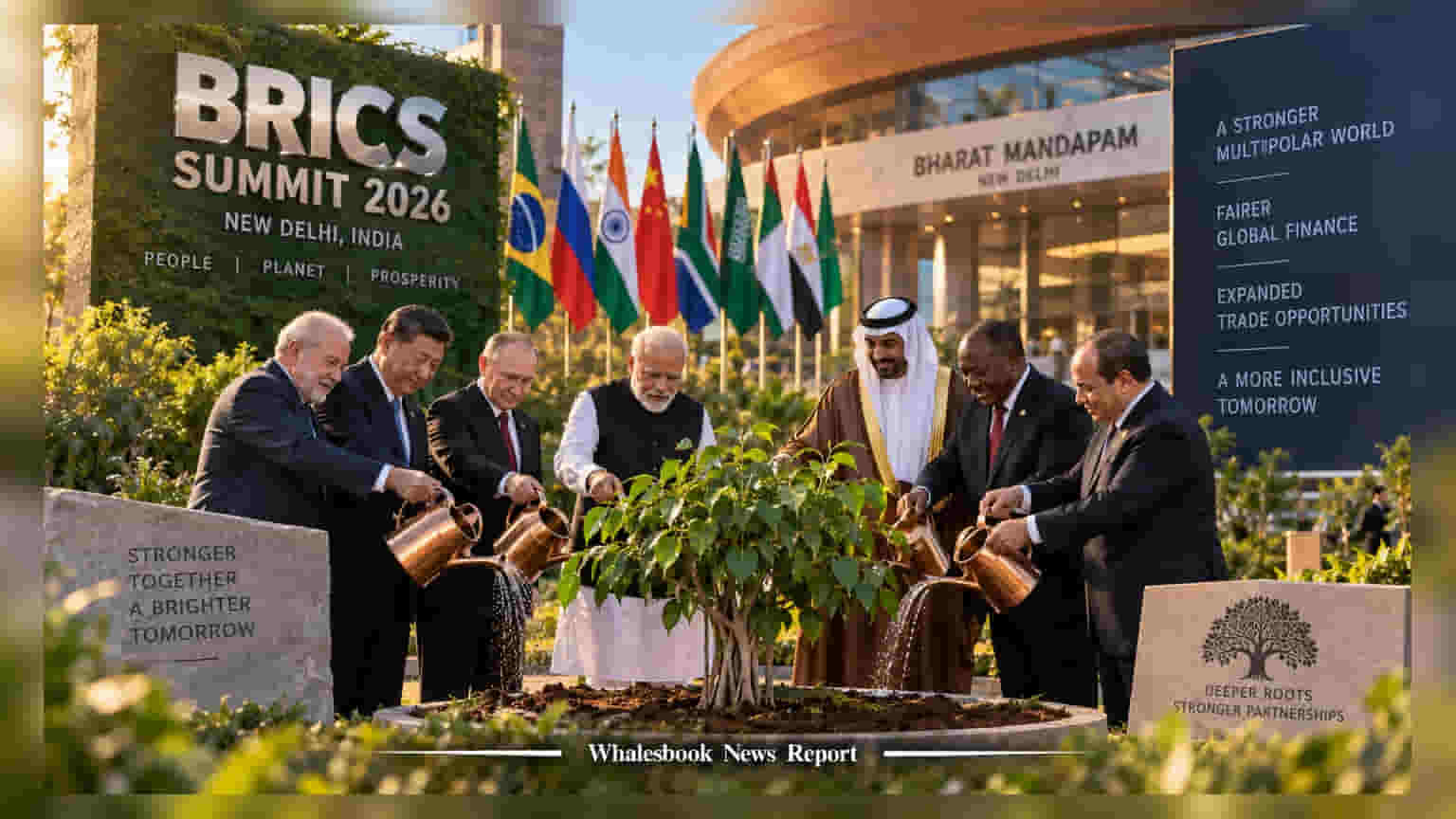
Prime Minister Narendra Modi and BRICS leaders adopted the New Delhi Declaration during the 18th Summit, emphasizing global governance reform and economic resilience. For Indian investors, the focus is on how the 11-member bloc navigates trade barriers, supply chain shifts, and potential changes in cross-border payment mechanisms amid global economic volatility.
The 18th BRICS Summit concluded in New Delhi on September 12, 2026, with leaders from the 11-member bloc gathering at Bharat Mandapam. Beyond the ceremonial planting of banyan trees, which leaders used to symbolize the group’s deepening roots and expanding geopolitical reach, the primary outcome was the unanimous adoption of the New Delhi Declaration. This policy framework outlines the group's collective approach to global finance, trade, and diplomatic cooperation.
Impact on Global Trade and Governance
The declaration highlights a shared push by member nations—including Brazil, China, India, Russia, Saudi Arabia, and the UAE—to reform international financial institutions like the IMF and the World Bank. For investors, this matters because any shift in how these institutions operate can influence global capital flows and funding availability for developing economies. The member nations expressed concern over unilateral trade barriers, suggesting a move toward creating more protected or localized trade corridors to reduce dependency on traditional Western-led economic systems.
Shifts in Payment Mechanisms
A critical element discussed during the summit involves strengthening cross-border payment mechanisms. As the group explores ways to reduce reliance on existing global financial networks, companies involved in international trade, logistics, and banking may face a changing regulatory environment. The bloc's goal is to create more flexible trade settlement processes, which could eventually impact how Indian companies handle payments with partners in BRICS nations.
Risks and Market Realities
While the expansion to 11 members increases the group's collective market size, it also introduces operational complexities. The primary risk for global observers is the difficulty of maintaining consensus among such a diverse group. With members ranging from major energy producers to large manufacturing hubs, their individual economic priorities often conflict. The bloc faces challenges from internal alignment, particularly with geopolitical tensions between some member states, and potential friction with external powers over trade policies.
Investors should monitor how these broad policy goals are translated into actionable trade agreements. The stability of supply chains and the feasibility of new cross-border payment systems will be the main factors determining whether these geopolitical promises provide tangible benefits to businesses. The next stage to watch is how individual member countries implement the reforms outlined in the New Delhi Declaration and whether they can sustain a unified economic stance in the face of rising global protectionism.