

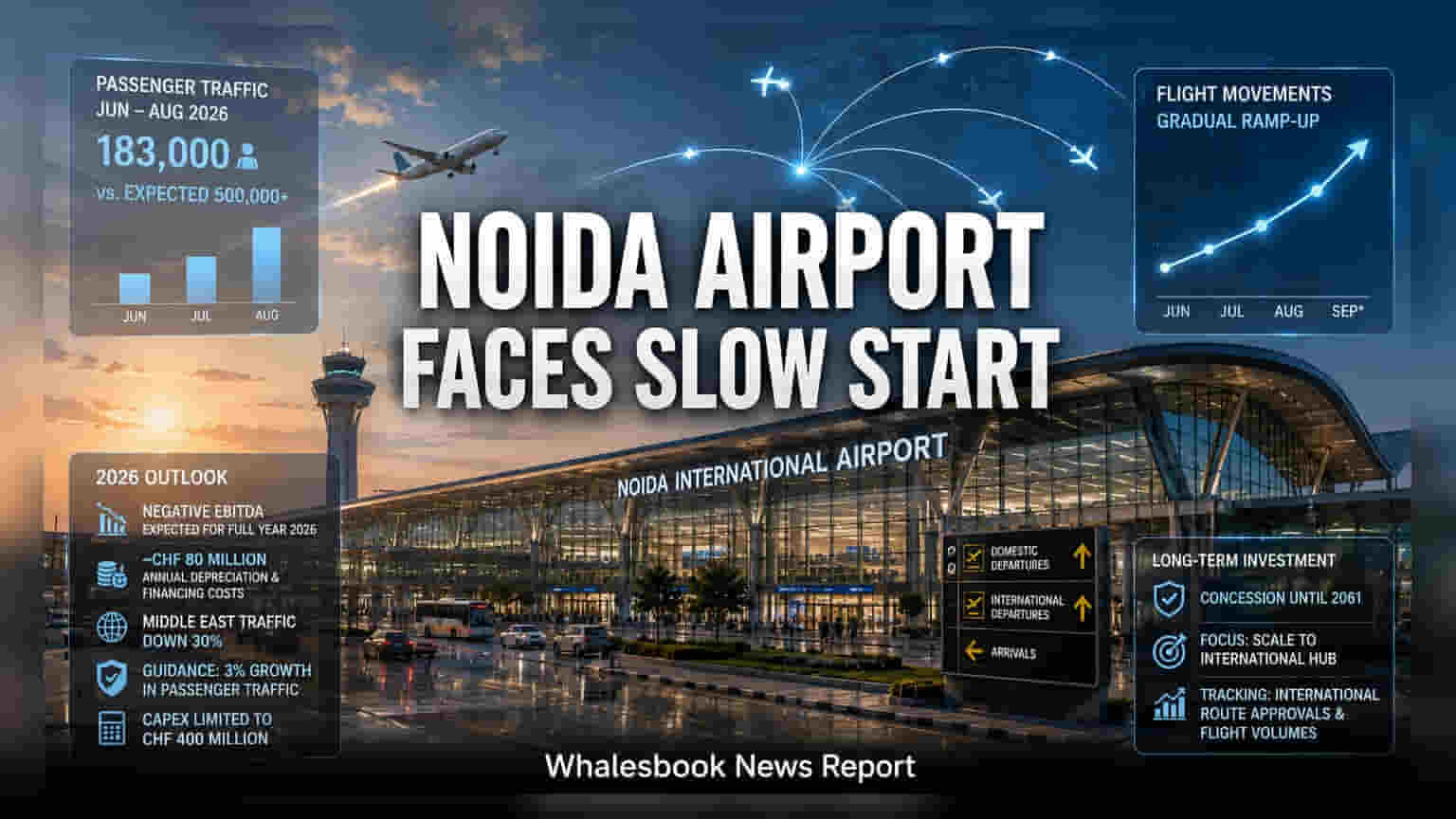
Zurich Airport’s shares fell by 4.26% after management flagged a cautious outlook for 2026, citing the slow operational ramp-up of the Noida International Airport. Although the group achieved record global performance, the capital-intensive nature of the Indian project—combined with geopolitical headwinds—is expected to weigh on near-term profitability and dividend expectations.
Zurich Airport (Flughafen Zürich AG) saw its stock price decline by approximately 4.26% on August 28, 2026. This market reaction occurred despite the company posting record results for the first half of the year, with group revenue rising 5% to CHF 674 million and EBITDA increasing to CHF 374 million. The sell-off was driven by investor concerns regarding the early operational phase of the Noida International Airport, which began commercial services on June 15, 2026.
Financial Pressure from the Noida Project
The Noida International Airport is a major long-term strategic investment for the group, with a concession period running until 2061. However, the market is currently focused on the immediate financial impact of this capital-intensive asset. Management has clarified that the project is expected to have a negative EBITDA contribution for the full year 2026. Beyond operational expenses, the facility carries a significant burden of roughly CHF 80 million in annual depreciation and financing costs. While such costs are standard for new, large-scale airport infrastructure, investors are closely monitoring how these expenses will affect the group's consolidated net income and dividend capacity in the near term.
Geopolitical Headwinds and Outlook
The company’s decision to tighten its guidance for 2026 reflects a broader set of challenges. Global geopolitical tensions, particularly the conflict in the Middle East, have hit the company’s traffic metrics, causing a 30% decline in passenger volume for that region. As a result of these uncertainties, the operator has set more conservative targets, now projecting a 3% growth in overall passenger traffic for the year. The group has also signaled a tighter approach to capital allocation, limiting its planned expenditure to CHF 400 million to preserve financial flexibility.
What Investors Are Monitoring
While the company remains committed to its long-term India strategy, the current focus is on managing the transition of the Noida facility from a domestic gateway to a broader international hub. The operator is currently servicing a limited number of routes through partners like IndiGo and Akasa Air. For shareholders, the most important updates to track will be the progress on international route approvals and flight volume trends. The ability of the airport to scale up flight movements and manage the initial high-cost phase will determine if the project meets its long-term return targets.