 Whalesbook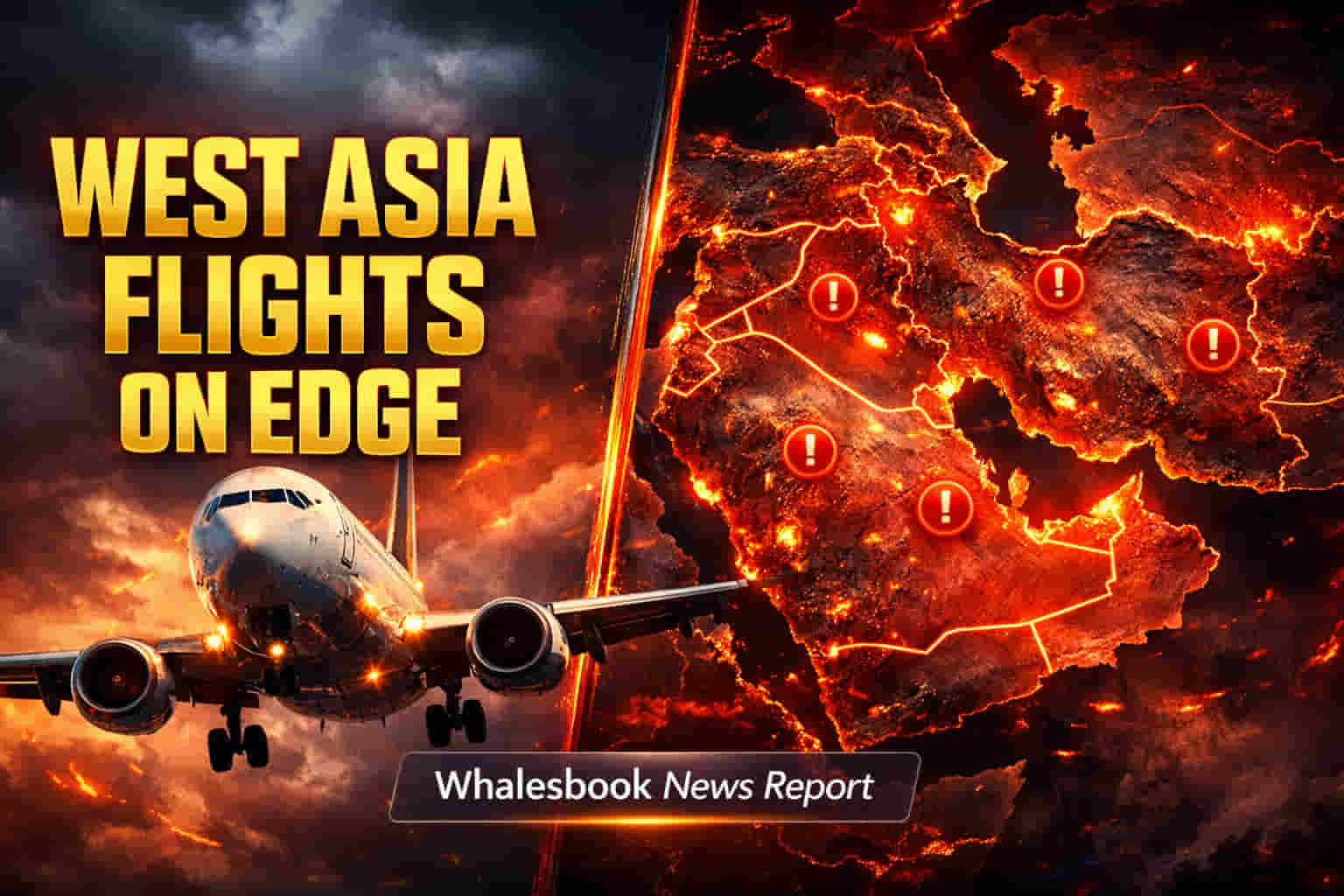


Reliance on West Asia Routes
West Asia is a vital transit point for Indian airlines flying to Europe and North America. Disruptions there create major operational and financial hurdles. For carriers like IndiGo and Air India, a large part of their international flights, around 45% of IndiGo's international routes, rely on this region. Current geopolitical tensions have led to airspace closures across Iran, Iraq, Syria, and Gulf states. This forces airlines to revise schedules and reroute flights extensively. This rerouting adds travel time, significantly boosts fuel use (which typically makes up 30-40% of operating costs), and lowers aircraft efficiency.
Rising Costs Squeeze Airline Finances
The conflict in West Asia is worsening already tight airline profit margins through higher operating costs. Jet fuel prices (ATF) are high due to volatile crude oil, which reacts to geopolitical events. A geopolitical risk premium of about $18 per barrel is estimated. War-risk insurance premiums for flights to West Asia have also jumped, adding significant costs per flight. A weaker Indian Rupee against the US Dollar (trading near 92.3760 on March 4, 2026) increases dollar-based costs like aircraft leases and maintenance.
IndiGo (InterGlobe Aviation) shows more resilience, thanks to its large market share and strong finances. As of March 7, 2026, IndiGo's market value was about ₹1.7 trillion, with a P/E ratio of around 53. Despite an 8% share price drop on March 9 due to oil price worries, most analysts maintain a 'Buy' rating; 22 of 27 tracked by Bloomberg recommend it. PL Capital estimates disruptions could cut IndiGo's profit before tax by 10% if they continue through March 2026.
SpiceJet, however, is facing severe financial weakness and negative equity. As of March 6, 2026, its market value was ₹2136.54 crore, with a P/E ratio of -2.63. MarketsMojo rates SpiceJet a 'Strong Sell,' citing weak fundamentals, falling sales, negative book value, and operating losses shown by negative EBITDA. The stock's value has dropped 71.76% in the past year as of March 7, 2026.
Government Monitors Operations and Fares
The Ministry of Civil Aviation is closely monitoring the situation, working with airlines to ensure passenger safety and smooth operations. Authorities are also watching airfares to prevent sharp increases. This aims to balance airlines' need to cover extra costs with keeping fares affordable for passengers.
Deeper Financial Woes for SpiceJet, Air India
The current geopolitical crisis is highlighting the structural weaknesses in India's aviation sector. SpiceJet's weak financial state makes it very vulnerable to prolonged disruptions, and its negative P/E ratio shows investor concern. SpiceJet's market value is a fraction of IndiGo's, showing a large gap in financial strength.
Air India, now owned by Tata Sons, continues to face significant challenges. The group reported a consolidated pre-tax loss of about $1.15 billion (₹9,568.4 crore) for FY25, with standalone losses at ₹3,976 crore. India's aviation safety regulator, the DGCA, has also scrutinized Air India. An analysis of 166 aircraft since January 2025 showed recurring technical issues in 82.5% of them, compared to 36.5% for IndiGo. Technical incidents, including fuel leaks, hit a 14-month high in January 2026. The DGCA is investigating the airline for operating a plane without a valid airworthiness certificate and has issued show-cause notices to pilots for safety breaches. These safety issues, along with restructuring costs and external disruptions like airspace closures, cloud its turnaround efforts.
Akasa Air reported a net loss of ₹1,983 crore in FY25, showing that profitability is a long-term goal despite revenue growth. Its future success depends on scaling up, which requires significant investment and initial losses.
Outlook: Demand Strong, Costs a Concern
Analysts see strong underlying passenger demand but warn that ongoing geopolitical and operational pressures require close watching. While the Indian aviation sector may see reduced net losses, reliance on volatile fuel prices and currency stability remains critical. The market's reaction to IndiGo's share price drop on March 9 shows how sensitive investors are to these cost pressures, even with the company's strong ratings. The situation in West Asia will likely keep affecting airline earnings and valuations, forcing carriers to balance passing on costs with keeping passenger numbers up.