

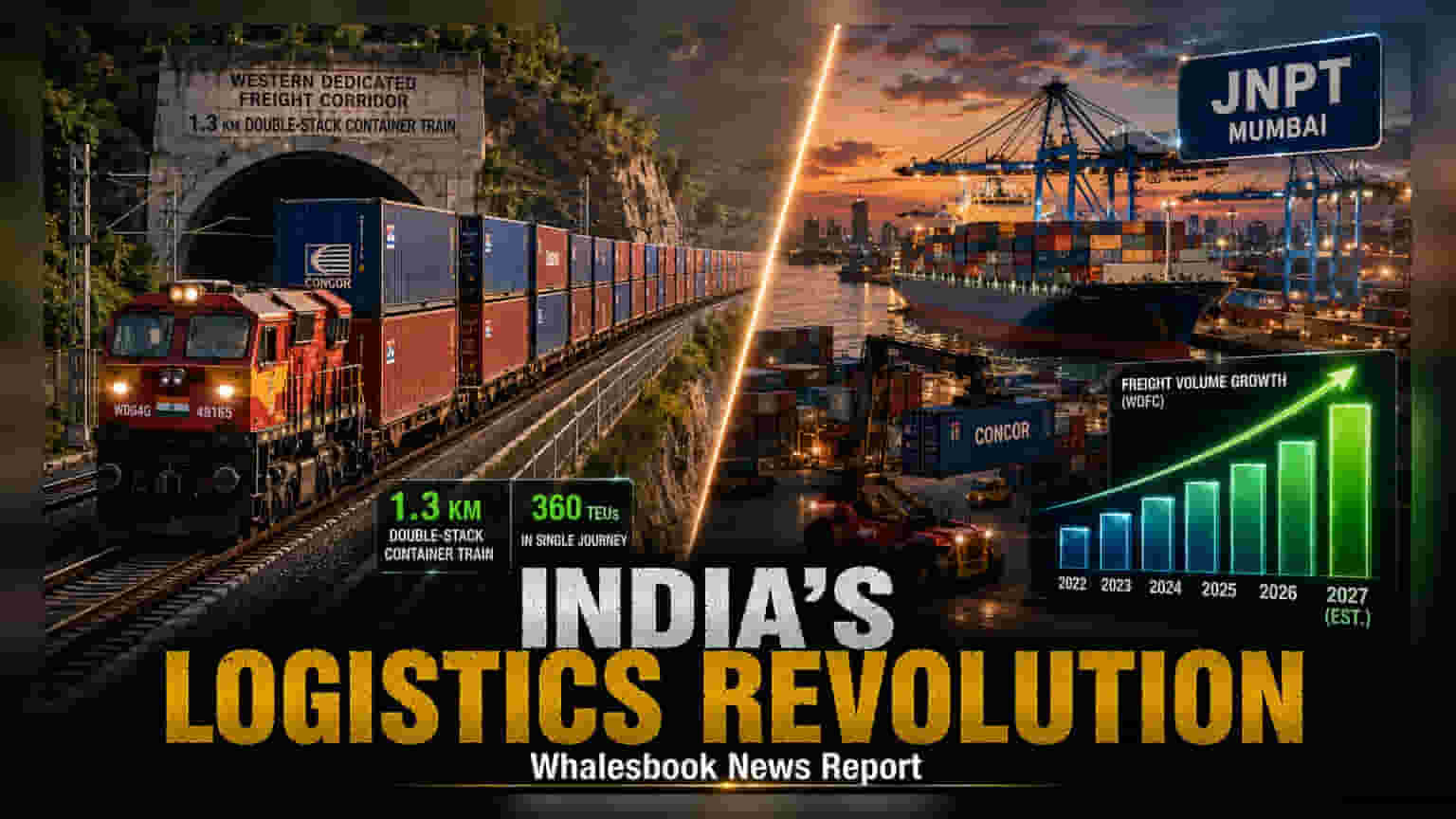
Indian Railways has successfully operated its first 1.3-kilometer long, double-stack container train on the Western Dedicated Freight Corridor (WDFC). Moving 360 TEUs from Mumbai to Gujarat, the service aims to reduce logistics costs and port congestion. This development highlights the growing operational scale of the newly completed freight corridor, impacting supply chain efficiency for logistics firms and e-commerce partners.
Indian Railways has successfully deployed its first 1.3-kilometer long, double-stack container train on the Western Dedicated Freight Corridor (WDFC), marking a key milestone in freight logistics. The train, which traveled from the Jawaharlal Nehru Port Trust (JNPT) in Mumbai to Varnama in Vadodara, carried 360 Twenty-foot Equivalent Units (TEUs) in a single journey. This operation utilized two joined double-stack rakes hauled by separate locomotives, showcasing the increased carrying capacity now available following the full completion of the WDFC in March 2026.
Efficiency Gains in Freight Movement
For investors and logistics stakeholders, the primary value of this long-haul formation lies in its potential to improve asset utilization. By consolidating more cargo into a single train, the rail network can reduce terminal congestion at major ports like JNPT. This increased efficiency is designed to lower container dwell times, which often drive up costs in the logistics supply chain. For companies like Container Corporation of India (CONCOR), which operates extensive rail-linked terminal infrastructure, these efficiency gains are critical as they directly improve turnaround times and lower the per-unit cost of transportation. Reduced reliance on multiple smaller train formations also helps optimize rolling stock deployment across the network.
Strategic Integration and E-commerce Adoption
This operational success follows the broader launch of the Joint Parcel Product–Rapid Cargo Service (JPP-RCS) on the WDFC, which began operations in mid-August 2026 with partners such as Amazon India. The integration of e-commerce volumes onto the dedicated corridor indicates a shift toward faster, rail-based logistics, challenging the traditional reliance on road transport for long-distance parcel movement. By separating freight from passenger traffic on the dedicated corridor, the network can offer more consistent transit schedules, which is vital for the time-sensitive requirements of modern e-commerce and manufacturing supply chains.
Operational Risks and Monitoring
While the WDFC offers significant capacity advantages, investors may track the integration of this new infrastructure with the legacy Indian Railways network. The WDFC operates on different technical parameters compared to older rail lines, and seamless coordination is required to prevent bottlenecks at interchange points. Furthermore, the operational success of these long-haul, double-stack services depends on precise scheduling to maintain the projected speed and reliability gains. As the network scales, the ability to manage high-volume, long-haul freight without service interruptions will be a key factor in realizing the expected economic benefits. Future updates regarding the frequency of these long-haul runs and the adoption rate by other private logistics partners will provide a clearer picture of the corridor's long-term utilization trend.