

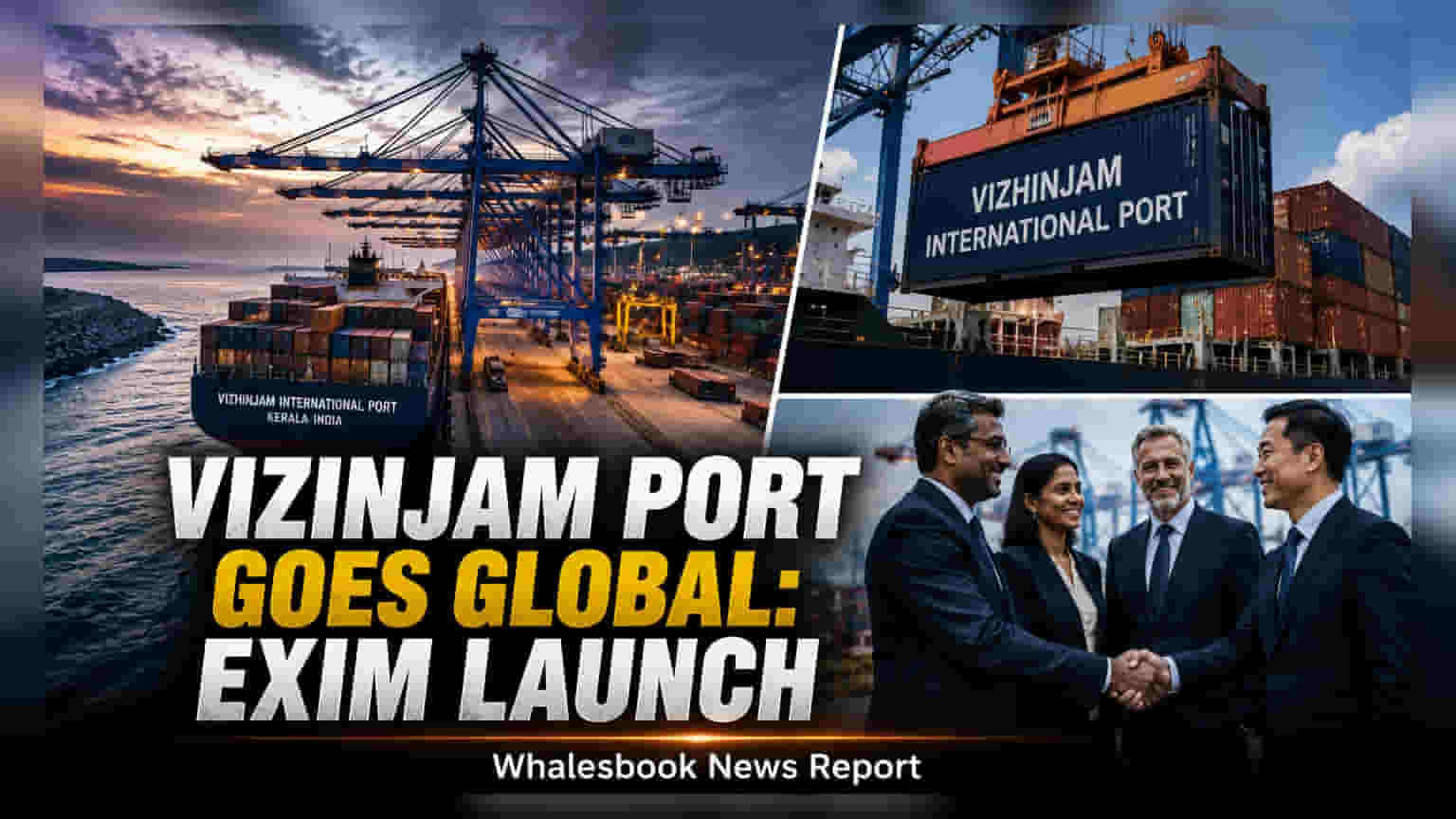
Vizhinjam International Port will begin full export-import operations on August 18, marking a transition into a complete cargo gateway. This shift is expected to improve regional supply chain efficiency and reduce freight costs for businesses. Investors are monitoring how this expansion impacts Adani Ports and Special Economic Zone's overall capacity and long-term cargo volume growth.
Vizhinjam International Port is set to commence full export-import (EXIM) operations on August 18, marking a significant step in its transition from a specialized transshipment hub to a comprehensive international cargo gateway. The inauguration, led by Kerala Chief Minister V.D. Satheesan, will include the flagging off of the first export container, officially integrating the port into the broader national and international trade network.
Strategic Expansion for APSEZ
Developed as a public-private partnership between the Kerala government and Adani Ports and Special Economic Zone (APSEZ), the port has already established a operational track record as a deep-sea transshipment facility. Since its commercial entry, the port has demonstrated high volume capacity, handling 2 million TEUs (Twenty-foot Equivalent Units) within the first 18 months. The addition of EXIM services is designed to capture a wider share of regional trade, allowing businesses in Southern India to export directly through this deep-sea location rather than relying on more distant ports.
Impact on Logistics and Trade
The state government’s initiative, which includes the 'Mission Samudra' business summit, aims to leverage this infrastructure to attract global shipping firms and logistics companies. By positioning the facility as an open-access port for all shipping lines, the project seeks to improve multimodal connectivity and lower logistics costs—a major hurdle for many Indian exporters. For APSEZ, this move is part of a larger strategy to strengthen its footprint in South Asia by utilizing the port's natural deep-water advantage, which can accommodate some of the world's largest container vessels that smaller ports cannot handle.
Operational Monitorables
While the expansion aims to drive economic development, investors will likely monitor the actual rate of cargo throughput and the pace of industrial growth in the surrounding region. The financial performance of this asset will depend on its ability to compete with existing hubs for consistent EXIM traffic. Additionally, the success of the 'Mission Samudra' event in securing long-term commitments from global shipping lines will be a key factor in ensuring high utilization of the port's automated container handling systems. As the port scales, the primary focus will remain on sustaining operational efficiency and managing the integration of road and rail connectivity to ensure that the increased cargo volume can be moved inland without logistical bottlenecks.