

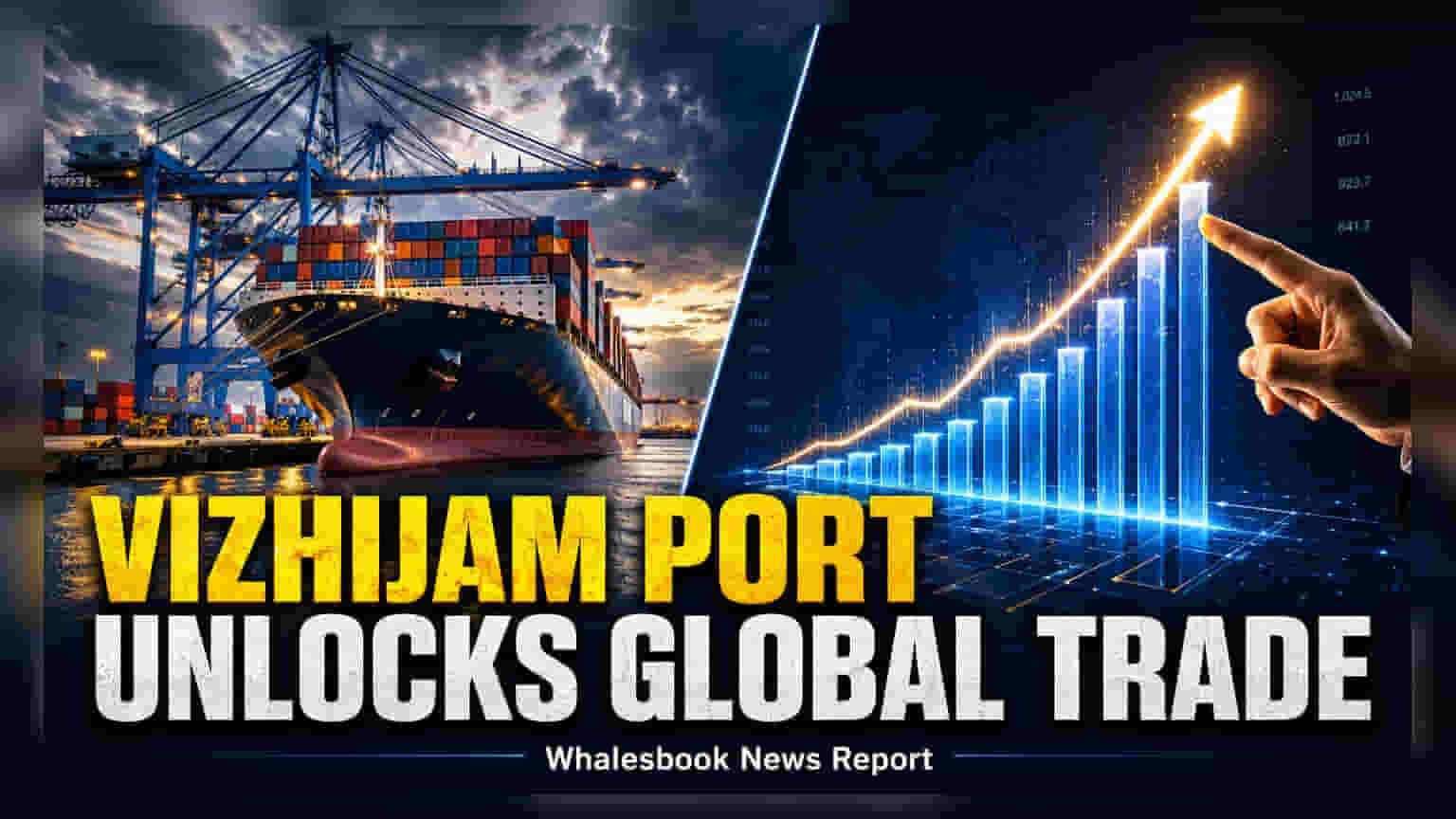
Vizhinjam International Seaport will begin full-scale export-import operations on August 18, marking a transition to a comprehensive cargo gateway. Developed by Adani Ports and the Kerala government, the project aims to lower logistics costs and improve maritime trade efficiency. Investors may track how this operational scale-up impacts the long-term cargo handling volumes and revenue growth for the port infrastructure sector.
The Vizhinjam International Seaport is scheduled to begin full-scale export-import (EXIM) operations on August 18. This transition shifts the facility from its primary role as a transshipment hub into a comprehensive international cargo gateway. The inauguration ceremony, led by Kerala state officials, will also feature the 'Mission Samudra' Business Summit, which is expected to bring together global shipping lines, logistics companies, and major exporters to foster further maritime integration.
Infrastructure and Operational Scale
Developed under a public-private partnership between the Kerala government and Adani Ports and Special Economic Zone (APSEZ), the project has gained attention for its deep-water capabilities. Official data from the facility indicates it has already handled two million twenty-foot equivalent units (TEUs) within the first 18 months of commercial activity. By accommodating some of the largest container vessels globally, the port has demonstrated its ability to handle high-capacity traffic, which is a critical factor for competitive maritime hubs.
Strategic Economic Impact
The launch of EXIM services is a key component of the state government’s 100-day action plan, designed to enhance the competitive edge of Indian exports. By enabling direct containerized movement, the port aims to reduce the logistical overheads typically associated with transshipment. For the broader logistics sector, lower transport costs and improved supply chain efficiency are essential for maintaining margins. The success of this expansion will depend on the port's ability to maintain high utilization rates as it integrates into the national and international trade network.
Sector Context and Investor Focus
As a deep-water, automated container facility, Vizhinjam operates on an open-access model, allowing various shipping lines to utilize its infrastructure. While this strengthens India's maritime standing, the project also faces the inherent risks of any large-scale infrastructure investment, such as the need for sustained high volumes to justify capital spending and the ongoing requirement to navigate regional regulatory environments. Investors interested in the logistics and port sector will likely track the commissioning of these new services and the subsequent impact on the port’s cargo throughput and revenue growth. Future updates regarding the volume of goods processed and the participation of major global shipping lines will serve as important indicators for the port's long-term commercial performance.