

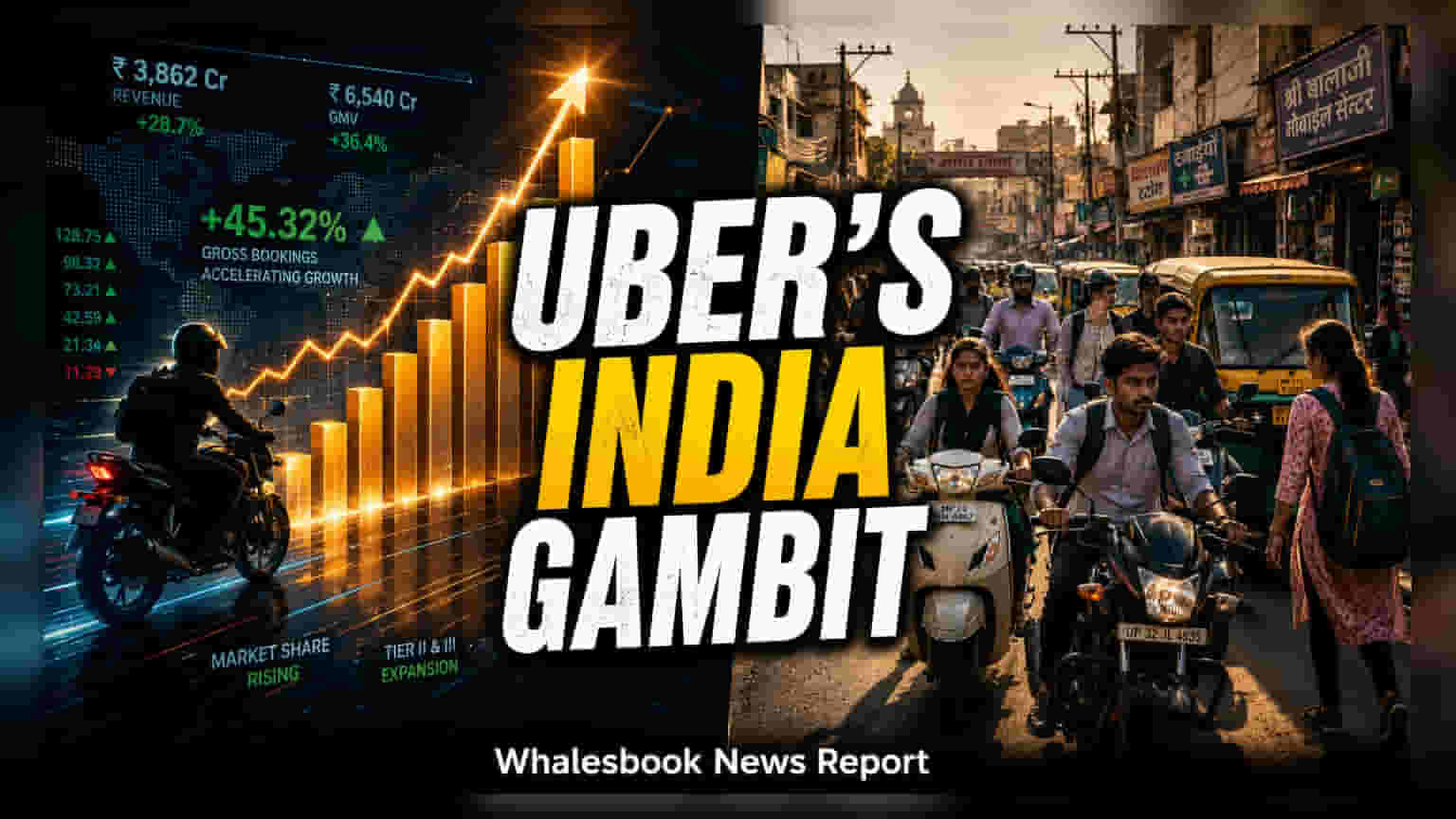
Uber is expanding its 'Uber Bike' service to smaller Indian cities to capture growing demand for affordable, short-distance transit. This push to penetrate Tier 2 and 3 markets comes as the company seeks to challenge rivals like Rapido, though it faces hurdles including a complex regulatory environment and pressure to improve profitability.
Uber is aggressively expanding its 'Uber Bike' service (formerly Moto) to a wider network of Tier 2 and 3 cities across India. By targeting smaller urban centers, the company aims to tap into a large, underserved market of students and daily commuters who need affordable options for short-distance travel. This strategy is part of a broader effort to make the platform more relevant to the diverse commuting needs of 'Bharat', where road infrastructure and traffic congestion often make two-wheelers a more practical choice than cars.
Targeting the Bharat Market
The company’s focus on smaller cities is a deliberate shift to move beyond its traditional stronghold in major metropolitan areas. By launching bike taxi services in these regions, Uber aims to increase its user base by providing a solution that fits the specific needs of towns with narrower roads and shorter commute requirements. For many residents in these areas, an affordable, app-based ride is often more convenient than waiting for public transport or using personal vehicles that are difficult to park or navigate through traffic.
Competitive and Financial Reality
While this expansion signals growth, Uber faces a stiff challenge in the Indian market. Its primary competitor, Rapido, currently holds a dominant position in the bike and three-wheeler taxi segment, commanding a significant market share. To compete, Uber has been forced to spend heavily on driver incentives and customer discounts to win over users in a highly price-sensitive market.
This high spending has impacted the company's financial performance. In the financial year 2025, Uber India's consolidated losses widened to ₹1,512 crore, largely driven by these intense efforts to match competitive pricing and acquire users. To support its operations and fuel this expansion, the parent entity, Uber B.V., has provided a capital infusion of ₹2,921 crore between late 2025 and 2026. The ability of the company to transition from spending on growth to achieving sustainable profit margins remains a critical area for market observers to monitor.
Regulatory Hurdles
The ride-hailing sector, particularly the bike taxi segment, continues to navigate an uncertain regulatory landscape in India. Various states, including Karnataka, Maharashtra, and Tamil Nadu, have had inconsistent policies regarding the operation of bike taxis. These regulatory differences create operational risks, as the company must constantly adapt its services to comply with local laws, which can affect service continuity and reliability in different regions.
For investors and market watchers, the success of this expansion will depend on several factors: the ability to maintain consistent demand in smaller cities, the capacity to control costs despite fierce competition from low-cost, subscription-based models, and the ongoing navigation of state-level regulations. The company’s focus on integrating these bike services with other offerings like autos, cabs, and metro ticketing is likely to continue as it tries to build a comprehensive mobility ecosystem.