

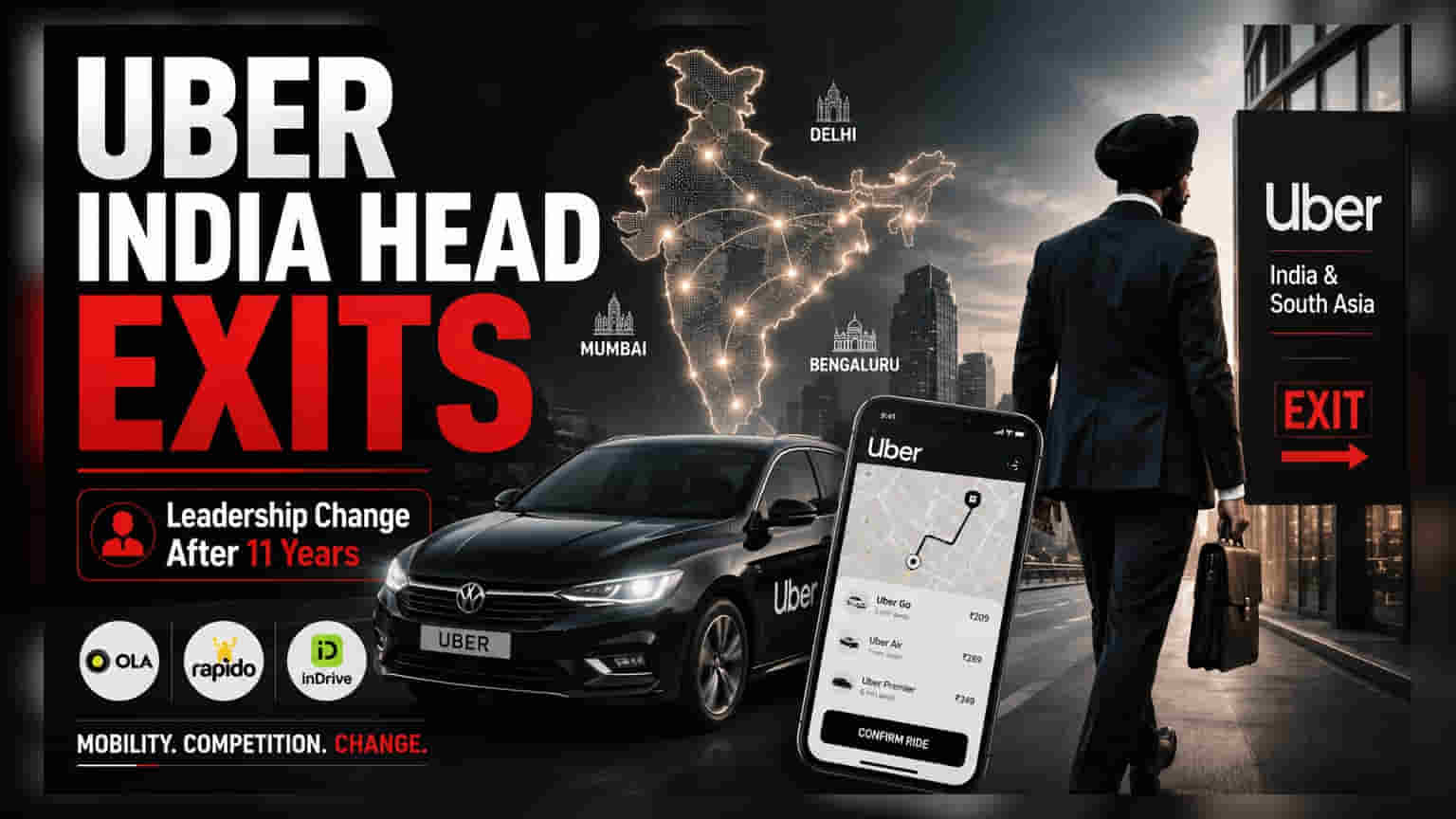
Prabhjeet Singh, President of Uber India and South Asia, has resigned to pursue a new opportunity in frontier technology. His departure comes during a critical expansion phase, following Uber's recent $330 million investment in the Indian market earlier this year. The company has yet to name a successor as it navigates intense competition and evolving regulatory requirements in the ride-hailing sector.
What Happened
Prabhjeet Singh, who has served as the President of Uber India and South Asia since 2020, has officially stepped down after an 11-year tenure with the ride-hailing company. The resignation, announced on June 26, 2026, marks the end of a decade-long journey during which Singh oversaw the company's expansion from a nascent ride-hailing app to a multifaceted mobility platform. According to company statements, Singh is departing to pursue a new leadership role in the frontier technology space. Uber has not yet announced a successor, but operations for the India and South Asia region will continue to be managed by the existing leadership team with support from the Asia Pacific division.
Why This Matters For The Business
Singh’s exit comes at a pivotal time for Uber’s India operations. Earlier in 2026, the company committed $330 million to its Indian subsidiary to bolster its competitive position against rivals like Ola and Rapido. The leadership transition follows a high-profile visit from Uber CEO Dara Khosrowshahi, who recently met with government officials and solidified plans for a new data center partnership with the Adani Group. The company has been aggressively diversifying its portfolio, pushing into premium segments like 'Uber Black' while simultaneously scaling mass-market solutions such as autos and two-wheeler rides to maintain volume growth in a price-sensitive market.
The Strategic Landscape
India remains one of Uber’s most significant global markets, acting as a major hub for both consumer demand and technology innovation. Under Singh's leadership, the company shifted focus toward 'made-for-India' products and deepened its integration with digital public infrastructure. However, the business faces a complex environment. The ride-hailing sector is undergoing a regulatory shift following the implementation of the Motor Vehicle Aggregator Guidelines (MVAG) 2025, which introduced stricter compliance requirements for aggregator licensing, passenger safety, and driver welfare. Additionally, state-level regulations, such as the Telangana Platform-Based Gig Workers Act, reflect a broader national trend toward formalizing the gig economy, which presents both operational and cost-related challenges for platforms.
Competitive And Sector Pressure
While Uber continues to hold a strong market position, the ride-hailing space in India remains fiercely competitive. Growth has shifted from traditional cab bookings to high-frequency, lower-ticket services like auto-rickshaws and bikes, particularly in non-metro cities. The company has been managing this through a multi-layered pricing strategy to attract different consumer segments. Despite its financial commitment and expansion efforts, the platform must balance this growth with thin unit economics and the need to retain driver partners amidst competing incentives from rivals.
What Investors Should Track
For those following the company’s trajectory, the key monitorable is the appointment of a new India head and whether the current strategic roadmap—focused on premiumization and deeper infrastructure integration—remains unchanged. Investors and stakeholders should also watch for updates on the implementation of the 2025 aggregator guidelines, as regional regulatory frameworks could influence future operating costs and compliance investments. Finally, the success of recent premium initiatives like Uber Black and corporate mobility services will be critical to sustaining margin improvements in a market that remains heavily reliant on affordable, high-volume ride formats.