 Whalesbook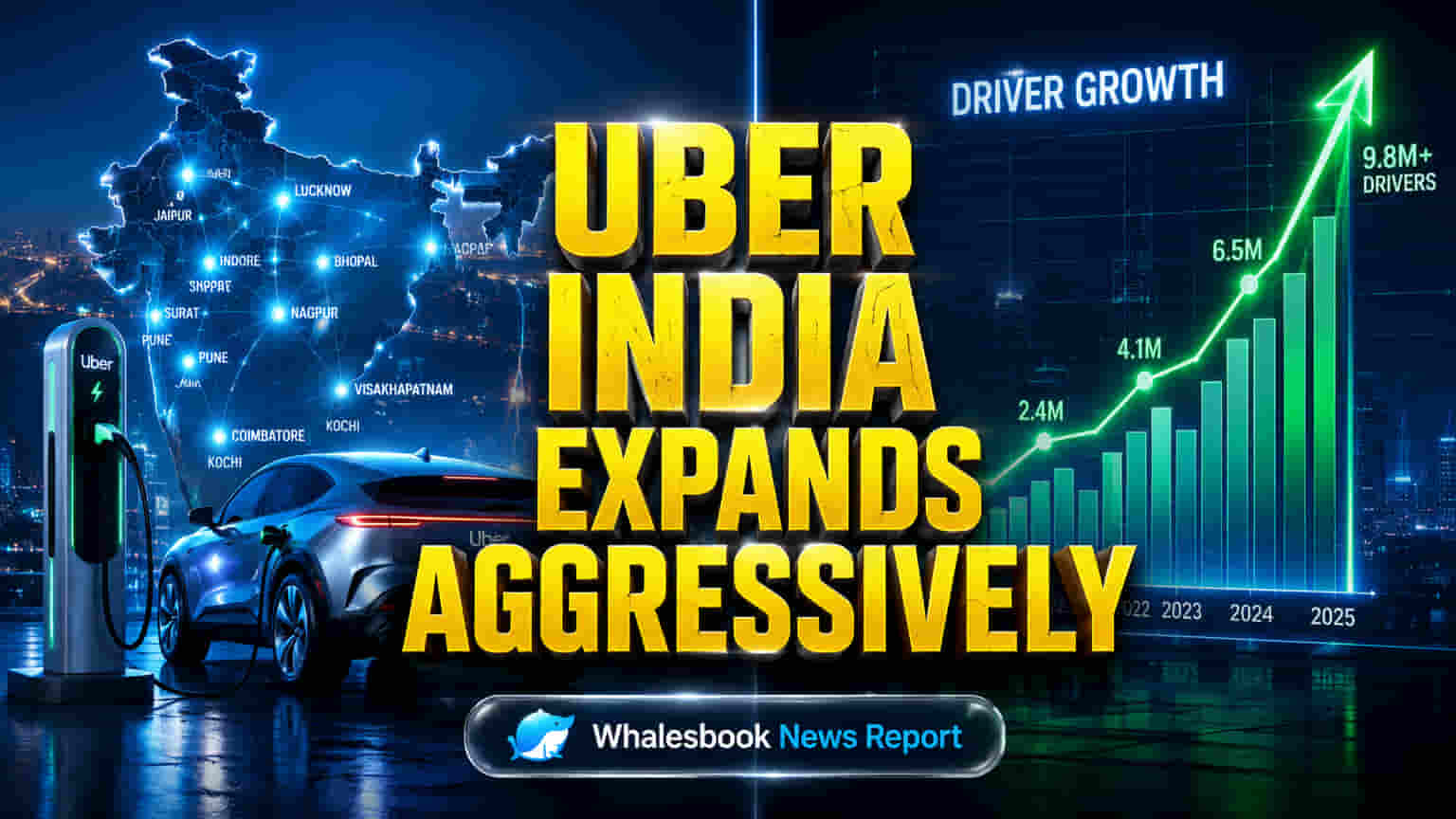


Electrifying Fleets and Reaching New Cities
Uber's renewed India strategy places a significant emphasis on electrifying its fleet and expanding its reach into tier-2 and tier-3 cities. This aligns directly with the Indian government's intensified focus on energy efficiency and reduced fossil fuel dependence, especially in light of the ongoing West Asia crisis. CEO Dara Khosrowshahi's discussions with Union Finance Minister Nirmala Sitharaman and Consumer Affairs Minister Pralhad Joshi highlighted this governmental push, with officials urging Uber to accelerate its EV transition and report on 'dark patterns'.
The strategic shift beyond major metros to smaller urban centers acknowledges a significant growth opportunity. Organized app-based mobility remains underpenetrated in these areas, where users increasingly favor lower-cost transport options. This focus on shared mobility formats, including bike taxis and auto-rickshaws, positions Uber to compete directly with Rapido, which has captured a substantial share of the two-wheeler segment. Rapido currently commands an estimated 70-75% market share in bike taxis and has surpassed Uber and Ola in overall ride numbers in India.
New Data Center With Adani Group
Further cementing its long-term commitment, Uber announced plans to establish its first India data center in partnership with the Adani Group. This facility, slated for completion later in 2026, is designed to support Uber's technology testing and deployment at scale, enabling it to "build at scale - from India, for the world.". This collaboration leverages Adani Group's expanding digital infrastructure footprint, including its significant investments in AI-ready data centers. The move aligns with India's ambition to become a global hub for artificial intelligence and cloud computing, and positions Uber to harness India's engineering talent for global product development.
Competition Heats Up in Indian Ride-Hailing
Uber's aggressive expansion comes amid a rapidly evolving and intensely competitive Indian ride-hailing market. While Uber and Ola remain dominant in the four-wheeler segment, Rapido has emerged as a formidable challenger, particularly in the bike-taxi and auto-rickshaw categories, boasting over 2 million registered partners. Rapido has captured a significant market share, reportedly surpassing Uber and Ola in total rides with approximately 50% of the market, compared to Uber's 40%.
Despite Rapido's volume advantage, Uber's Indian operations are reported to maintain better unit economics, with a higher net take rate than Rapido's. The Indian ride-hailing market is projected to grow at a robust CAGR of 18.78% between FY2025 and FY2032, reaching an estimated USD 3,766.79 million by 2032. The government's policy direction is increasingly focusing on shared electric mobility to address urban congestion and reduce reliance on fossil fuels.
Navigating Indian Regulations
Uber's engagement with Indian regulators also highlights adherence to evolving standards. Minister Prahlad Joshi's call for Uber to support drivers' transition to EVs and to self-audit 'dark patterns' indicates the government's expectation for platforms to align with its sustainability and consumer protection agendas. India's overall EV policy, supported by schemes like FAME, aims for 30% of new vehicle sales to be electric by 2030. However, the rapid mandate for 100% EV transition in two-wheeler ride-hailing fleets within six months raises concerns about ecosystem readiness.
Challenges and Risks Ahead
Despite the expansion and governmental alignment, significant challenges persist. Rapido's aggressive, low-cost model has disrupted Uber's market dominance, particularly in high-volume, price-sensitive segments. While Uber has invested heavily in its Indian arm, including a ₹3,000 crore injection, it faces intense competition that has historically made profitability elusive for all players. The regulatory environment, while pushing for electrification, presents a complex patchwork of state-level policies that can create compliance friction. Furthermore, the rapid scaling of gig economy platforms often brings risks of driver dissatisfaction and retention issues, potentially impacting service reliability. Uber's Q1 2026 results showed strong EPS growth, revenue slightly missed expectations, indicating the delicate balance required to manage growth amidst competition and investment needs. Analysts generally maintain a positive outlook, with a consensus 'Buy' rating and an average price target of around $105.01, suggesting confidence in Uber's long-term strategy, but the competitive intensity in India demands continuous strategic adaptation.