

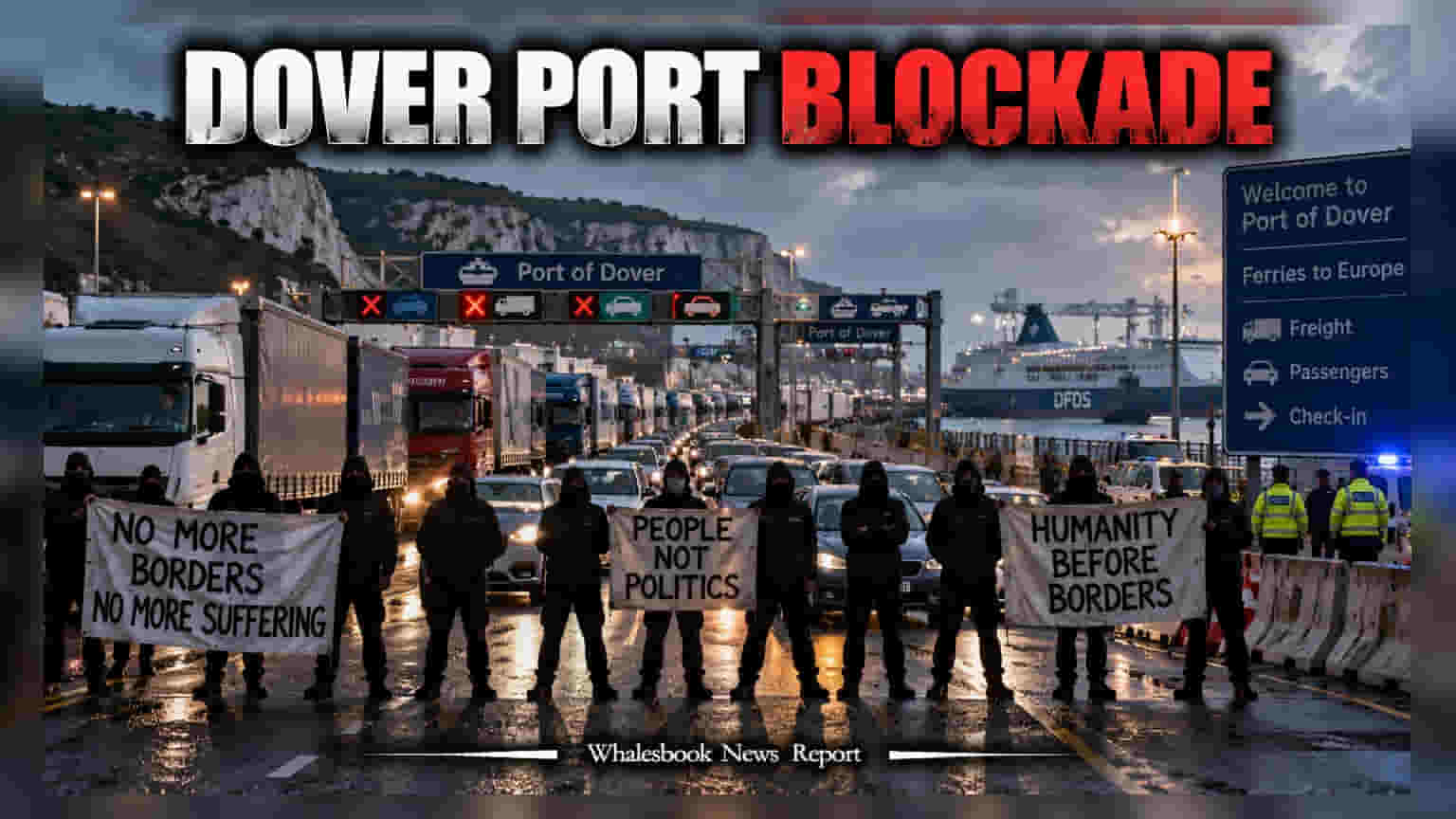
Masked protesters blocked access to Britain's busiest ferry port on Saturday, creating a 6.4-kilometre vehicle backlog and halting logistics for several hours. The incident highlights the vulnerability of critical trade gateways to social unrest, impacting cross-Channel freight operations. While services are resuming, the event serves as a reminder of the operational risks facing major infrastructure hubs.
The Port of Dover, a critical artery for trade between Britain and the European Union, experienced significant logistical disruptions on Saturday, September 5, 2026. A group of masked demonstrators blocked key access routes, including the A20, leading to a 6.4-kilometre traffic jam that halted the movement of freight and passenger vehicles for several hours.
The protest, which was reportedly linked to ongoing tensions over migration policy, forced major ferry operators like P&O Ferries and DFDS to manage severe scheduling delays. Passengers were advised to rebook onto subsequent departures as the blockade prevented normal access to the terminal. By midday, local law enforcement had engaged with the protesters and cleared the routes, allowing operations to resume, though the backlog took time to clear.
For investors and market analysts, this event underscores a specific type of operational risk: the fragility of key infrastructure. The Port of Dover is not just a transport hub; it handles a vast majority of the roll-on/roll-off freight entering Britain. Any interruption to this port, whether caused by weather, strikes, or social unrest, ripples immediately through supply chains. Delays in this corridor can lead to increased costs for logistics companies, inventory shortages for businesses relying on just-in-time delivery, and scheduling pressures that reduce the efficiency of cross-Channel operations.
While the immediate disruption was resolved, the incident highlights why companies with high exposure to critical trade routes must account for infrastructure security in their risk management frameworks. When major gateways are blocked, there is often no easy alternative, which can force operators to absorb higher costs or pass them on to the consumer.
This event also serves as a reminder of the broader social and political climate in the UK. As the country navigates ongoing debates regarding border control and migration, infrastructure nodes are increasingly becoming focal points for public demonstrations. For investors, the key monitorable remains how port authorities and the government balance public order with the need to keep essential trade routes functioning without delay. Future updates will likely focus on whether security protocols at Dover and other major entry points are adjusted to prevent similar, prolonged shutdowns.