 Whalesbook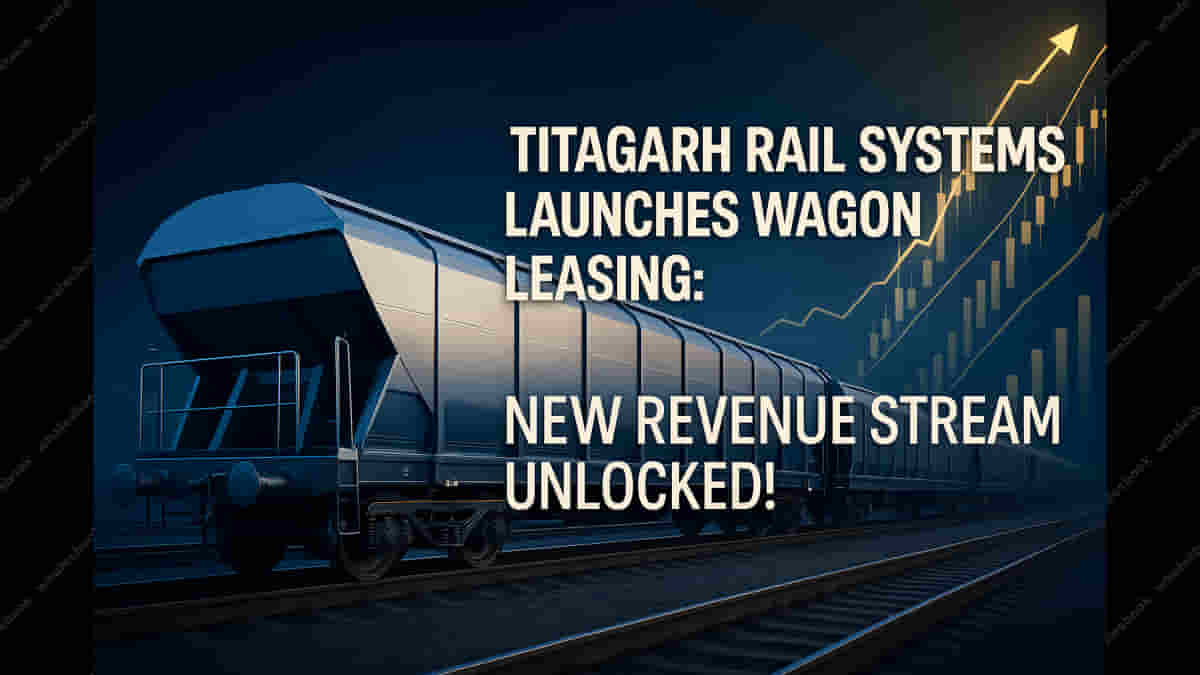
Titagarh Rail Systems Limited is embarking on a new strategic venture into the wagon leasing business.
This expansion aims to capture a significant share of the growing private sector market by offering long-term lease models.
Background Details
- The company has prior experience in wagon leasing, having executed transactions with Indian Railways.
- This past involvement was crucial in helping Titagarh Rail Systems qualify for the new leasing license.
Key Numbers or Data
- The target market for annual wagon leases in the private sector is estimated at 1,500 to 2,000 wagons.
- Titagarh Rail Systems holds a robust order book worth approximately Rs 28,000 to Rs 29,000 crore.
- Production has normalized to a run rate of 800-850 wagons per month following the resolution of supply chain issues.
Latest Updates
- The company has successfully resolved the long-standing issue concerning wheel set availability.
- This resolution allows for the normalization of wagon production to its expected monthly run rate.
Importance of the Event
- Entering the wagon leasing business diversifies Titagarh Rail Systems' revenue streams.
- It allows the company to deepen its market penetration in the rail logistics sector.
- The leasing model is expected to generate recurring revenue, providing more stable income.
Future Expectations
- Titagarh Rail Systems aims to become a key player in the wagon leasing ecosystem.
- The company expects to establish strong, long-term relationships with private sector clients in the logistics chain.
- The move leverages the company's manufacturing capabilities to explore new growth avenues.
Management Commentary
- Umesh Chowdhary, Vice Chairman and Managing Director, stated the company is evaluating whether to execute leasing through its own balance sheet or a special purpose vehicle (SPV).
- He clarified that an NBFC license is not a necessity as wagon leasing is categorized as operating leasing, not financial leasing.
- Chowdhary expressed confidence, calling it a "very interesting business to be in" and highlighting the company's ambition in this segment.
Company Financials
- The company boasts a substantial order book providing significant revenue visibility for the near term.
Investor Sentiment
- This strategic diversification and resolution of production bottlenecks are likely to be viewed positively by investors.
- The focus on recurring revenue streams from leasing business signals a well-thought-out growth strategy.
Regulatory Updates
- Recent policy discussions suggest that wagon leasing companies might be permitted to retain ownership of the wagons they operate.
Impact
- This move could significantly enhance Titagarh Rail Systems' financial performance through diversified and recurring revenue streams.
- It positions the company to benefit from the increasing trend of operational leasing in the private sector.
- The resolution of production issues supports its ability to meet existing and future demand.
- Impact Rating: 8/10
Difficult Terms Explained
- Wagon Leasing: Renting out railway freight wagons to businesses for a specific period.
- Special Purpose Vehicle (SPV): A subsidiary company created for a specific, limited purpose, such as a particular project or financing.
- Operating Leasing: A lease agreement where the lessor (owner) transfers the right to use an asset for a period, but retains ownership and the asset appears on the lessor's balance sheet. The lessee makes periodic payments.
- Financial Leasing: A lease agreement that transfers substantially all the risks and rewards of ownership of an asset to the lessee. It's akin to acquiring an asset financed over time.
- NBFC (Non-Banking Financial Company): A financial institution that provides banking-like services but does not hold a banking license. They typically do not accept demand deposits.
- Logistics Chain: The entire process involved in managing the flow of goods from origin to consumption, including transportation, warehousing, and inventory management.
- Rail Logistics: The segment of logistics specifically involving the transportation of goods via railway networks.