

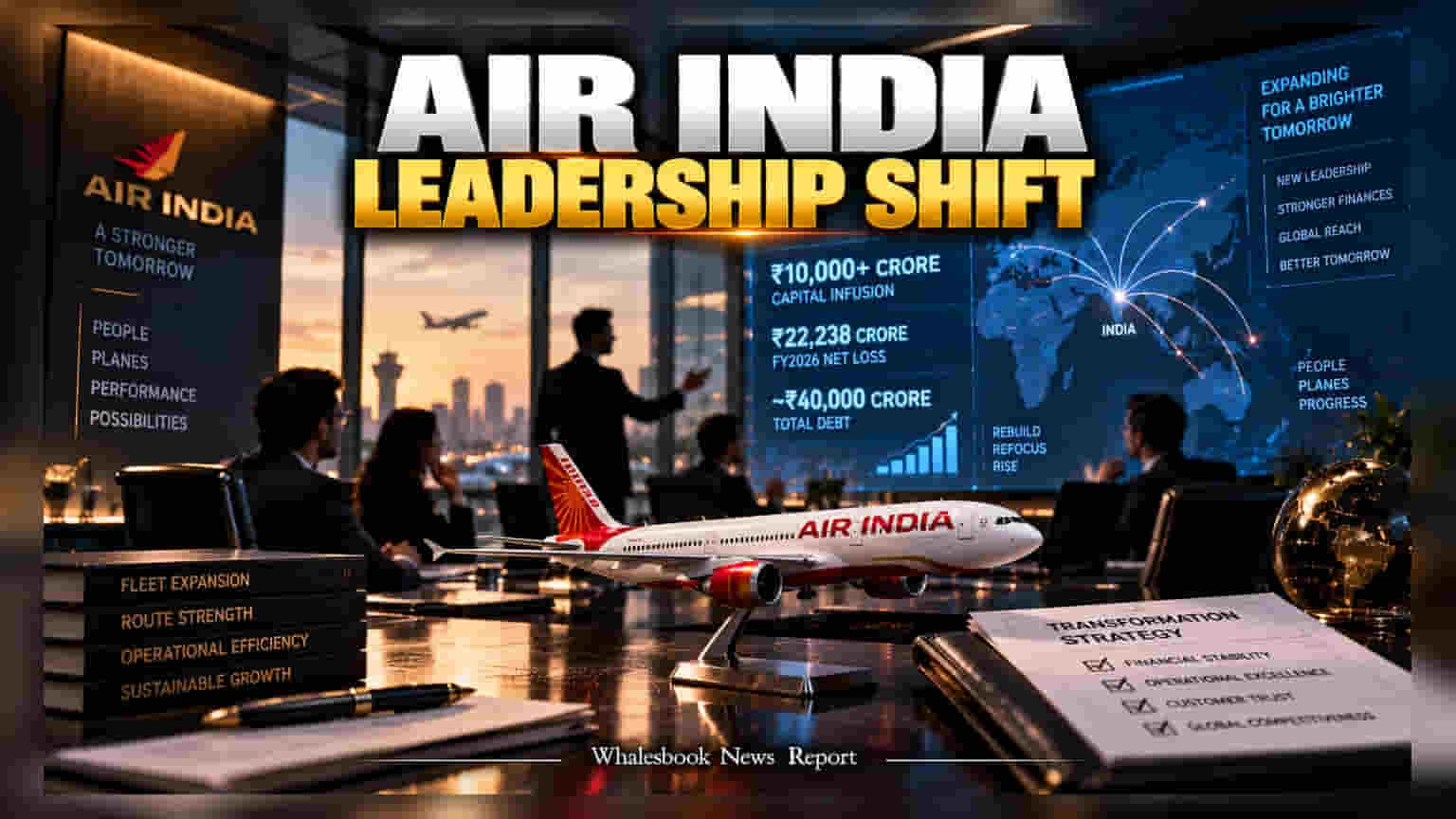
Tata Sons has approved a fresh capital infusion of over ₹10,000 crore for Air India to help the airline manage its financial challenges. The company reported a net loss of ₹22,238 crore for FY26 and faces a debt burden of roughly ₹40,000 crore. As new CEO Tewolde Gebremariam takes charge, the industry is watching how this funding and the participation of other shareholders like Singapore Airlines will impact the carrier's future.
Tata Sons has granted in-principle approval for a capital infusion exceeding ₹10,000 crore into Air India. This move is a significant step to stabilize the airline's finances as it navigates a difficult period marked by heavy losses and high debt. The funding is intended to provide the necessary support for the airline to continue its operations and long-term transformation strategy.
Financial Reality and Debt Pressure
The need for this capital injection is rooted in the airline's performance for the financial year ending March 2026, which saw the company report a net loss of ₹22,238 crore. With total debt estimated at approximately ₹40,000 crore across 11 lenders, the carrier has been under significant pressure to manage its balance sheet. This fresh round of equity is not just about growth; it is seen as an essential measure to sustain basic operations. The parent company has set conditions for this release, requiring the airline to present a solid business case for how these funds will be deployed in the future.
Shareholder Dynamics and Ownership
Singapore Airlines, which holds a 24.7% stake in Air India, remains a key figure in this funding process. To prevent their ownership from being diluted by this new capital infusion, Singapore Airlines would theoretically need to contribute around ₹3,350 crore. The Singaporean government has indicated that it will not interfere in the airline's commercial investment decisions, leaving the choice to participate entirely up to the company. The participation of minority shareholders will be a critical point for the market to track, as it reflects their confidence in the airline's turnaround plan.
Leadership Transition and Operational Challenges
This funding announcement coincides with a major leadership change. Tewolde Gebremariam took over as CEO and Managing Director on August 5, 2026, following the departure of Campbell Wilson. The new management faces a tough environment, including rising fuel costs and geopolitical tensions that have forced the airline to reroute several international flights. These operational disruptions have made it more expensive to run long-haul routes and have hurt overall efficiency.
Beyond these external pressures, the airline is also dealing with the complex task of fleet expansion and the integration of new aircraft. The success of the current turnaround strategy will likely depend on how effectively the new management team manages these rising costs while attempting to expand capacity. Moving forward, investors and industry observers will be monitoring whether the airline can improve its profit margins and reduce its reliance on repeated equity injections from the parent group.