

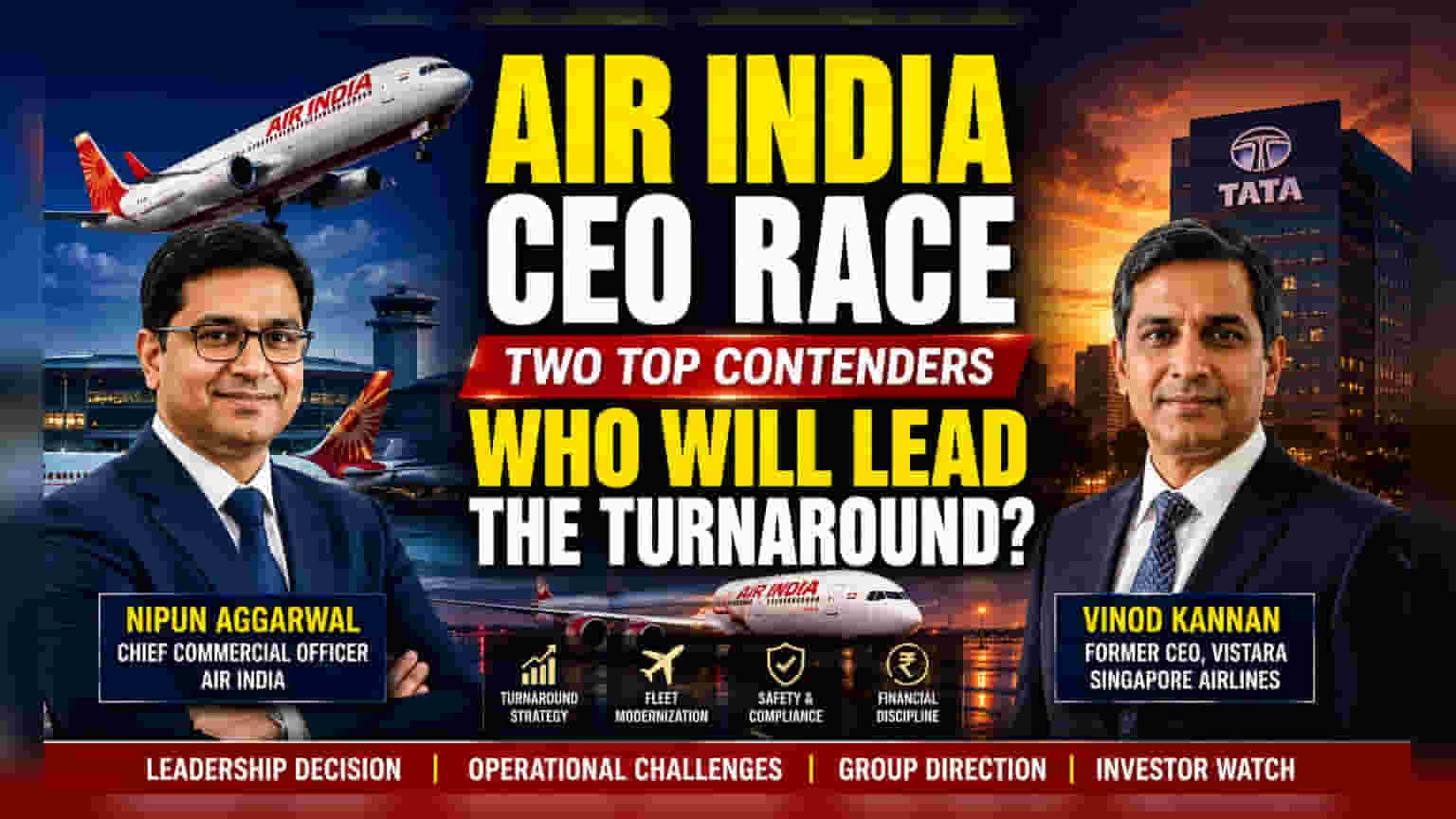
Tata Group is finalizing its search for the next Air India CEO, with Nipun Aggarwal and Vinod Kannan emerging as leading candidates. The leadership transition comes during a challenging period for the airline, marked by fleet expansion, geopolitical disruptions, and ongoing leadership discussions within Tata Sons.
What Happened
Tata Group is in the final stages of identifying a new Chief Executive Officer for Air India following the resignation of Campbell Wilson in April 2026. The search for a successor has narrowed down to two primary internal contenders: Nipun Aggarwal, who currently serves as Air India’s Chief Commercial Officer, and Vinod Kannan, the former CEO of Vistara who is now with Singapore Airlines. The leadership change is a significant development for the airline as it attempts to sustain its long-term turnaround plan in a complex global aviation environment.
The Contenders in Focus
The choice between the two candidates represents two different strategic paths for the airline. Nipun Aggarwal is widely seen as the architect of Air India's transformation strategy. Supporters view him as an internal leader who is deeply familiar with the current restructuring efforts, particularly regarding the commercial and operational turnaround.
On the other hand, Vinod Kannan brings extensive experience from his tenure at Vistara, a full-service carrier. His background is often highlighted by those who advocate for a leader with a proven track record in managing premium, full-service airline operations. The Tata board is weighing these internal profiles against the airline’s specific need for operational stability and reputation management.
Internal Leadership Friction at Tata Sons
The CEO search is unfolding against a backdrop of broader leadership discussions at the parent company, Tata Sons. Reports indicate that the reappointment of Tata Sons Chairman N Chandrasekaran has been a subject of deliberation among board members.
Noel Tata, Chairman of Tata Trusts—which holds a majority stake in Tata Sons—has reportedly raised questions regarding capital allocation and the financial performance of various group ventures, including Air India. This internal discourse has created a complex environment for decision-making, as the group balances the need for long-term strategic continuity with the need for immediate financial accountability.
Operational and Financial Headwinds
Whoever takes over as CEO will face a demanding operational environment. Air India is currently managing several headwinds, including the impact of geopolitical tensions in the Middle East, which have constrained flight capacity on key routes. Additionally, the airline is continuing to address the long-term repercussions of the June 2025 flight incident in Ahmedabad, which remains a focal point for regulatory scrutiny and internal safety reviews.
Furthermore, the airline’s ambitious fleet modernization program is facing external pressure from global supply chain delays. While the order for 570 aircraft is a core part of its growth strategy, the timing of these deliveries and the associated capital commitments are critical variables. The airline also reported a significant loss for the financial year ended March 2026, making financial discipline a primary objective for the incoming leadership.
What Investors Should Monitor
For those tracking the broader Tata Group, the key monitorable is the resolution of the leadership succession at both the Air India and Tata Sons levels. The clarity provided by the board regarding N Chandrasekaran’s term and the subsequent appointment of the Air India CEO will be essential signals of the group’s strategic direction. Investors and analysts will also watch for updates on fleet delivery timelines, the outcome of ongoing regulatory investigations related to safety, and the airline's progress toward achieving financial sustainability in the coming quarters.