

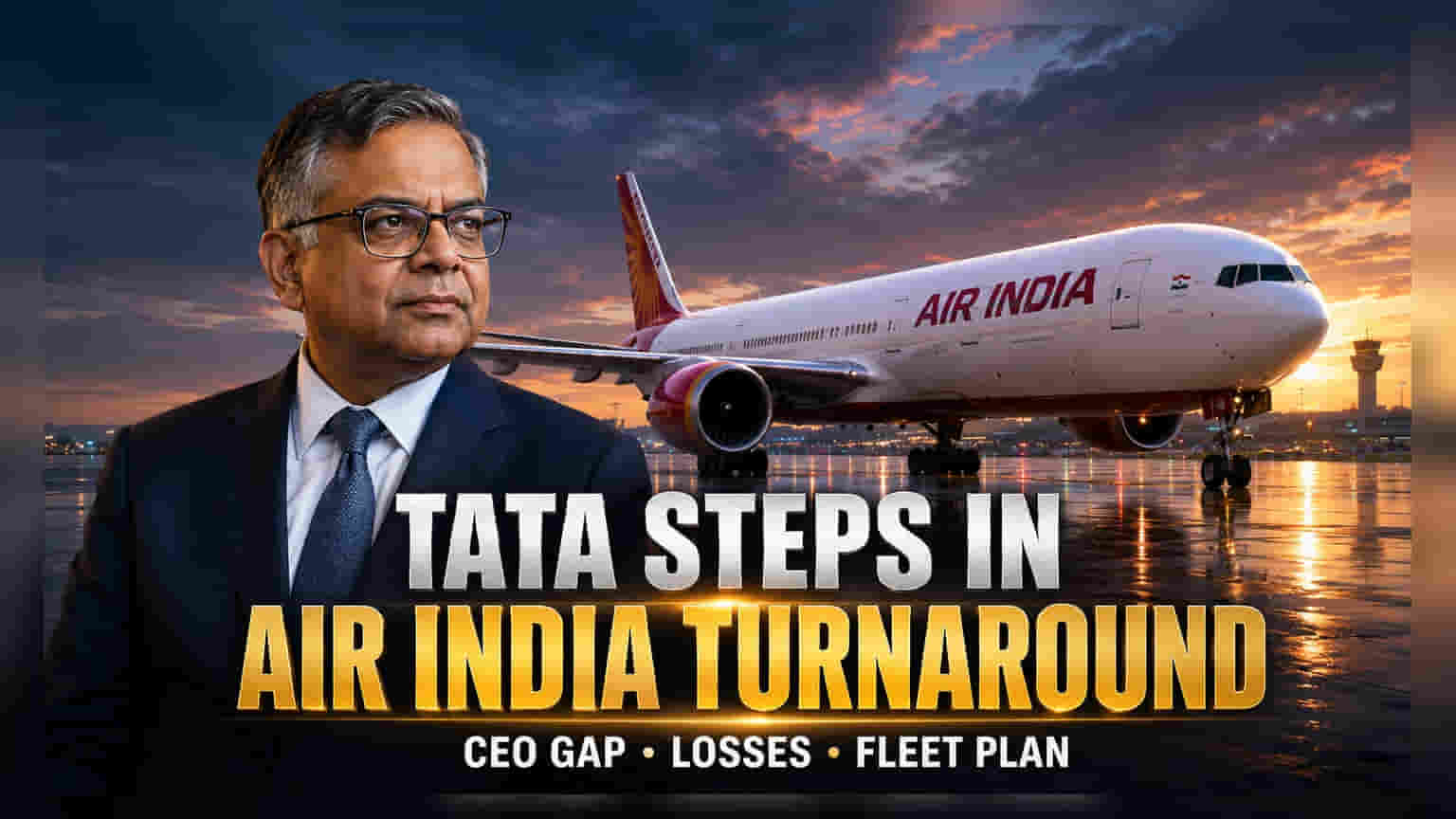
Tata Sons Chairman N Chandrasekaran has begun directly overseeing Air India’s weekly operations amid a leadership gap following CEO Campbell Wilson’s planned exit. The carrier is navigating significant financial losses, adding pressure on the group’s capital resources as it attempts an ambitious fleet expansion.
What Happened
Tata Sons Chairman N Chandrasekaran has stepped in to directly oversee the weekly operations of Air India. This move follows the planned departure of CEO Campbell Wilson, for whom a successor has not yet been named. The chairman is now requiring direct progress reports from key divisions, including finance, commercial strategy, and flight operations. This hands-on approach reflects a high-pressure environment as the airline attempts to navigate a complex turnaround plan following its privatization by the Tata Group in 2022.
Why The Leadership Gap Is A Concern
With the search for a new CEO stalled and no consensus reached on potential internal candidates, the leadership void is becoming a critical issue. Internal reports suggest that this uncertainty is causing delays in key business decisions and affecting employee morale. For a complex business like aviation, which relies on fast, decisive action, a lack of dedicated, permanent leadership can slow down critical operational improvements. The chairman’s direct involvement is a temporary measure, but it highlights that the group is currently struggling to find a stable long-term leadership path for the airline.
Financial Strain And Group Resources
Air India is currently facing significant financial headwinds, with board discussions reportedly projecting losses of approximately Rs 27,000 crore for FY26. While Air India is not a publicly listed company, these losses impact the Tata Group as a whole, as the conglomerate and its partner, Singapore Airlines, are required to infuse capital to keep operations running and fund the turnaround. Heavy reliance on the parent group's resources can lead to questions about capital allocation across other listed Tata group entities. Furthermore, external factors such as rising jet fuel costs due to regional conflicts and longer flight routes caused by the closure of Pakistani airspace have added heavy operating costs, putting further pressure on the airline's profit margins.
Fleet Strategy Amid Turbulence
Despite the operational and financial challenges, the airline is continuing with its aggressive fleet expansion plan. The company is set to induct seven wide-body aircraft in FY27, and its budget arm, Air India Express, is adding around 10 Boeing 737 Max planes this fiscal year. The management is also focusing on retiring older, less fuel-efficient aircraft to rationalize capacity. The challenge for the airline will be balancing this rapid fleet growth with the need to improve financial health and operational efficiency in a cost-sensitive market.
What Investors Should Track
Investors in listed Tata Group companies may watch for updates on how the group manages capital allocation, given the significant funding requirements of the airline. Key monitorables include the timeline for appointing a new, permanent CEO, evidence of the turnaround plan reducing losses, and future requirements for capital infusion from Tata Sons. Additionally, any changes in fuel costs or regulatory environment that affect the broader aviation sector will remain important to watch as they impact the airline's ability to reach break-even profitability.