

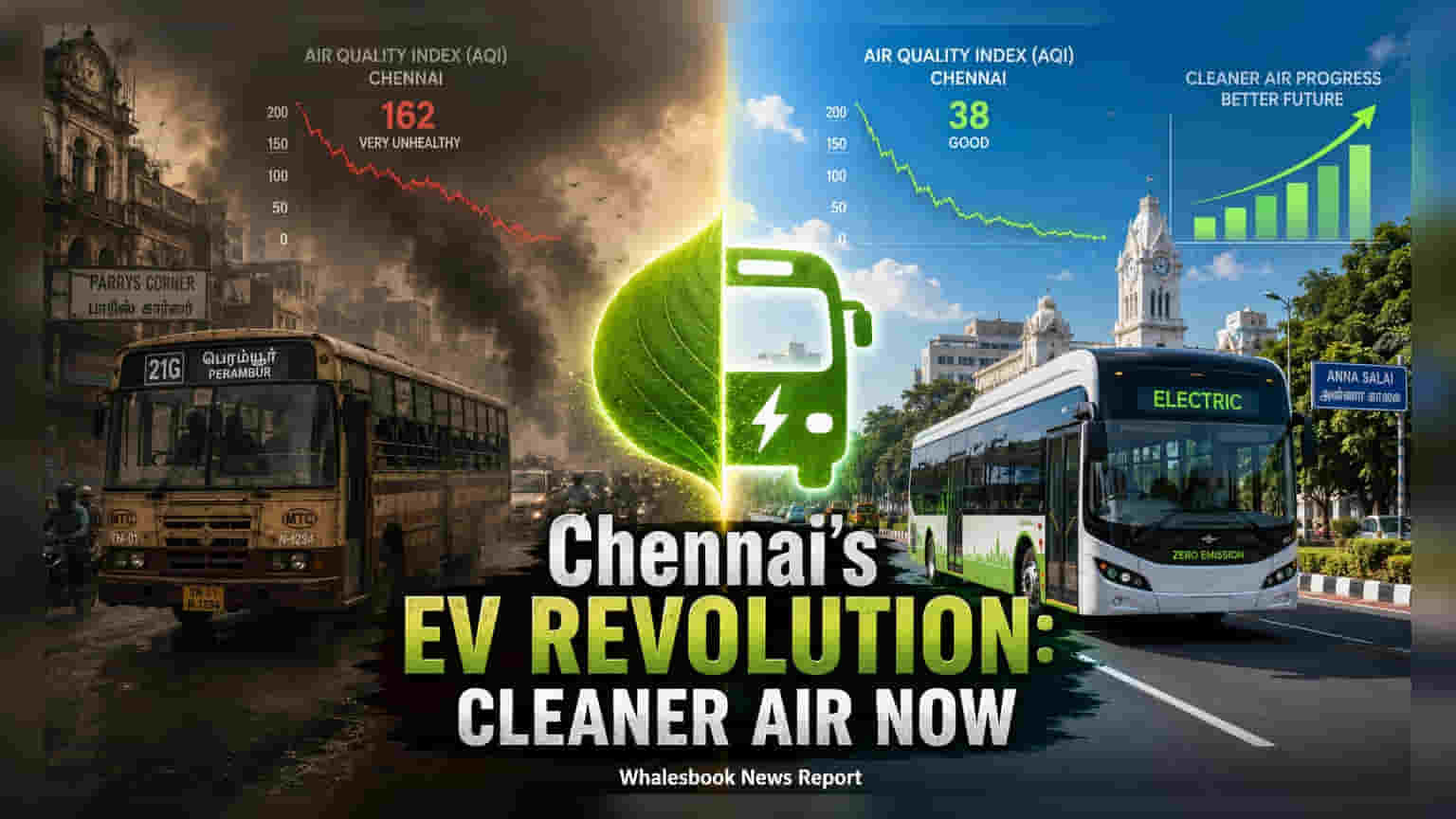
Chennai’s transition to electric buses has contributed to a 22% reduction in local air pollution over five years. The Tamil Nadu government has allocated ₹13,561 crore for the transport sector in its 2026-27 budget, aiming to add 1,000 new air-conditioned electric buses. Investors are tracking the Gross Cost Contract (GCC) model and upcoming tender timelines as key indicators for this sector's expansion.
The Metropolitan Transport Corporation (MTC) in Chennai is aggressively expanding its electric bus fleet, playing a central role in the state's environmental goals. Recent data indicates that Tamil Nadu has successfully achieved a 22% reduction in fine particulate matter over the last five years. This shift away from diesel-powered buses is a key component of the state’s alignment with the National Clean Air Programme, which targets a 40% reduction in air pollution by 2026.
Financial Commitment and Fleet Expansion
The state government’s commitment to this transition is reflected in the 2026-27 revised budget, which allocated ₹13,561 crore to the transport sector. A significant portion of this capital is earmarked for the procurement of 1,000 new air-conditioned electric buses. Since June 2025, the existing electric fleet has covered over 30 million kilometers and saved an estimated 10 million liters of diesel, showcasing a clear improvement in operational efficiency for the MTC.
The Shift to Gross Cost Contracts
For investors and market observers, the most significant change is the move toward the Gross Cost Contract (GCC) model. Under this arrangement, private entities manage the operation and maintenance of the buses, while the transport corporation retains control over ticket revenue and pays the operator on a per-kilometer basis. This shift helps reduce the heavy capital expenditure burden on the government balance sheet while outsourcing operational risks to private partners.
However, this model brings its own set of operational requirements. The state is currently in the process of a large-scale procurement of 1,520 electric buses. This tender process has faced revisions and rescheduling, with stakeholders now watching for the upcoming bid deadline on August 19, 2026. The ability of the state to successfully finalize these tenders and manage the deployment is a critical factor for the sector's growth.
Operational Risks and Challenges
The electrification push is not without hurdles. While the reduction in fuel costs is measurable, long-term success depends on solving infrastructure gaps. These include the availability of sufficient charging stations and the complex task of battery management for a large fleet. Furthermore, the reliance on the electricity grid means that the actual environmental benefit is tied to how clean the power source is.
There is also the challenge of internal friction; transport unions have expressed concerns regarding the potential for privatization and its impact on the economic stability of state transport corporations. As the transition progresses, investors will closely monitor the tender outcomes, the speed of infrastructure rollout, and the operational reliability of the buses as they scale up to meet the 3,000-bus target.