

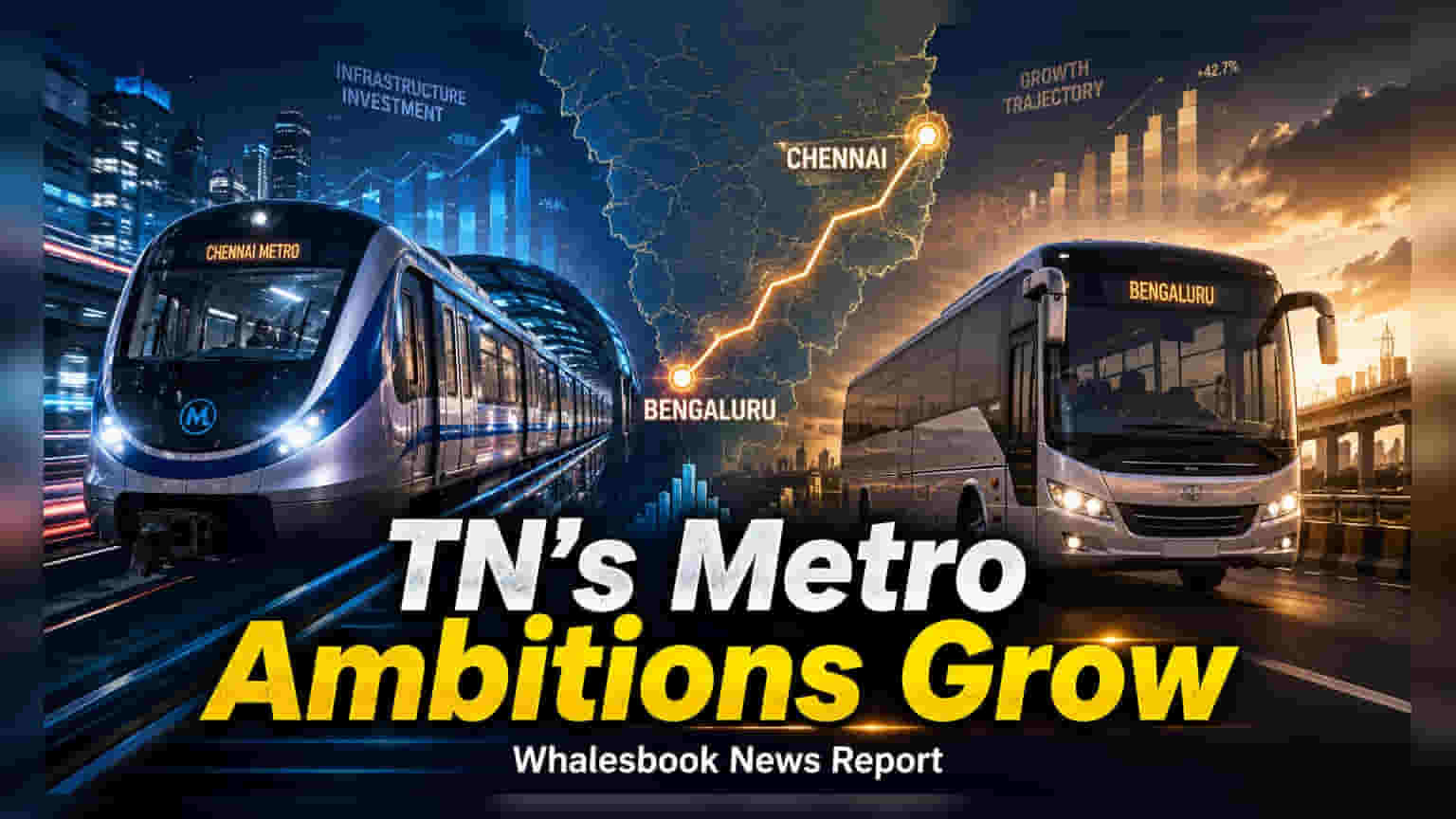
Tamil Nadu’s latest budget focuses on infrastructure, with plans for a new Hosur-Bommasandra metro link and expanded Chennai Metro corridors. The government has also earmarked funds for procuring 1,000 electric buses. While the push for better connectivity creates potential for infrastructure and transport players, investors should track how the state balances these ambitious capital-heavy projects against its existing high debt load.
The Tamil Nadu government, in its budget presented on August 5, 2026, has signaled a major push for public transport infrastructure. Finance Minister N. Marie Wilson outlined plans to significantly expand the state's transport network, with a focus on both metro rail connectivity and modernization of the public bus fleet.
Chennai Metro and Inter-State Links
A central highlight of the budget is the continued development of the Chennai Metro Phase II project. This massive infrastructure undertaking, spanning 118.9 km across three corridors, is estimated to cost Rs 63,246 crore. The state is aiming to commission the initial segment from Poonamallee Bypass to Porur Junction shortly, which could improve local transit efficiency. Beyond existing projects, the government is seeking central approvals for three additional corridors, including links between Chennai Airport and Kilambakkam, and Koyambedu to Pattabiram.
Additionally, the government announced plans for an inter-state metro rail link connecting Hosur in Tamil Nadu to Bommasandra in Karnataka. This proposal, if finalized, would require close coordination between the Tamil Nadu and Karnataka state governments, as well as the Union government. For investors, this project represents a long-term infrastructure ambition that could influence regional connectivity, though the timeline for approvals and construction remains a key factor to watch.
Fleet Modernization and Funding
To upgrade public transport, the government plans to introduce 1,000 new air-conditioned electric buses for the Chennai Metropolitan Transport Corporation. A notable shift in the implementation strategy is the use of a gross cost contract model. Under this arrangement, the private operator typically manages the fleet and operations for a set fee per kilometer, which can help the state manage upfront capital costs. The budget also provides Rs 13,561 crore to the Transport Department to support these initiatives, covering subsidies, performance gap funding, and share capital assistance.
Financial Context and Investor Monitorables
While these expansion plans aim to improve urban mobility, they come at a time when the state is navigating significant financial constraints. With the state's outstanding debt exceeding Rs 10.43 lakh crore, the ability to fund large-scale infrastructure projects while managing the fiscal deficit will be a critical area of focus. Investors and analysts often monitor the ratio of capital spending to debt servicing to understand if the state can sustain such aggressive growth plans without fiscal stress.
Moving forward, the primary monitorables for investors include the pace of physical progress on the Chennai Metro Phase II, as physical execution has faced delays in the past. Additionally, market participants will watch for clarity on the central government’s approval for the new proposed corridors and the actual rollout of the electric bus tenders. Success will depend on the state's ability to maintain project timelines and manage the costs associated with these large-scale transport initiatives.