

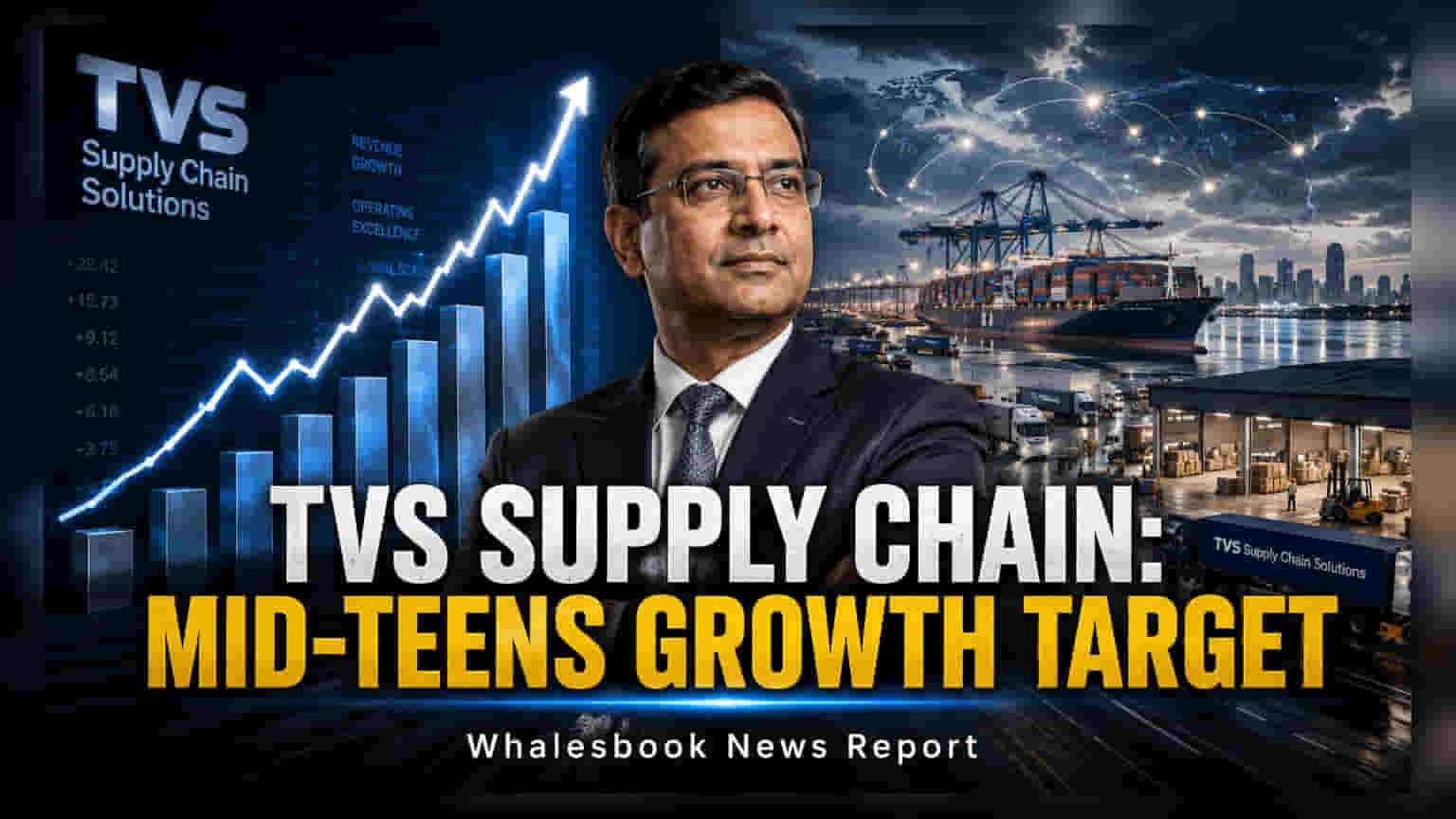
TVS Supply Chain Solutions reported a 28.7% revenue increase in Q1 FY27 to ₹3,335.2 crore, though net profit declined to ₹22.48 crore from ₹71.16 crore a year ago due to base effects. The company maintains a mid-teen revenue growth target for the fiscal year, prioritizing profitable contract wins over volume. Investors are tracking how the company manages margin pressures against its record order pipeline.
TVS Supply Chain Solutions has reported a 28.7% jump in revenue for the first quarter of fiscal year 2027, reaching ₹3,335.2 crore. Despite this robust top-line performance, the company’s consolidated net profit fell to ₹22.48 crore, compared to ₹71.16 crore in the same period last year. This significant decline in profit is primarily attributed to the impact of one-time gains recorded in the prior year’s corresponding quarter, rather than a structural decline in the core logistics business.
Management has reiterated a conservative yet focused outlook, aiming for mid-teen revenue growth for the full fiscal year 2027. This guidance reflects a strategic shift toward securing more profitable contracts rather than focusing solely on increasing the total volume of business. The company believes this selective approach will better protect its long-term financial health.
Business wins have accelerated significantly, with the company securing new orders worth ₹543 crore in the first quarter alone. With an order pipeline currently exceeding ₹7,500 crore, there is a clear focus on sustaining operational momentum. Notably, about two-thirds of these new wins are coming from existing clients, which indicates strong customer retention and continued trust in the company’s services.
A key strategic goal for the company is to increase the Indian market’s contribution to total revenue. Currently at 30%, management aims to grow this share to approximately 40% over the next three to four years. While global supply chains continue to face challenges such as freight rate volatility and geopolitical instability in regions like West Asia, the company has managed these headwinds by passing on increased logistics costs to its customers.
Investors will likely continue to monitor the company’s ability to protect its profit margins as it scales up these new contracts. Risks such as the rising cost of implementation and potential macroeconomic slowdowns remain factors that could impact the bottom line. The next important phase for shareholders will be to track how effectively the company converts its record order pipeline into sustained, profitable revenue, especially as it navigates the ongoing global logistics environment.