

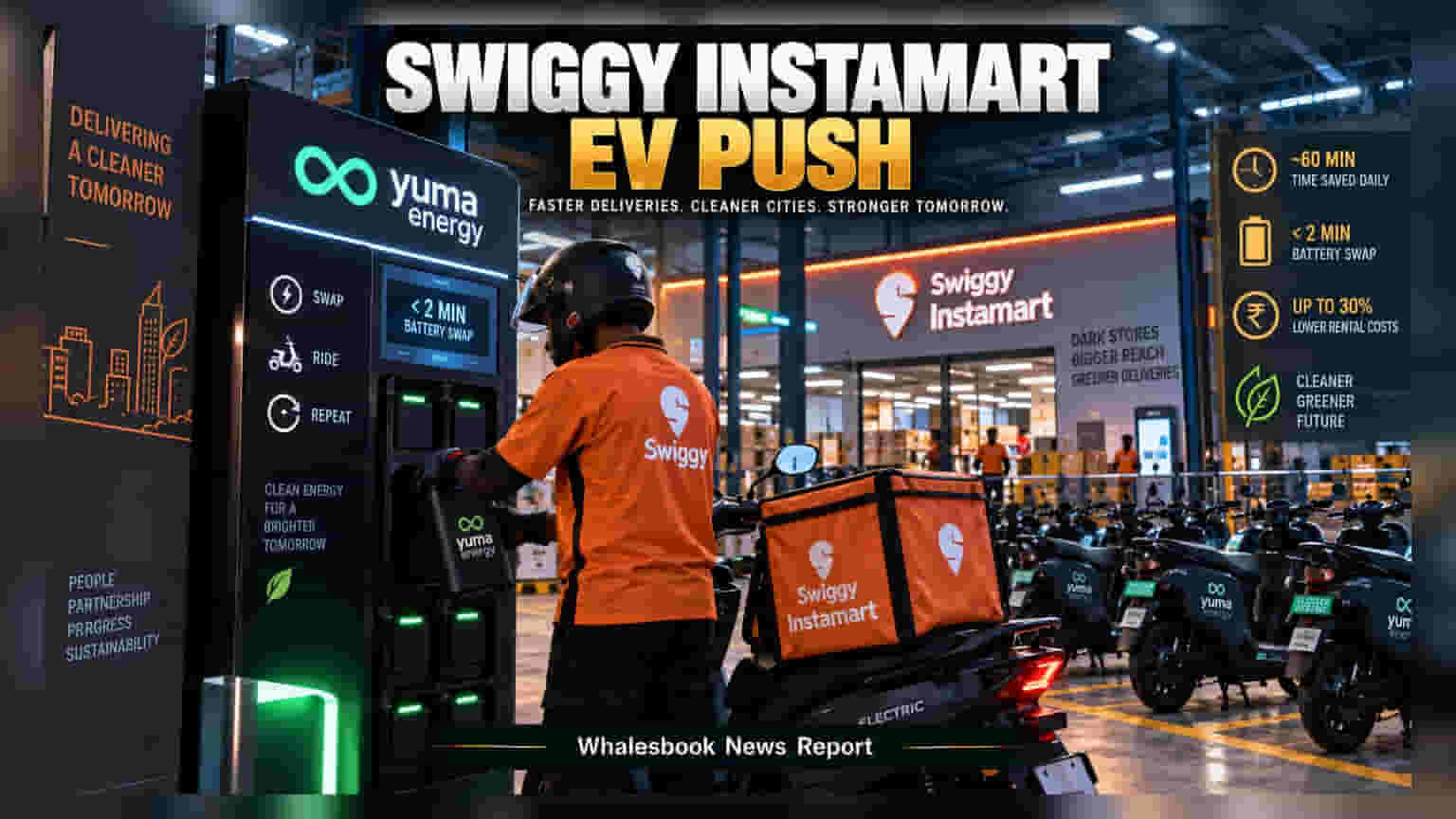
Swiggy Instamart is installing Yuma Energy battery-swapping kiosks at its dark stores to improve delivery speed. Combined with Yulu rental incentives, the move aims to reduce operational costs and charging downtime for delivery partners. This strategy is part of a broader push to scale EV adoption in the competitive quick commerce sector.
Swiggy Instamart is expanding its electric vehicle (EV) network by installing battery-swapping kiosks from Yuma Energy directly at its micro-fulfillment centers, or dark stores. This move, currently starting in Bengaluru, is designed to reduce the time delivery partners spend charging their vehicles. In the quick commerce sector, speed is the primary differentiator. Delivery partners often travel over 90 kilometers daily. Traditional charging methods require significant time, often forcing riders to divert from their routes during high-demand hours. By integrating battery swapping at the origin of deliveries, Swiggy aims to help partners recover about 60 minutes of operational time per day. Since Yuma Energy kiosks take less than two minutes to swap a battery, the setup is intended to minimize downtime during peak delivery periods.
To further encourage the switch to electric vehicles, Swiggy is also providing rental incentives for partners who use Yulu electric bikes. The company reported that this program has helped thousands of delivery partners reduce their rental costs by up to 30 percent since May. Lowering the cost for partners is critical for logistics companies that rely on a gig workforce, as it helps in rider retention and reduces dependence on fossil fuels. This infrastructure expansion is part of Swiggy’s larger strategy to optimize its fleet and operational efficiency. With over 50 EV partners already in its network, the platform is attempting to build a sustainable model to handle the increasing volume of quick commerce orders across the country.
The success of this model will depend on the scale of the rollout. While Bengaluru is the starting point, the impact on delivery speed and partner retention will become clearer as the company expands these kiosks to other cities. Investors and stakeholders in the logistics sector will likely track how this infrastructure spend affects the company's operational costs and whether it provides a competitive advantage in a market where delivery speed defines customer preference. The next important step will be the speed at which these kiosks are deployed in other high-demand urban centers.