

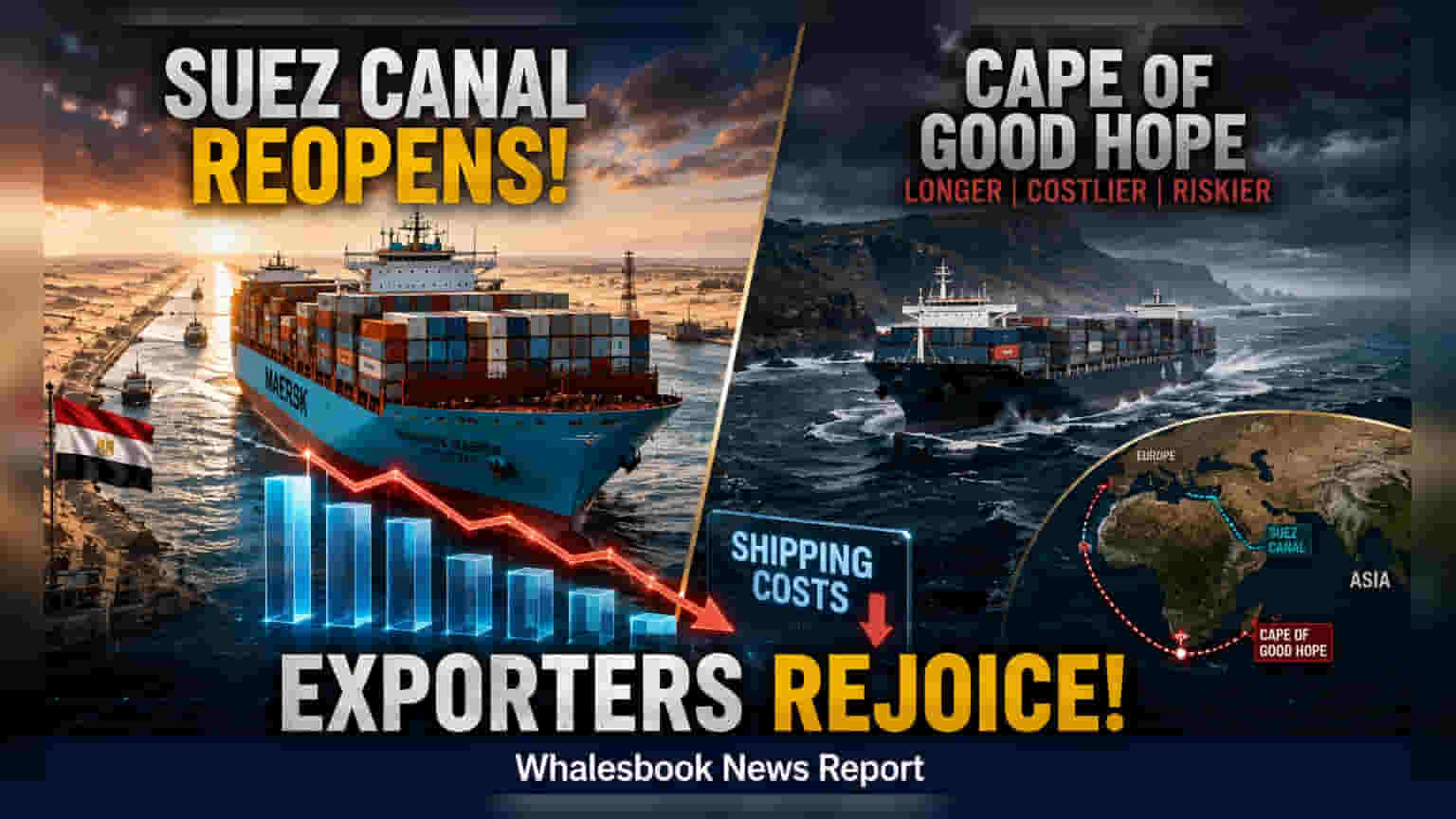
Major global shipping lines have begun a phased return to the Suez Canal, ending nearly 1,000 days of reliance on the longer Cape of Good Hope route. This shift is expected to reduce transit times for Indian exporters by up to 14 days, though companies remain cautious due to ongoing geopolitical risks.
Major global shipping lines have begun a phased and cautious return to the Suez Canal, providing a much-needed reprieve for trade routes connecting Asia and Europe. The Suez Canal Authority has confirmed that large container vessels, including the 17,200 TEU Bangkok Maersk, have successfully transited the waterway. This development marks a shift away from the Cape of Good Hope route, which carriers have used for nearly 1,000 days to avoid security threats in the Red Sea.
For Indian exporters, the resumption of the Suez route is a welcome development, particularly with the critical Christmas and New Year festive season approaching. Utilizing the canal significantly lowers logistics expenses. Compared to the longer route around Africa, the Suez path reduces voyage times by approximately 10 to 14 days. For Indian industries like textiles, apparel, and engineering goods, this shorter transit means faster delivery cycles and reduced working capital locked in transit.
Impact on Logistics and Costs
Beyond just time savings, the return to this traditional route is expected to help rationalize freight and fuel costs, which have remained elevated since the disruptions began. Indian ports on the West Coast, which handle a significant portion of the country’s trade with Europe, stand to gain from this increased efficiency. Improved transit reliability allows exporters to better plan their inventory and meet the tighter delivery deadlines required by foreign buyers during peak retail periods in Europe and the U.S.
The Reality of Geopolitical Risks
While the return of major lines like Maersk and CMA CGM to the canal is a positive signal, it is not a return to business as usual. Shipping companies are adopting a highly flexible and phased approach. The region remains volatile, and carriers have indicated that routes are subject to sudden changes based on real-time security assessments. Risks persist, including regional instability and the potential for new security incidents, which keep maritime insurance premiums and risk-related surcharges higher than historical averages.
Investors should note that the transition could bring its own set of operational hurdles. A sudden, simultaneous surge of ships returning to the Suez route may lead to short-term bottlenecks and congestion at major European ports as schedules realign. Furthermore, if security conditions were to deteriorate, carriers could pivot back to the Cape of Good Hope route without notice.
The key monitorable for market participants in the coming weeks will be the frequency of vessel transits and the subsequent trend in freight rates. While the reopening supports Indian trade margins, the sustainability of this recovery remains tied to the broader geopolitical stability in the Middle East.