

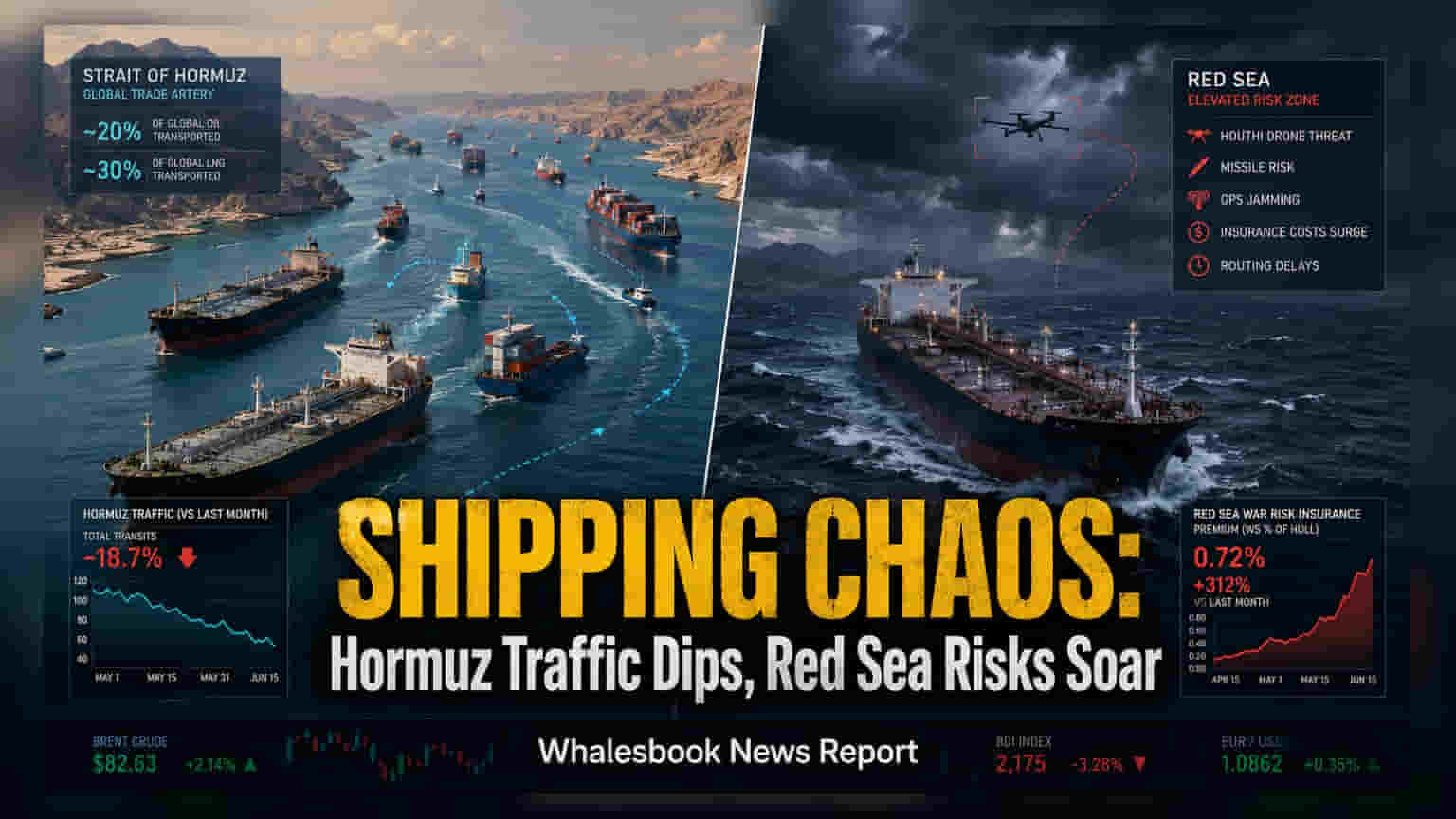
Maritime traffic through the Strait of Hormuz fell on August 4, 2026, as geopolitical tensions continue to affect critical global trade routes. Increased security risks in the Red Sea and the use of 'dark' shipping tactics are causing uncertainty in energy supply chains, potentially leading to higher freight rates and insurance costs.
Maritime traffic moving through the Strait of Hormuz, one of the world's most critical oil transit routes, saw a decline on August 4, 2026. Ship movement data showed that total transits fell to 14, down from 17 the previous day. This dip reflects the ongoing instability in the region, where security threats and geopolitical tensions are forcing shipping companies to adjust their operations.
Evasive Tactics and Rising Risks
A significant factor impacting maritime data is the rise of 'dark activity,' where vessels turn off their automatic identification systems (AIS) or transponders to hide their location. This practice makes it difficult to track the exact volume of ships moving through the region. Companies and captains often use this tactic to avoid detection in areas where security threats, such as potential attacks or seizures, are considered high.
The security situation in the broader region remains volatile. While traffic in the Strait of Hormuz has shown volatility, the Bab el-Mandeb Strait near the Red Sea—another major chokepoint—has seen a rebound in crossings. However, this recovery comes despite Houthi forces claiming to have targeted commercial vessels in the area. These persistent security threats against tankers have created a high-risk environment, leading to increased insurance premiums for shipping companies and, in some cases, higher freight rates due to the perceived danger.
Energy Supply Chain Impacts
Despite these challenges, energy exports continue to move through these waters. Data indicates that a significant portion of tanker departures from the Gulf has been dominated by Iraqi crude, with millions of barrels of Basrah crude transiting the region. Additionally, refineries in the UAE and Qatar continue to manage product movements, though the constant threat of disruption means that supply chain managers are under pressure to navigate routes more cautiously.
Changes in routing are also visible. The use of the Saudi port of Yanbu as a hub for LPG exports has grown, with volumes doubling in the first half of 2026 compared to the previous year. When ships choose to avoid the Bab el-Mandeb route due to security concerns, they must take longer journeys, which increases demand for shipping capacity and adds costs to the entire energy logistics chain.
For the global market, the situation remains fluid. The primary concern for shippers and energy analysts is not just the immediate volume of ships, but the rising cost of moving goods. If the security situation escalates, or if regional actors impose new transit tolls or mandatory insurance requirements, it could cause further volatility in global energy prices. Investors and market watchers should monitor any new diplomatic developments, such as potential management talks between Iran and Oman, as well as any updates regarding security incidents, which act as the main trigger for changes in shipping costs and insurance premiums.