

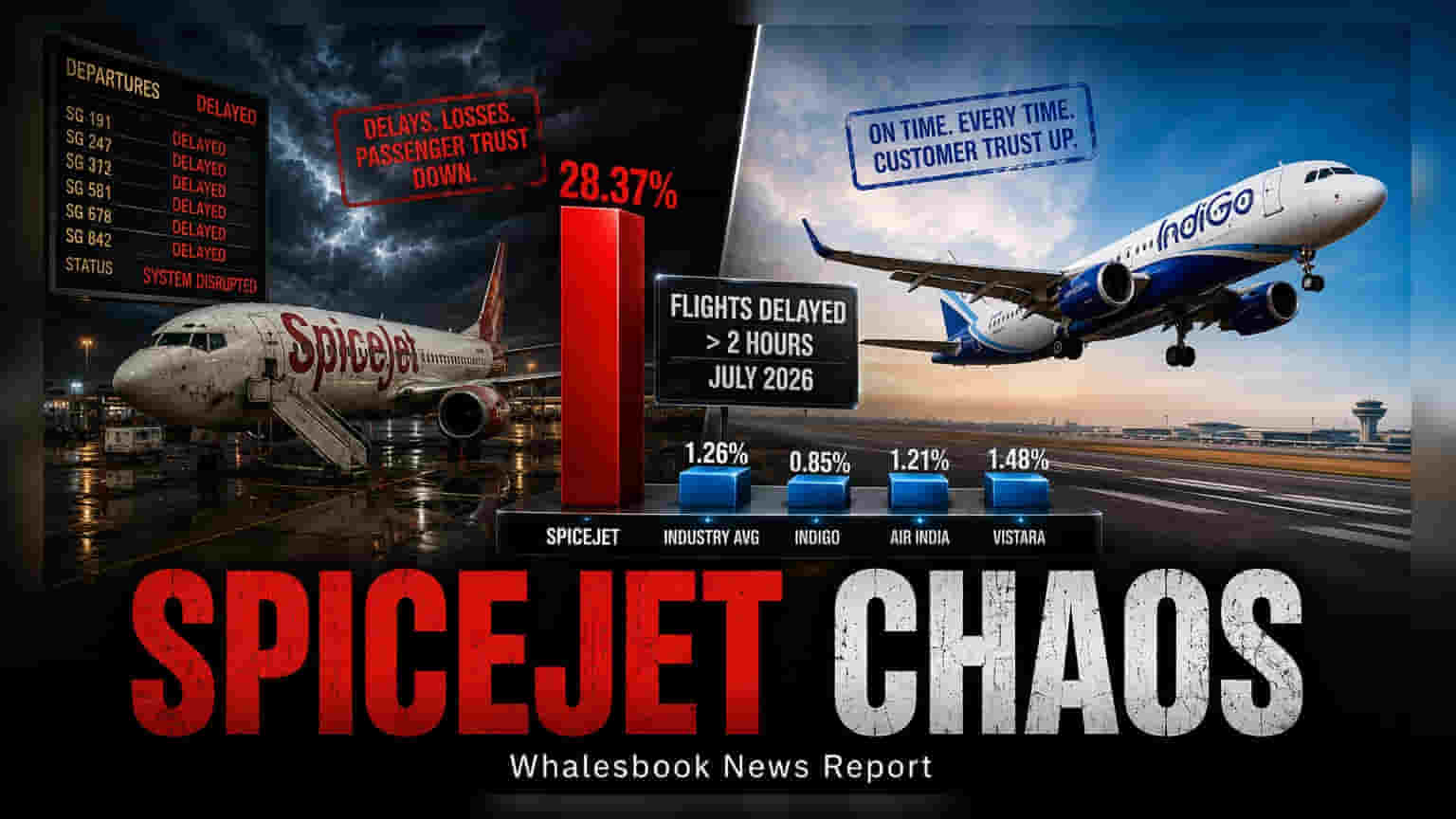
SpiceJet reported that 28.37% of its domestic flights were delayed by over two hours in July, significantly trailing industry peers. This operational strain coincides with a decline in domestic market share to 1.6%. Investors are tracking these disruptions alongside the airline's ongoing legal challenges at the NCLT and persistent financial pressures.
Data from the Directorate General of Civil Aviation (DGCA) for July 2026 highlights significant operational hurdles for SpiceJet. The airline recorded that 28.37% of its domestic flights faced delays exceeding two hours, a figure that remains high compared to the broader aviation sector. For context, the industry saw an average of only 1.26% of flights delayed by more than two hours in the same period.
The operational disparity is stark when compared with major competitors. While SpiceJet’s on-time performance stood at 34.6% in July, carriers like IndiGo achieved 91.2% punctuality. This difference in consistency has weighed on the airline’s standing in the market. Consequently, SpiceJet’s domestic market share decreased to 1.6% in July, down from 1.9% in June, even as overall industry traffic remains a key focus for participants.
Operational and Legal Pressures
The root of these disruptions is often attributed to 'reactionary' factors, where delays in one part of the schedule cascade throughout the day. However, for SpiceJet, these operational challenges occur against a backdrop of deeper systemic issues. The company has been navigating multiple insolvency petitions at the National Company Law Tribunal (NCLT) filed by various lessors and creditors. These legal proceedings, which have involved hearings regarding settlement terms and financial obligations, create an environment of uncertainty for the airline’s operations.
Financial stress remains a primary concern for the company. The airline has faced issues with negative net worth, a shrinking fleet, and the need to manage high levels of debt. The inability to consistently maintain flight schedules often reflects the difficulty in managing operational costs and fleet availability. In recent months, the combination of restricted cash flows and the necessity to meet creditor obligations has limited the company's ability to compete on parity with larger, more capitalized peers.
Investor Monitorables
Investors looking at the sector are currently balancing these operational data points with the company’s ability to resolve its legal and liquidity bottlenecks. The primary monitorables for the next few quarters include the outcome of ongoing NCLT hearings, as these will directly influence the airline's future fleet management and solvency status. Additionally, market participants will observe whether the airline can stabilize its flight schedules, as continued operational instability can further impact passenger load factors and, by extension, revenue generation. The company's future performance remains tied to its success in managing debt, securing additional capital to support operations, and reducing the incidence of flight disruptions.