

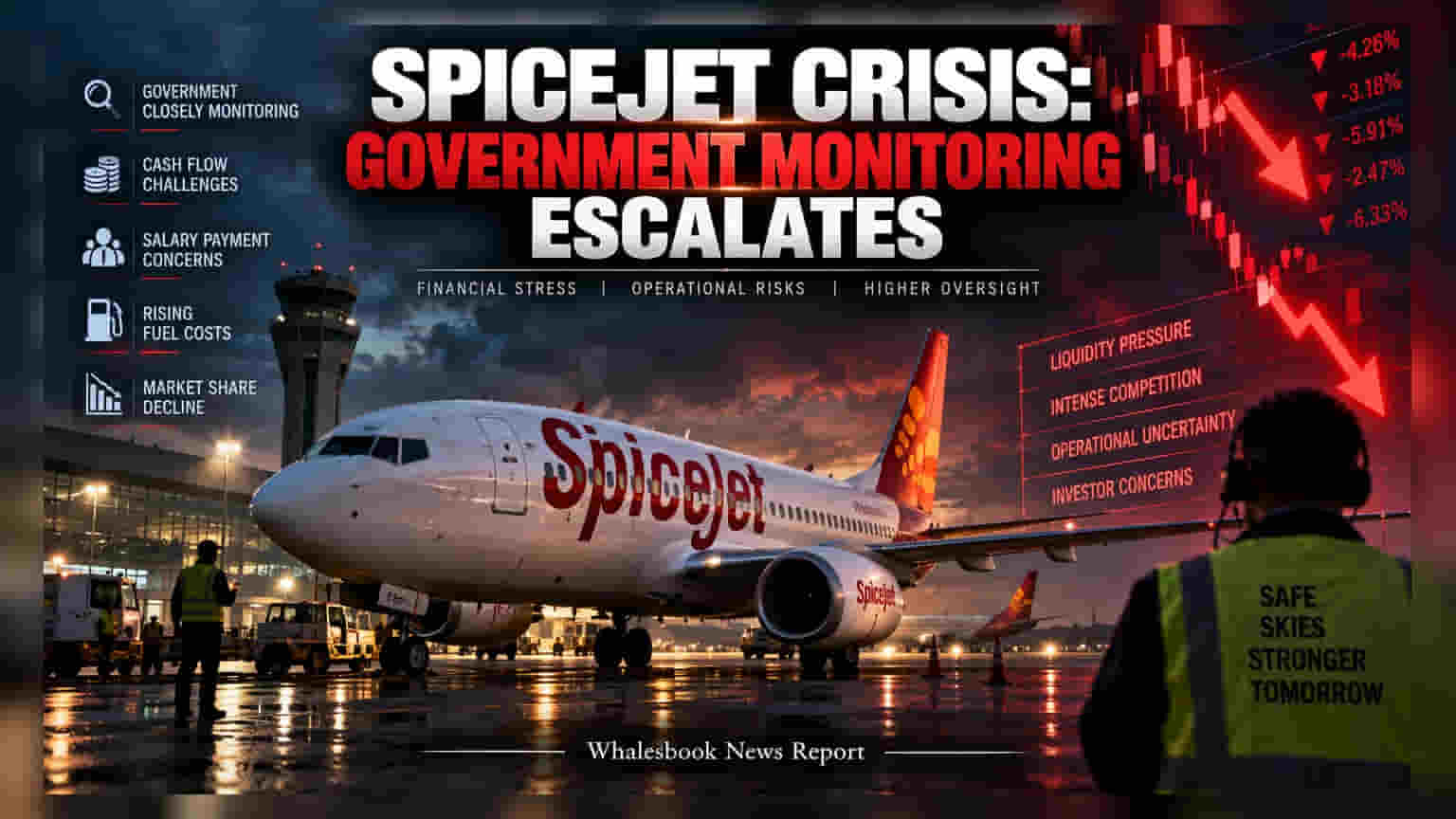
The Ministry of Civil Aviation has intensified monitoring of SpiceJet due to ongoing financial instability and liquidity issues. While the government is focused on ensuring passenger safety and operational continuity, its ability to directly intervene in the private carrier is limited. Investors are watching for any update on the airline’s ability to secure fresh capital to address its mounting debt and operational challenges.
The Ministry of Civil Aviation has confirmed that it is keeping a close watch on SpiceJet as the airline continues to navigate severe cash flow problems. Civil Aviation Minister Ram Mohan Naidu stated that the government is coordinating with aviation regulators to make sure the carrier's financial instability does not affect daily flight operations or put passengers at risk. This heightened oversight comes as the airline struggles to stabilize its business and meet its financial obligations.
Government Role and Limitations
While the government is prioritizing passenger safety and ensuring that the airline remains functional, there are limits to what it can do. Because SpiceJet is a private company, the government cannot directly step in to manage its finances or provide unlimited bailouts. The minister clarified that while the situation is being monitored, the primary responsibility for the company's survival and financial health rests with its management. The government’s role is largely restricted to ensuring regulatory compliance and safe flight services, rather than managing the airline’s internal balance sheet.
Financial Hurdles and Operational Challenges
The airline's financial health has been under pressure for some time. Despite receiving ₹1.5 billion through the Emergency Credit Line Guarantee Scheme, the carrier still faces significant liquidity hurdles. This financial weakness has been worsened by rising fuel costs and fierce competition from other low-cost airlines, which have squeezed profit margins. Additionally, the company has faced public concerns regarding delayed salary payments to its crew, which highlights the fragility of its current business model. Regional geopolitical instability in the Middle East has also added to the complexity, causing further disruptions to flight operations.
Shift in Market Position
SpiceJet’s current struggle marks a sharp decline from its position in 2019, when it was the second-largest domestic carrier in India by market share. Since then, the airline has lost significant ground to rivals. The combination of intense competition and high operating costs has eroded its market share, leaving the company with little room for error. The airline is now operating in a consolidating aviation sector where only the most financially robust players are thriving. For the airline to regain stability, it will likely need to secure fresh capital to pay off debts and restore normal operations. The ability of the management to raise these funds will be the most important factor for investors to monitor in the coming months.