

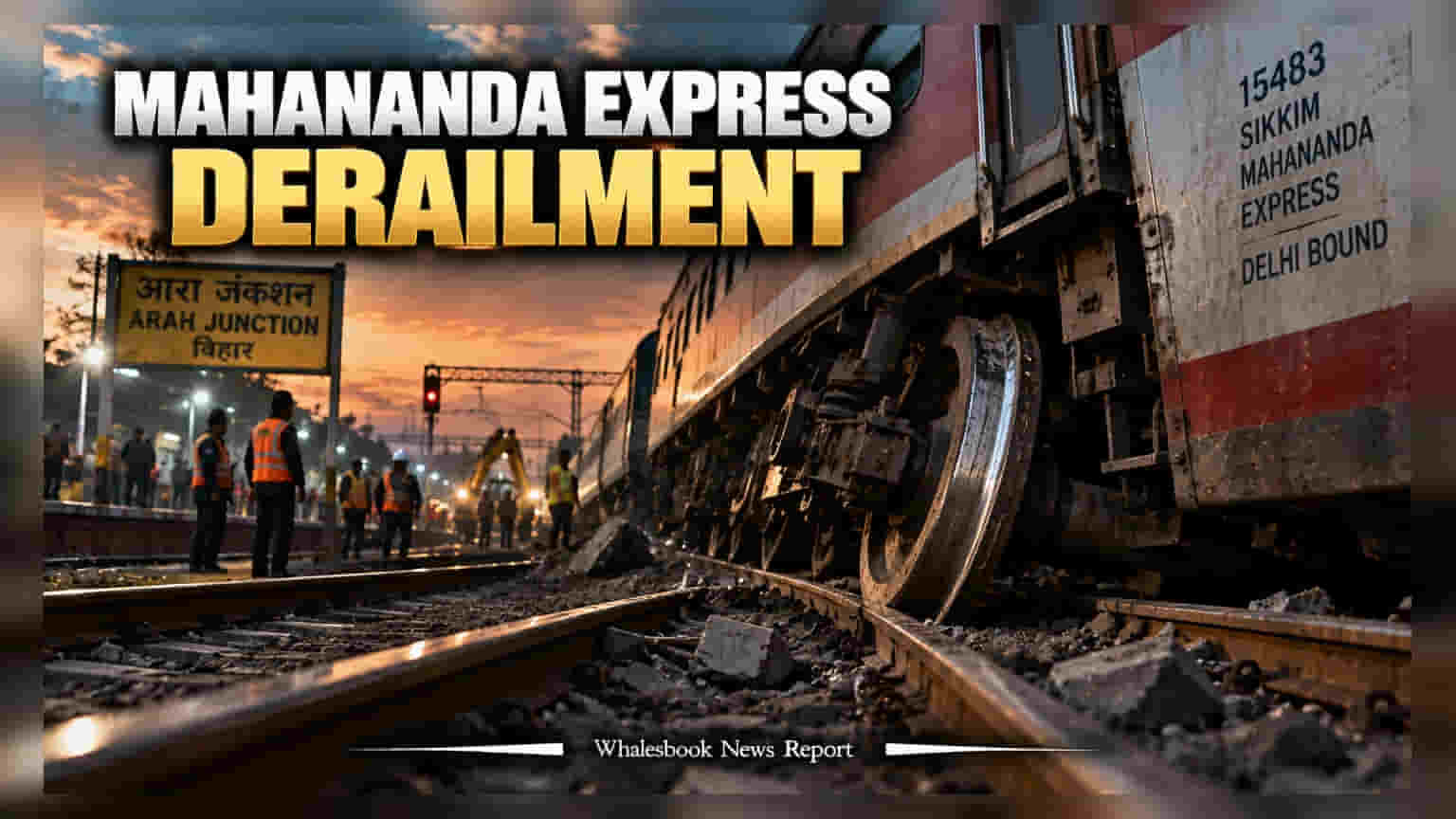
The Delhi-bound Sikkim Mahananda Express derailed near Arrah Junction in Bihar on Sunday morning. No injuries were reported, and preliminary investigations point to the train overshooting a red signal. While Indian Railways is a government-managed entity and not a listed company, such operational incidents are relevant to the broader infrastructure and railway supply chain sector.
The Delhi-bound Sikkim Mahananda Express (train number 15483) derailed near Arrah Junction in Bihar early Sunday morning. The incident occurred around 4:00 am, shortly after the train had departed from the station. Operations on the up line were temporarily paused to allow for restoration work, but traffic was resumed after the technical teams successfully re-railed the affected coaches.
There were no injuries or casualties reported among passengers or railway staff. Because the train was moving at a low speed at the time of the incident, the situation did not escalate into a severe accident. Preliminary reports from railway officials suggest that the derailment likely occurred because the locomotive overshot a red signal, an issue that will be subject to a formal safety audit to determine the exact cause.
It is important for market participants to note that Indian Railways is a government-managed entity and is not a publicly traded company. Consequently, this event does not have a direct impact on any stock price. However, incidents involving passenger safety and rail infrastructure often carry weight for the broader sector. Ongoing maintenance, the integrity of signaling systems, and operational efficiency are critical factors that influence how the government manages and allocates capital spending for the national rail network.
Investors who track the railway infrastructure ecosystem in India—including companies that provide engineering services, locomotive components, and construction expertise—often pay attention to such events. These operational reports can sometimes influence public discourse and policy shifts regarding safety protocols, technology upgrades, and maintenance budgets. As the Ministry of Railways continues to push for faster and safer transit, the market focus remains on how the department addresses human error and infrastructure gaps to improve overall system reliability.
The next step for stakeholders and the public will be the final report from the railway authorities, which will confirm the specific technical findings and outline any necessary changes to safety procedures in the division.