 Whalesbook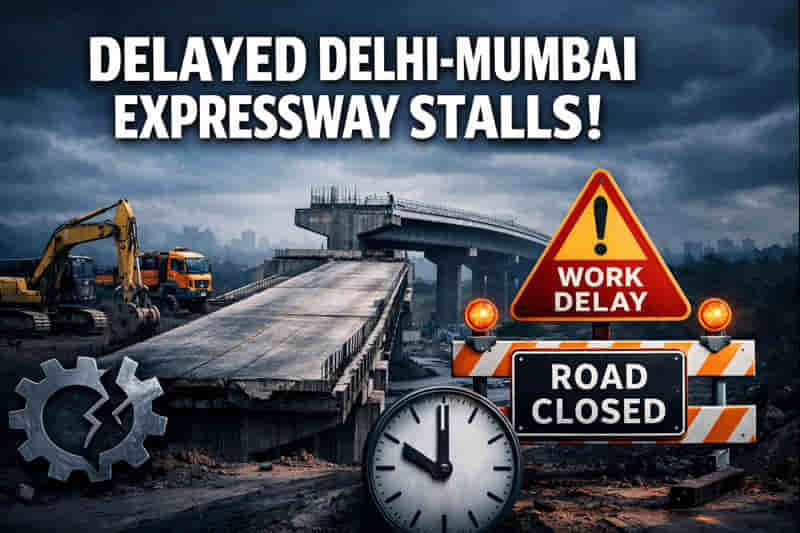
Delhi-Mumbai Expressway Project Hindered by Gujarat Stretches
The ambitious Delhi-Mumbai Expressway project, a Rs 1.04 lakh crore national endeavor, is facing significant setbacks due to severe delays on three crucial stretches in Gujarat. These relatively small segments, totaling just 87 km, are holding up the larger 1,386 km corridor, raising alarm bells within the Ministry of Road Transport and Highways. The National Highways Authority of India (NHAI) is now contemplating terminating the contract of the Pune-based contractor, Roadway Solutions India Infra Ltd (RSIIL), which has shown minimal progress over nearly four years.
The Core Issue
Roadway Solutions India Infra Ltd (RSIIL) was awarded three packages on the Vadodara-Virar section in Gujarat – packages 8, 9, and 10 – in 2021. Despite being awarded these stretches nearly four years ago, less than 20 percent of the 87 km work has been completed. This slow pace is starkly contrasted by the fact that other sections of the expressway, including those in Gujarat, are nearing completion. NHAI officials have attributed the issues to RSIIL's non-performance.
Financial Implications
The Delhi-Mumbai Expressway project is one of India's largest infrastructure undertakings, with an estimated cost of Rs 1.04 lakh crore. So far, Rs 71,718 crore has been spent on its development. The prolonged delays on key sections like those in Gujarat risk escalating project costs and pushing back the expected completion date, potentially impacting the return on investment for this critical infrastructure.
Official Statements and Responses
Navjeet Gadhoke, Director of RSIIL, stated that the delays were primarily due to the "non-provision of land by NHAI." Conversely, NHAI officials have attributed the issues to RSIIL's poor performance and ongoing contractual disputes. The NHAI is reportedly considering issuing "cure period" notices to RSIIL, a formal step before more stringent actions like contract termination can be taken.
Historical Context and Re-awarding
In a surprising turn of events, NHAI had previously scrapped the contracts for two of the RSIIL-managed stretches in March 2023 due to persistent delays. However, RSIIL was re-awarded these same contracts in November 2023 after it submitted the lowest bid in a fresh tender process. A Ministry of Road Transport and Highways official expressed concern, questioning why RSIIL should have been awarded the contract again. NHAI defended the decision by stating that company participation could not be barred and RSIIL was the lowest bidder (L1). RSIIL maintains that the earlier termination was illegal.
Future Outlook
The immediate future of these three Gujarat stretches hangs in the balance. NHAI is weighing the option of terminating RSIIL's contract, a move that would necessitate finding a new contractor and initiating yet another tender process. This could lead to further significant delays, impacting the overall timeline for the 1,386 km Delhi-Mumbai Expressway, which is designed to drastically cut travel time and distance between the national capital and Mumbai's Jawaharlal Nehru Port.
Regulatory Scrutiny
The Ministry of Road Transport and Highways is closely monitoring the situation, with officials raising red flags over the lack of progress and the contractor's repeated award. The NHAI's handling of the contractor's performance and the re-awarding process are likely under internal review.
Impact
The delays in completing these critical sections of the Delhi-Mumbai Expressway will postpone the significant benefits this corridor promises, including a reduction of 180 km in distance and up to a 50 percent decrease in travel time between key economic hubs. For investors in infrastructure, this situation could heighten concerns about project execution risks and contractor accountability in large-scale public works. The delays might also affect the economic activity expected to be spurred by the expressway's completion.
Impact Rating: 7/10
Difficult Terms Explained
- Cure Period: A specific timeframe granted to a contractor to rectify or fix contractual breaches or delays before a contract can be terminated.
- L1 Bidder: Stands for 'Lowest 1st Bidder'. In a tender process, the company or contractor that offers to complete the work at the lowest price is declared the L1 bidder and is typically awarded the contract.
- Debarment/Blacklisting: The act of prohibiting a company or individual from participating in future tenders or contracts issued by a government authority or organization for a specified period or permanently, usually due to serious contractual violations or misconduct.